
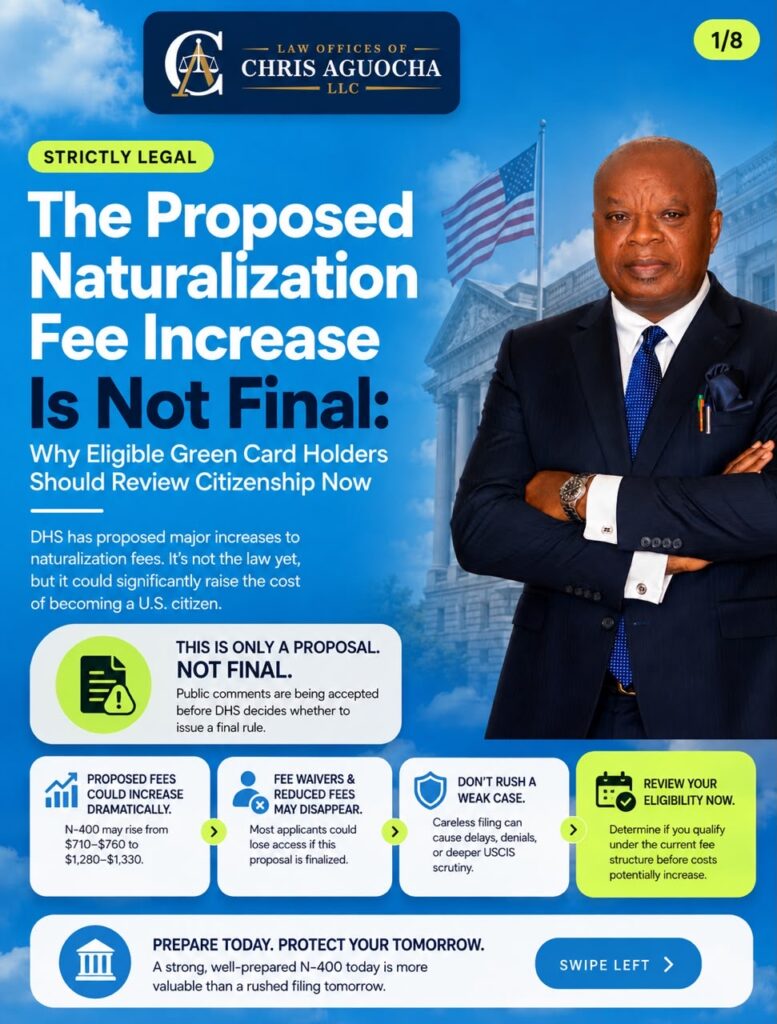


The Department of Homeland Security (DHS) has proposed significant increases to the filing fees for Form N-400, Application for Naturalization, and Form N-336, Request for a Hearing on a Denial of Naturalization. The proposal has not become law, but it could substantially increase the cost of becoming a U.S. citizen if it is finalized.
For many lawful permanent residents, this is a good time to determine whether they are already eligible to apply—not whether they should rush to file.
The Fee Increase Is Only a Proposal—For Now
Under the proposed rule, DHS would increase filing fees as follows:
• Form N-400, paper filing: from $760 to $1,330.
• Form N-400, online filing: from $710 to $1,280.
• Form N-336, paper filing: from $830 to $1,475.
• Form N-336, online filing: from $780 to $1,425.
The proposal remains subject to the federal rulemaking process and is not yet in effect. Public comments are currently being accepted before DHS decides whether to issue a final rule.
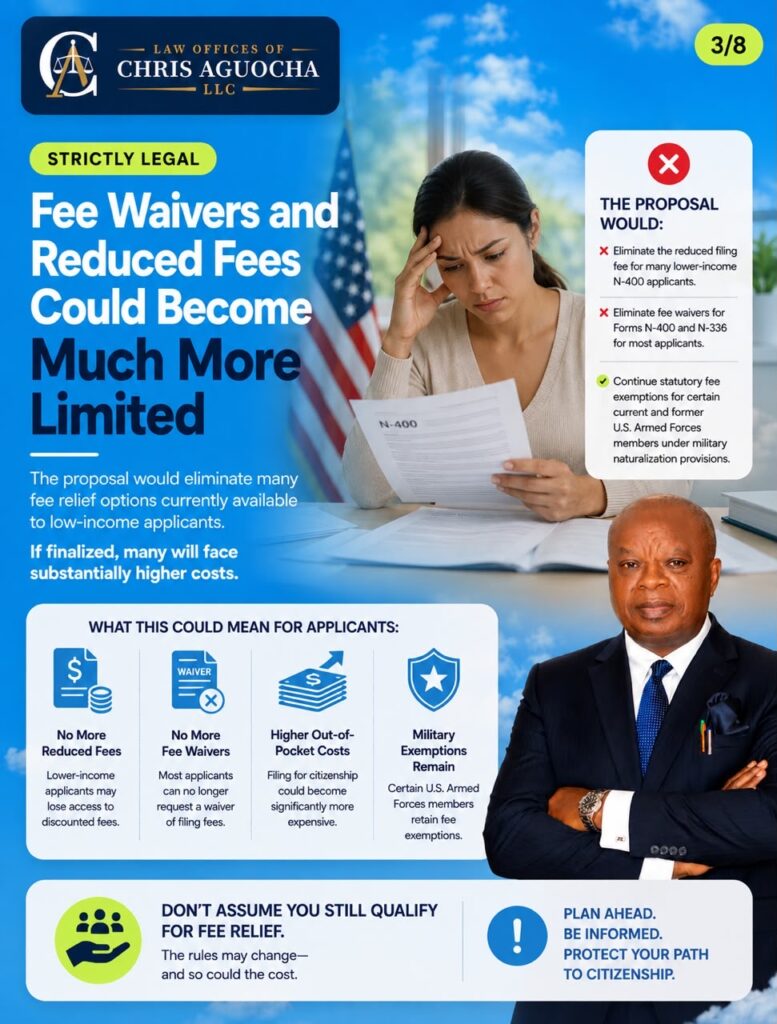
Fee Waivers and Reduced Fees Could Become Much More Limited
The proposal would also:
• Eliminate the reduced filing fee currently available for many lower-income N-400 applicants.
• Eliminate fee waivers for Forms N-400 and N-336 for most applicants, while preserving statutory fee exemptions for certain current and former members of the U.S. Armed Forces applying under the military naturalization provisions.
If the proposal is finalized, many applicants who currently qualify for reduced fees or fee waivers could face substantially higher filing costs.
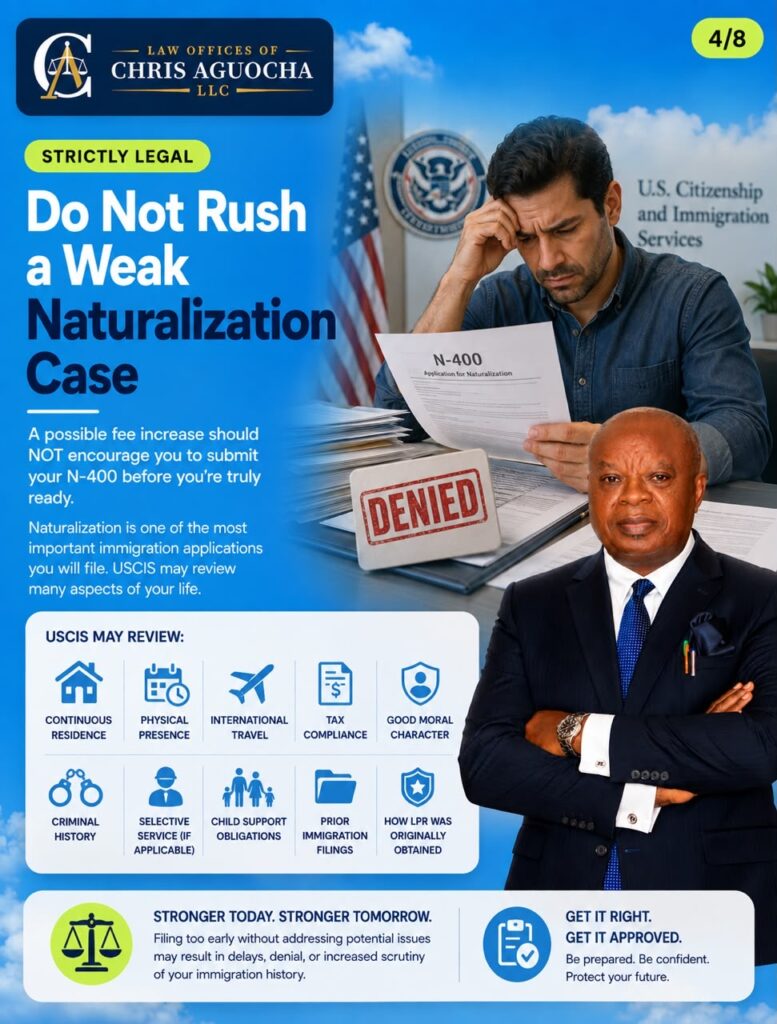
Do Not Rush a Weak Naturalization Case
A possible fee increase should not encourage applicants to submit an N-400 before they are truly ready.
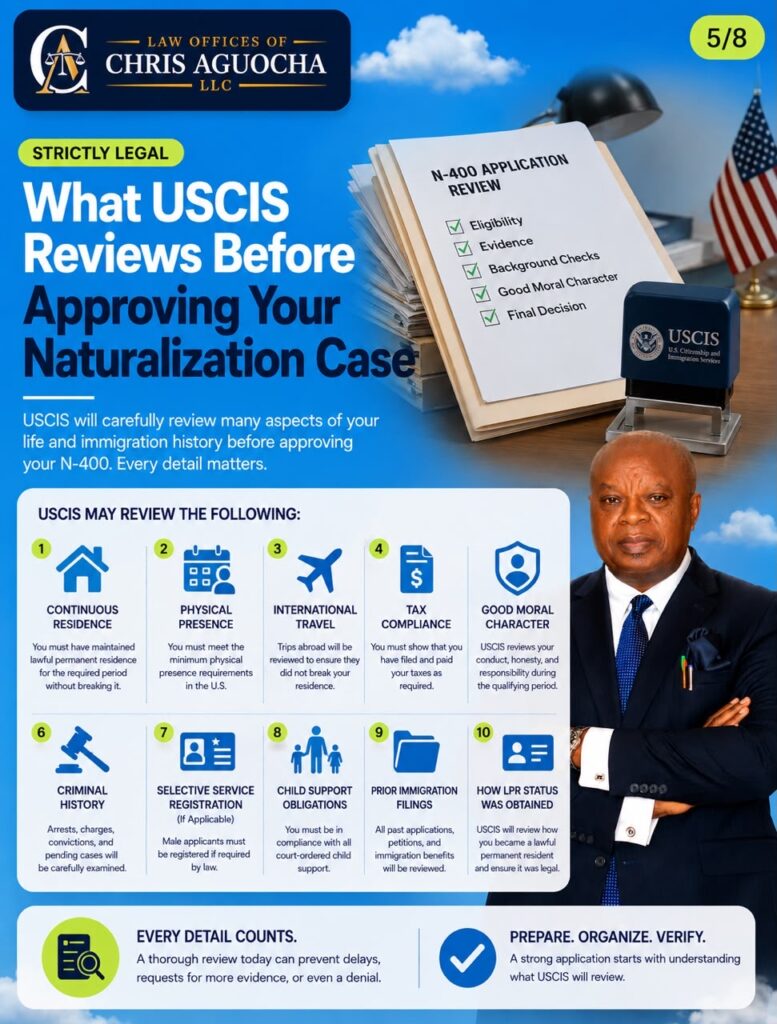
Naturalization is one of the most important immigration applications a lawful permanent resident can file. USCIS may review:
• Continuous residence.
• Physical presence.
• International travel.
• Tax compliance.
• Good moral character.
• Criminal history.
• Selective Service registration, where applicable.
• Child support obligations.
• Prior immigration filings.
• How lawful permanent residence was originally obtained.
Filing too early without addressing potential issues may result in delays, denial, or increased scrutiny of the applicant’s immigration history.
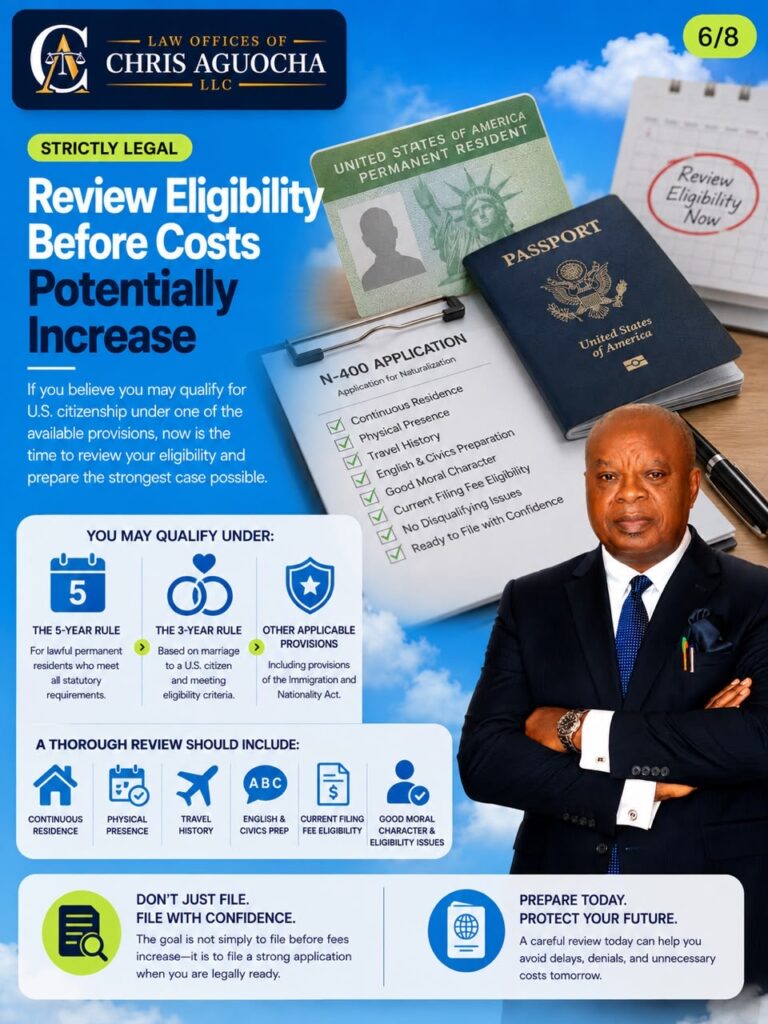
Review Eligibility Before Costs Potentially Increase
If you believe you may qualify for naturalization under:
• The five-year rule;
• The three-year rule based on marriage to a U.S. citizen; or
• Another applicable provision of the Immigration and Nationality Act,
this may be an appropriate time to review your eligibility with experienced counsel.
A thorough review should include:
• Continuous residence.
• Physical presence.
• Travel history.
• English and civics preparation.
• Current filing fee eligibility.
• Any issues affecting good moral character or eligibility.
The goal is not simply to file before fees increase—it is to file a strong application when you are legally ready.
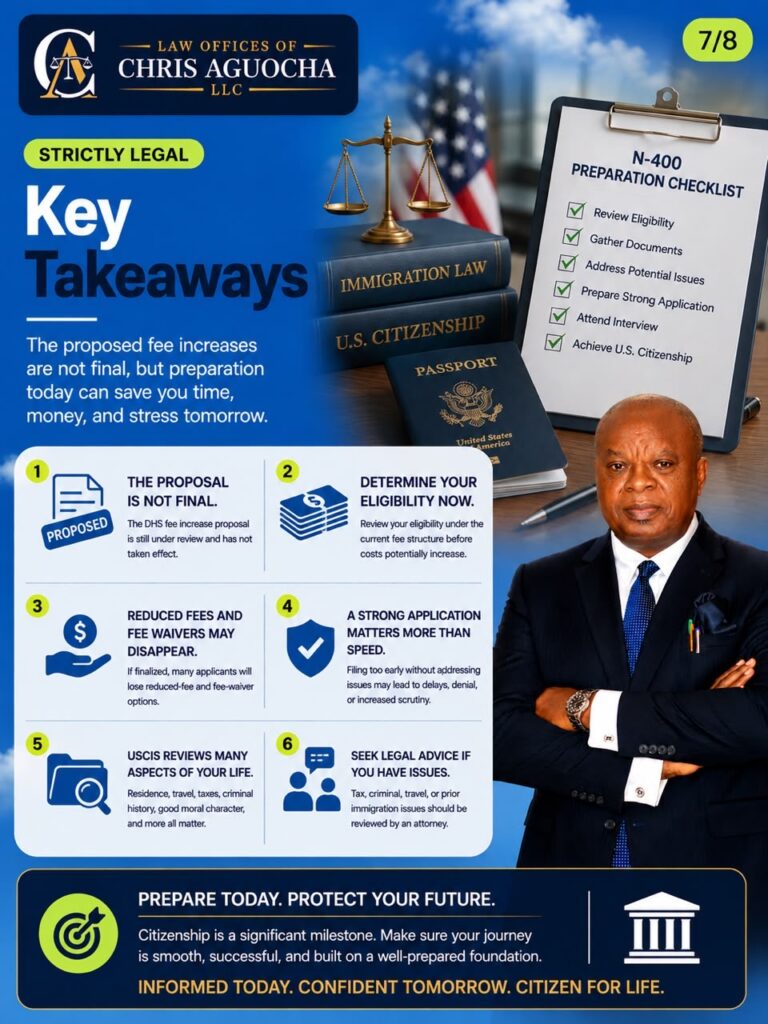
Key Takeaways
• The proposed naturalization fee increases have not yet taken effect.
• Eligible Green Card holders should determine whether they qualify to apply under the current fee structure.
• The proposal would eliminate many reduced-fee and fee-waiver options if finalized.
• A carefully prepared N-400 is generally more important than filing quickly.
• Applicants with tax, criminal, travel, or prior immigration issues should seek legal advice before submitting a naturalization application.
Ready to Apply for U.S. Citizenship?
Law Offices of Chris Aguocha LLC assists lawful permanent residents with naturalization, N-400 applications, citizenship interview preparation, and complex immigration history reviews. We help clients evaluate eligibility, identify potential issues before filing, and prepare strong naturalization applications.
Office: 301-322-1304
Cell: 240-470-4364
Email: chris@aguochalawyer.com
Disclaimer: This article is provided for general informational purposes only and does not constitute legal advice. Reading this article does not create an attorney-client relationship. The DHS fee proposal has not been finalized and may change before taking effect. Every immigration case is unique, and you should consult an attorney regarding your specific legal circumstances.
