
Making money online does not automatically place the activity outside U.S. immigration employment rules. For a foreign national temporarily in the United States, the important questions include what services are being performed, where the person is physically performing them, whether compensation is involved, and whether the person’s immigration status authorizes the activity.
Online Work Can Still Be Employment
TikTok, Instagram, YouTube, affiliate marketing, freelancing, consulting, livestreaming, and other digital activities can become immigration issues when compensated services are performed while the individual is physically present in the United States.
Using a foreign bank account, working for an overseas company, or being paid through an online platform does not automatically make the activity permissible.
Visitors Generally Cannot Work While in the United States
B-1/B-2 visitors and Visa Waiver Program travelers do not have general authorization to work in the United States.
A person who enters for tourism but then actively films sponsored content, negotiates brand contracts, promotes products for compensation, provides freelance services, or manages a commercial creator business may raise questions about unauthorized employment and whether the person’s actual activities are consistent with the purpose of admission.
The analysis is fact-specific. Not every social media post, vacation photograph, or incidental online activity constitutes employment. The concern increases when there is active commercial activity performed in exchange for compensation.
F-1 Students Have Separate Employment Restrictions
F-1 status does not provide unrestricted permission to earn income.
Student employment generally must fit within an authorized category, such as qualifying on-campus employment, CPT, OPT, or STEM OPT, where applicable.
A student who maintains a monetized creator business unrelated to authorized employment may therefore create a status problem even while attending classes and otherwise maintaining the academic program.
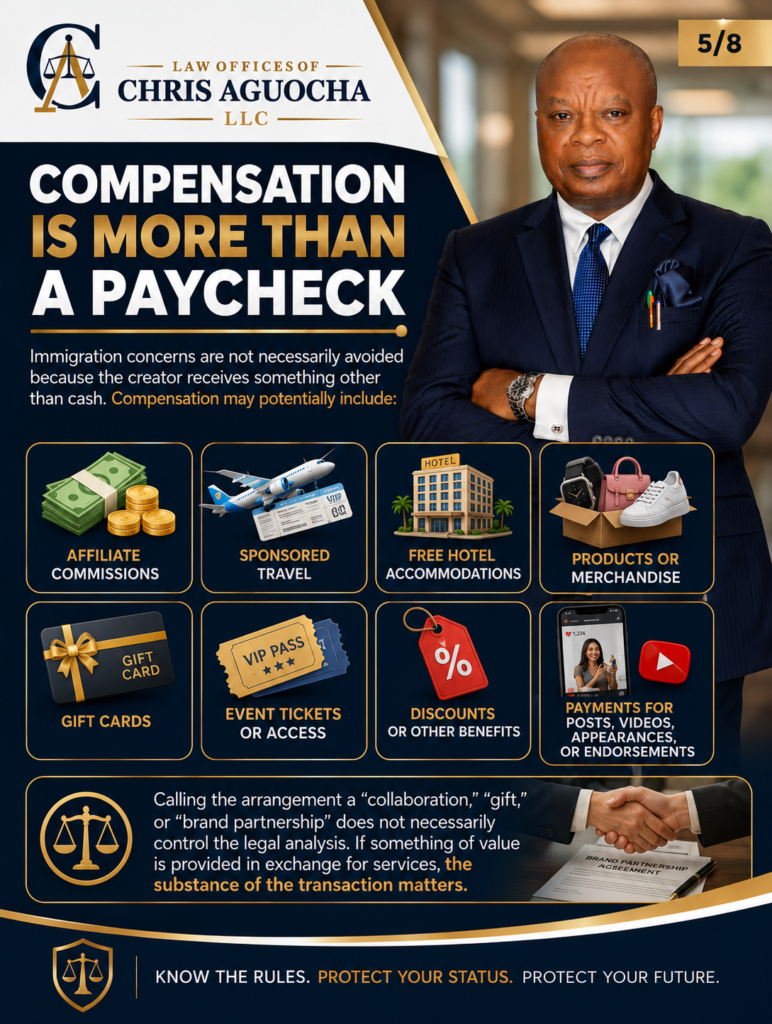
Compensation Is Not Limited to a Paycheck
Immigration concerns are not necessarily avoided because the creator receives something other than cash.
Compensation may potentially include:
• Affiliate commissions.
• Sponsored travel.
• Free hotel accommodations.
• Products or merchandise.
• Gift cards.
• Event tickets or access.
• Discounts or other benefits.
• Payments for posts, videos, appearances, or endorsements.
Calling the arrangement a “collaboration,” “gift,” or “brand partnership” does not necessarily control the legal analysis. If something of value is provided in exchange for services, the substance of the transaction matters.
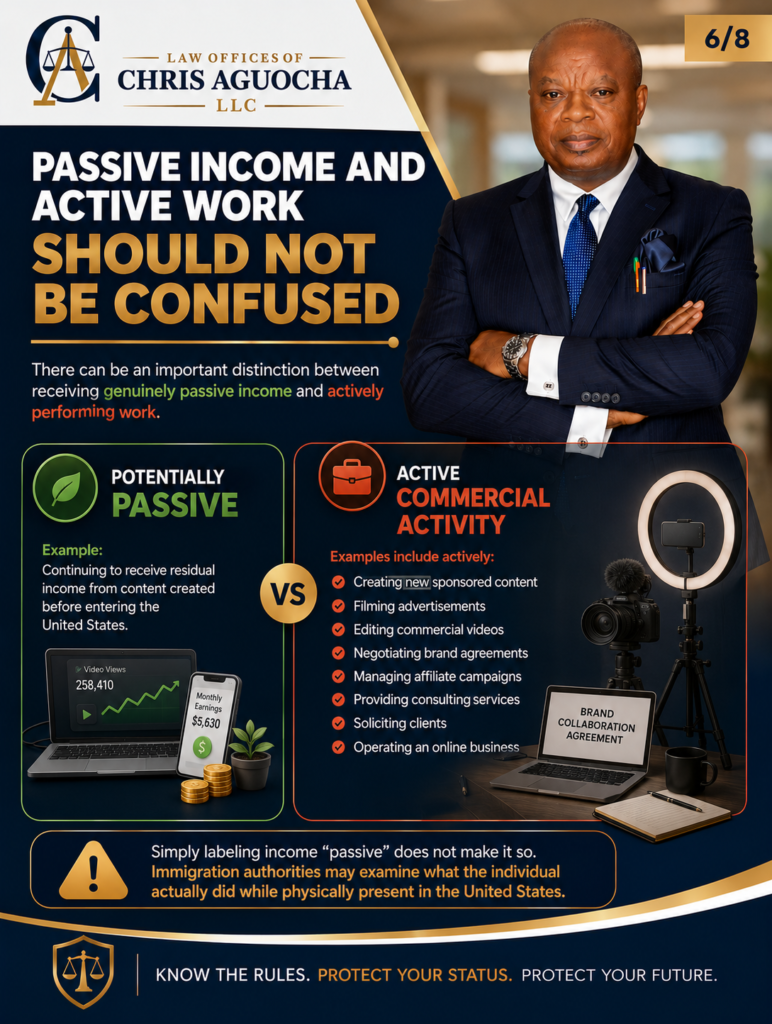
Passive Income and Active Work Should Not Be Confused
There can be an important distinction between receiving genuinely passive income and actively performing work.
For example, continuing to receive residual income from content created before entering the United States may present different issues from actively:
• Creating new sponsored content.
• Filming advertisements.
• Editing commercial videos.
• Negotiating brand agreements.
• Managing affiliate campaigns.
• Providing consulting services.
• Soliciting clients.
• Operating an online business.
Simply labeling income “passive” does not make it so. Immigration authorities may examine what the individual actually did while physically present in the United States.
Employer-Specific Visas Do Not Automatically Authorize a Side Business
Holding a work-authorized status does not necessarily mean the individual can perform any type of work.
H-1B, L-1, O-1, and other employment-based classifications may be tied to particular employers, petitions, activities, or conditions.
A person authorized to work for one employer should therefore not assume that the same status automatically permits an unrelated creator business, freelance consulting, paid endorsements, or another commercial side activity.
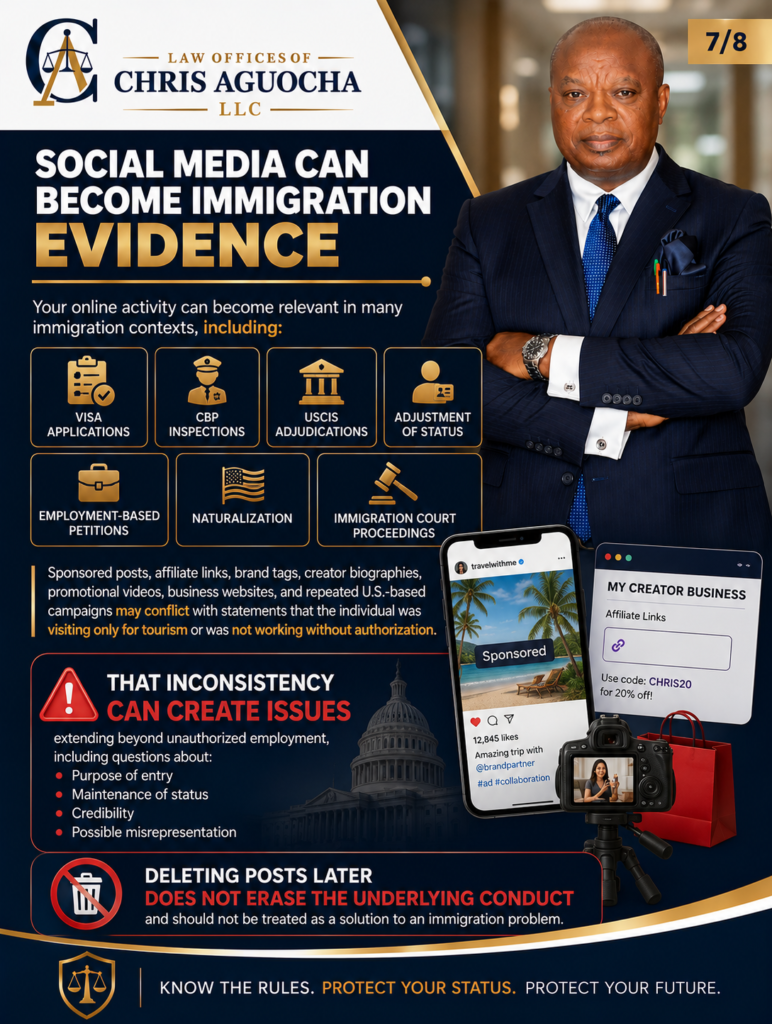
Social Media Can Become Immigration Evidence
Public social media activity can become relevant during:
• Visa applications.
• CBP inspections.
• USCIS adjudications.
• Adjustment of status.
• Employment-based petitions.
• Naturalization.
• Immigration court proceedings.
Sponsored posts, affiliate links, brand tags, creator biographies, promotional videos, business websites, and repeated U.S.-based campaigns may conflict with statements that the individual was visiting only for tourism or was not working without authorization.
That inconsistency can create issues extending beyond unauthorized employment, including questions about purpose of entry, maintenance of status, credibility, and possible misrepresentation.
Deleting posts later does not erase the underlying conduct and should not be treated as a solution to an immigration problem.
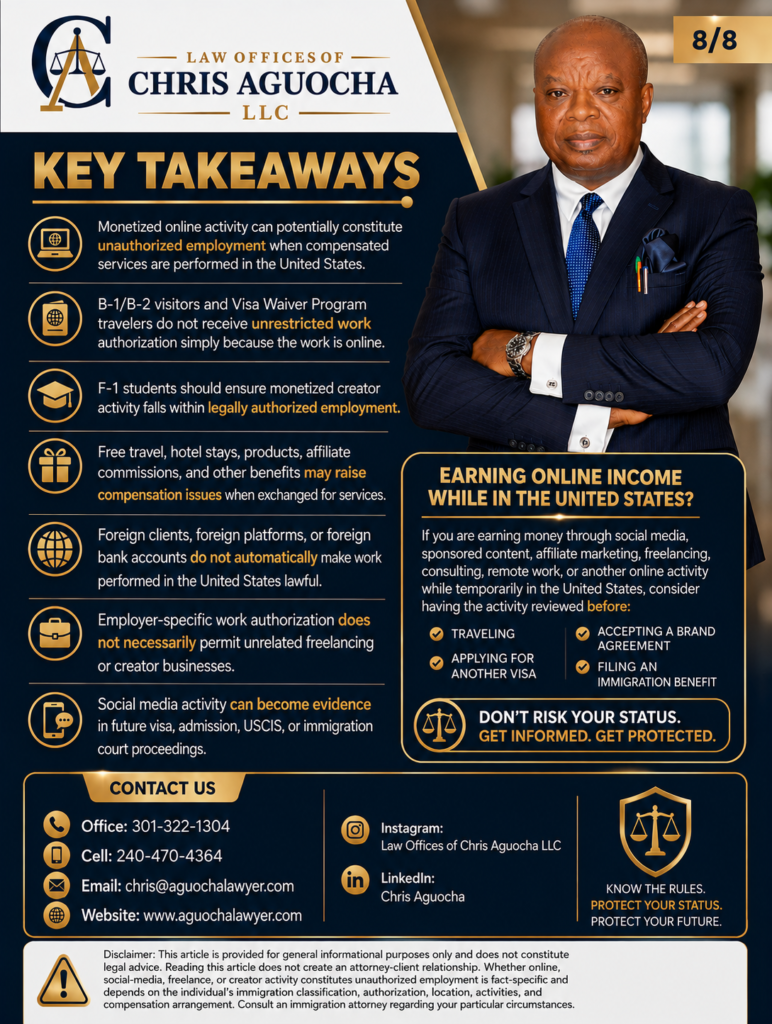
Key Takeaways
• Monetized online activity can potentially constitute unauthorized employment when compensated services are performed in the United States.
• B-1/B-2 visitors and Visa Waiver Program travelers do not receive unrestricted work authorization simply because the work is online.
• F-1 students should ensure monetized creator activity falls within legally authorized employment.
• Free travel, hotel stays, products, affiliate commissions, and other benefits may raise compensation issues when exchanged for services.
• Foreign clients, foreign platforms, or foreign bank accounts do not automatically make work performed in the United States lawful.
• Employer-specific work authorization does not necessarily permit unrelated freelancing or creator businesses.
• Social media activity can become evidence in future visa, admission, USCIS, or immigration court proceedings.
Earning Online Income While in the United States?
If you are earning money through social media, sponsored content, affiliate marketing, freelancing, consulting, remote work, or another online activity while temporarily in the United States, consider having the activity reviewed before traveling, applying for another visa, accepting a brand agreement, or filing an immigration benefit.
Law Offices of Chris Aguocha LLC
Office: 301-322-1304
Cell: 240-470-4364
Email: chris@aguochalawyer.com
Disclaimer: This article is provided for general informational purposes only and does not constitute legal advice. Reading this article does not create an attorney-client relationship. Whether online, social-media, freelance, or creator activity constitutes unauthorized employment is fact-specific and depends on the individual’s immigration classification, authorization, location, activities, and compensation arrangement. Consult an immigration attorney regarding your particular circumstances.
