

Having a U.S. citizen spouse or children is an important factor in many immigration cases—but it does not automatically overcome a prior removal order or guarantee permission to return to the United States.
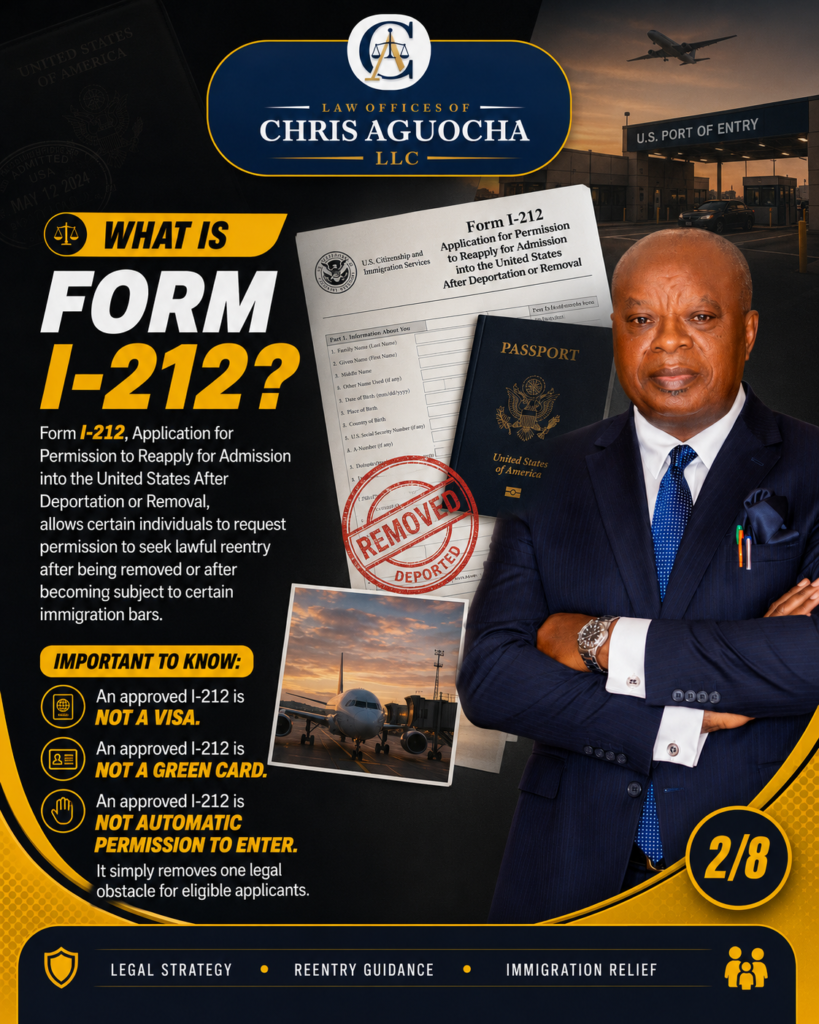
What Is Form I-212?
Form I-212, Application for Permission to Reapply for Admission into the United States After Deportation or Removal, allows certain individuals to request permission to seek lawful reentry after being removed or after becoming subject to certain immigration bars.
An approved I-212 is not a visa, a Green Card, or automatic permission to enter the United States. It simply removes one legal obstacle for eligible applicants.
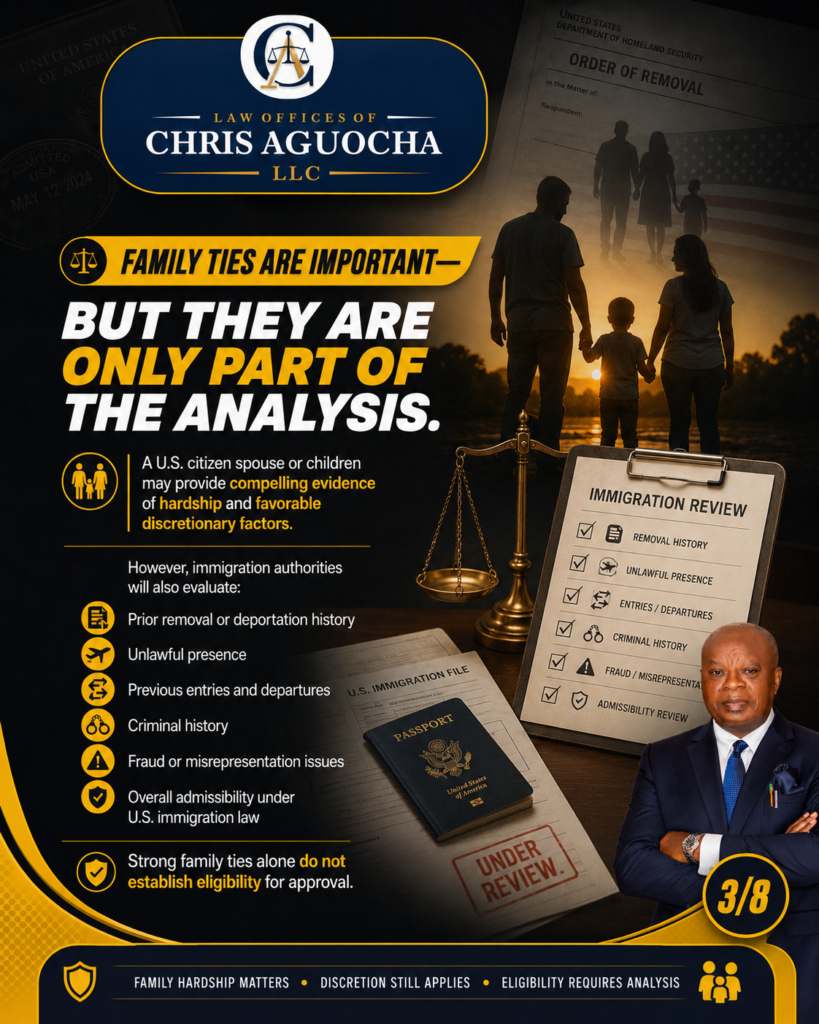
Family Ties Are Important—But They Are Only Part of the Analysis
A U.S. citizen spouse or children may provide compelling evidence of family hardship and favorable discretionary factors. However, immigration authorities will also evaluate:
• Prior removal or deportation history.
• Unlawful presence.
• Previous entries and departures.
• Criminal history.
• Fraud or misrepresentation issues.
• Overall admissibility under U.S. immigration law.
Strong family ties alone do not establish eligibility for approval.
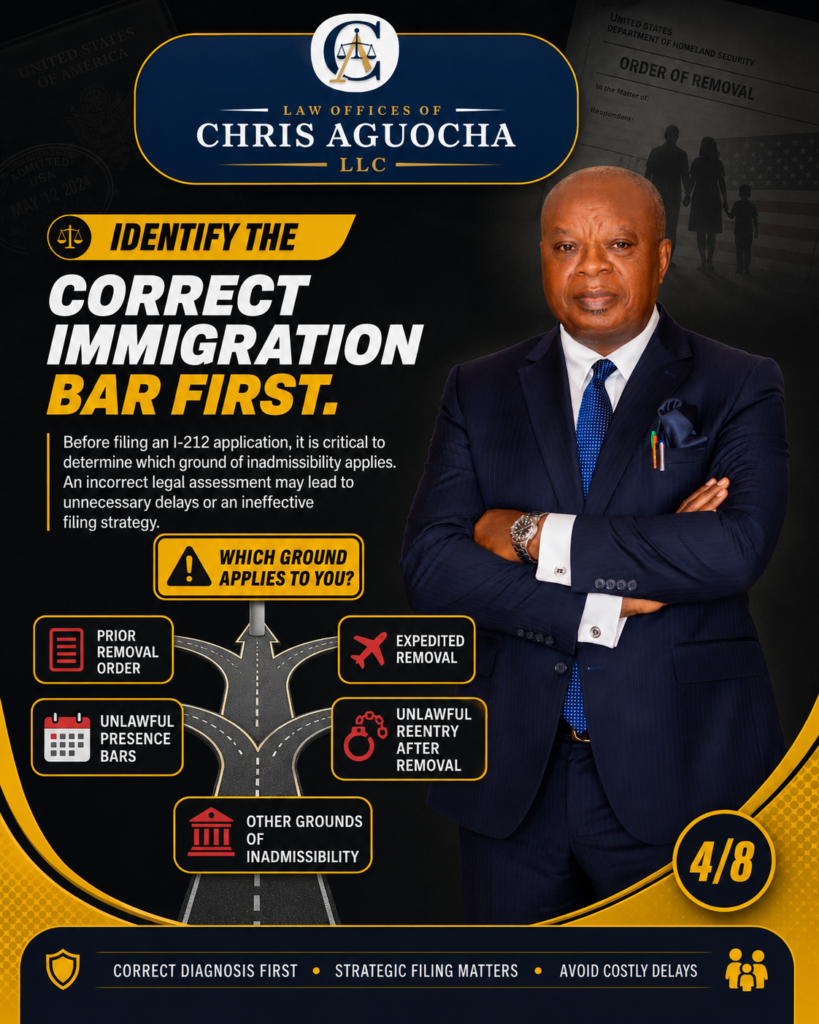
Identify the Correct Immigration Bar First
Before filing an I-212 application, it is critical to determine which ground of inadmissibility applies.
Depending on the circumstances, an applicant may be subject to:
• A prior removal order.
• Expedited removal.
• Unlawful presence bars.
• Unlawful reentry after removal.
• Other grounds of inadmissibility.
An incorrect legal assessment may lead to unnecessary delays or an ineffective filing strategy.
You May Need More Than an I-212
Some applicants require additional waivers, such as Form I-601, Application for Waiver of Grounds of Inadmissibility, depending on the specific immigration violations involved.
Developing the right strategy before consular processing or a visa interview can help avoid additional delays and refusals.
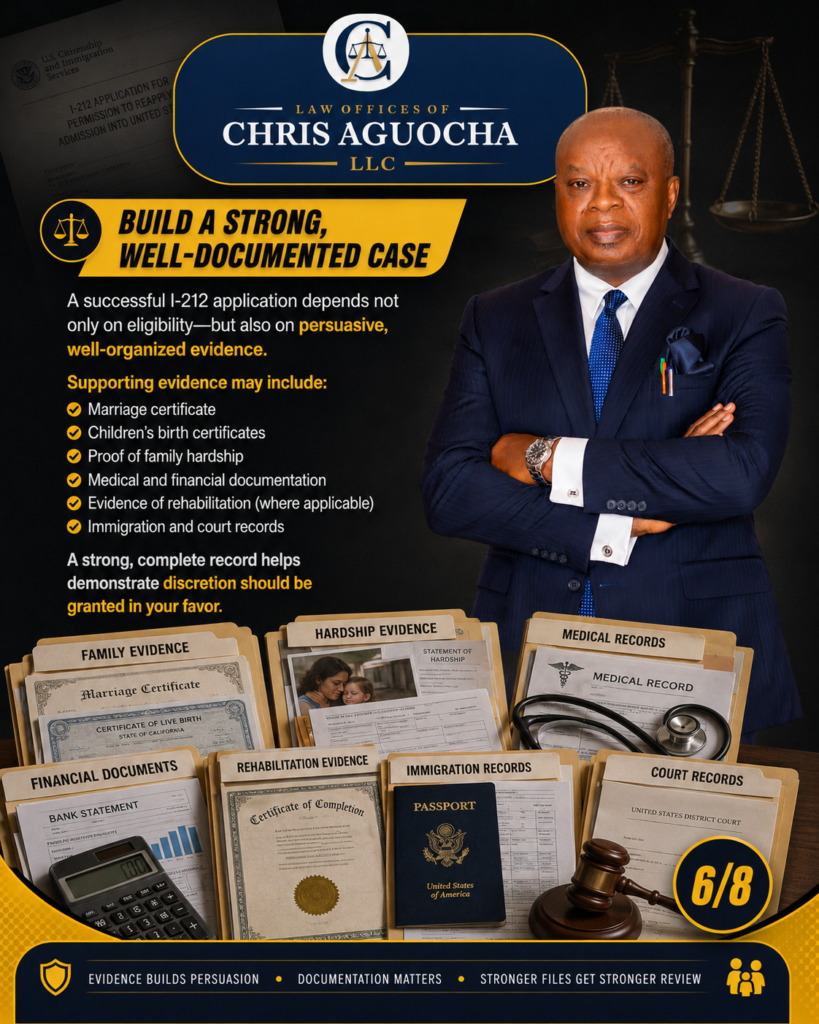
Build a Strong, Well-Documented Case
Supporting evidence may include:
• Marriage certificate.
• Children’s birth certificates.
• Proof of family hardship.
• Medical and financial documentation.
• Evidence of rehabilitation, where applicable.
• Immigration and court records.
A successful I-212 application is built on both legal eligibility and persuasive supporting evidence.
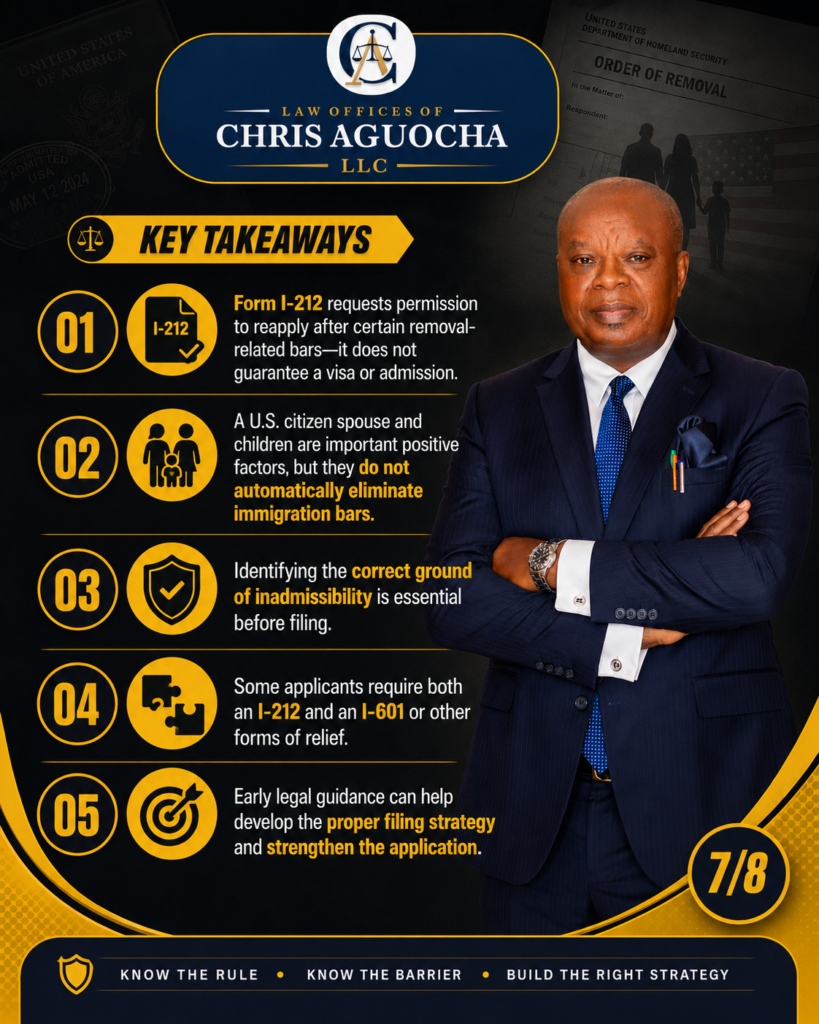
Key Takeaways
• Form I-212 requests permission to reapply after certain removal-related bars—it does not guarantee a visa or admission.
• A U.S. citizen spouse and children are important positive factors, but they do not automatically eliminate immigration bars.
• Identifying the correct ground of inadmissibility is essential before filing.
• Some applicants require both an I-212 and an I-601 or other forms of immigration relief.
• Early legal guidance can help develop the proper filing strategy and strengthen your application.
Need Help with an I-212 or Immigration Waiver?
Law Offices of Chris Aguocha LLC provides experienced legal representation in I-212 applications, I-601 waivers, consular processing, family-based immigration, removal defense, and other complex immigration matters.
Office: 301-322-1304
Cell: 240-470-4364
Email: chris@aguochalawyer.com
Disclaimer: This article is provided for general informational purposes only and does not constitute legal advice. Reading this article does not create an attorney-client relationship. Every immigration case is unique, and you should consult an attorney regarding your specific legal circumstances.
