

An H-1B petition approved by USCIS and an H-1B visa issued by a U.S. consulate are related—but they are not the same thing. Understanding the difference is especially important for F-1 students, workers changing status, and anyone planning international travel after H-1B approval.
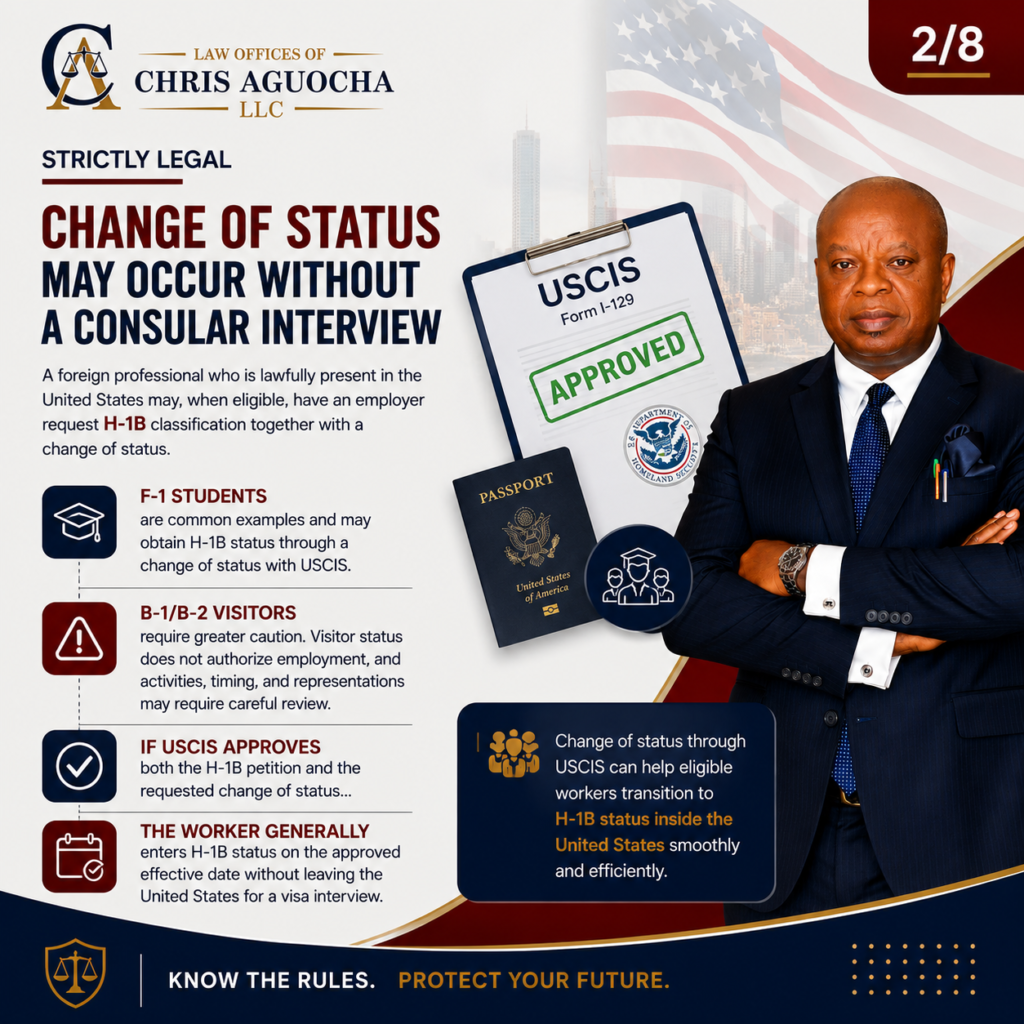
Change of Status May Occur Without a Consular Interview
A foreign professional who is lawfully present in the United States may, when eligible, have an employer request H-1B classification together with a change of status.
F-1 students are common examples. B-1/B-2 visitors require greater caution because visitor status does not authorize employment, and the person’s activities, timing, and representations concerning the purpose of the visit may require careful review.
If USCIS approves both the H-1B petition and the requested change of status, the worker generally enters H-1B status on the approved effective date without leaving the United States for a visa interview.
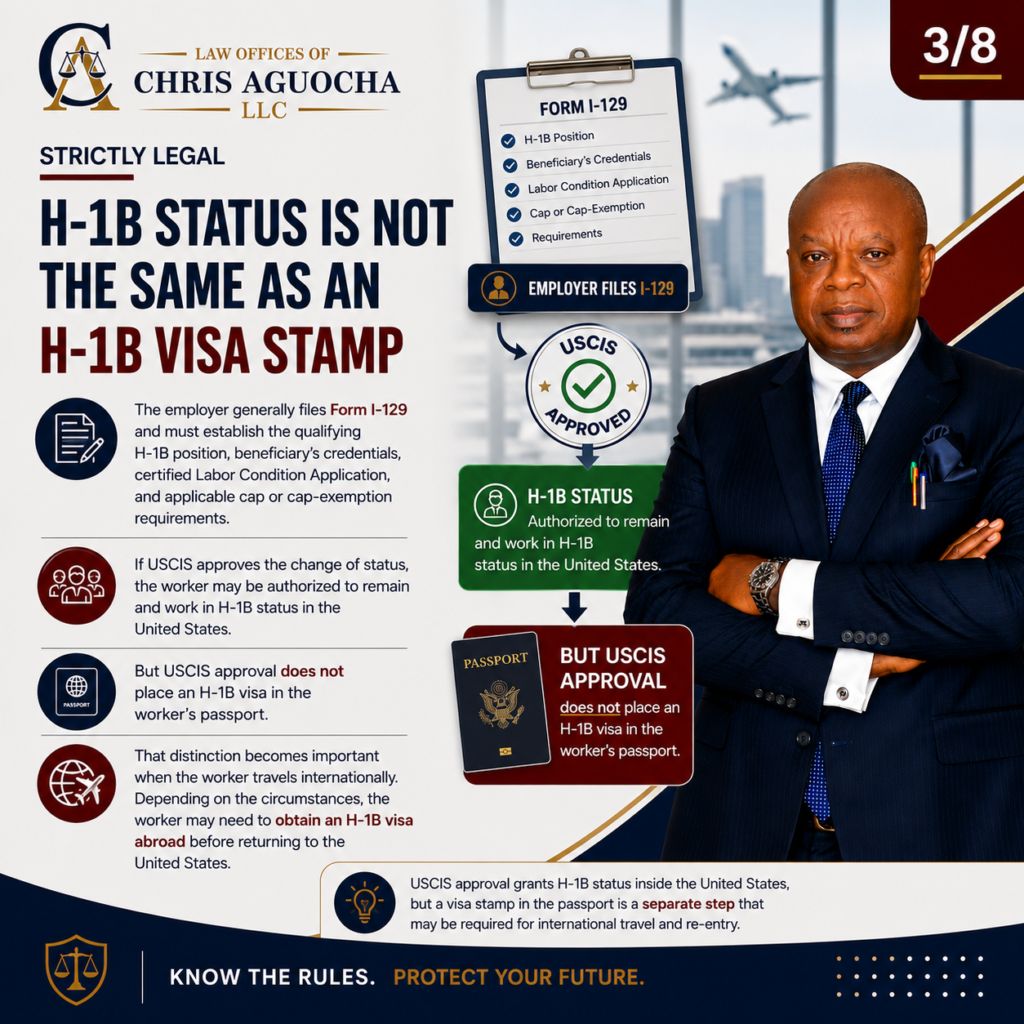
H-1B Status Is Not the Same as an H-1B Visa Stamp
The employer generally files Form I-129 and must establish the qualifying H-1B position, beneficiary’s credentials, certified Labor Condition Application, and applicable cap or cap-exemption requirements.
If USCIS approves the change of status, the worker may be authorized to remain and work in H-1B status in the United States.
But USCIS approval does not place an H-1B visa in the worker’s passport.
That distinction becomes important when the worker travels internationally. Depending on the circumstances, the worker may need to obtain an H-1B visa abroad before returning to the United States.
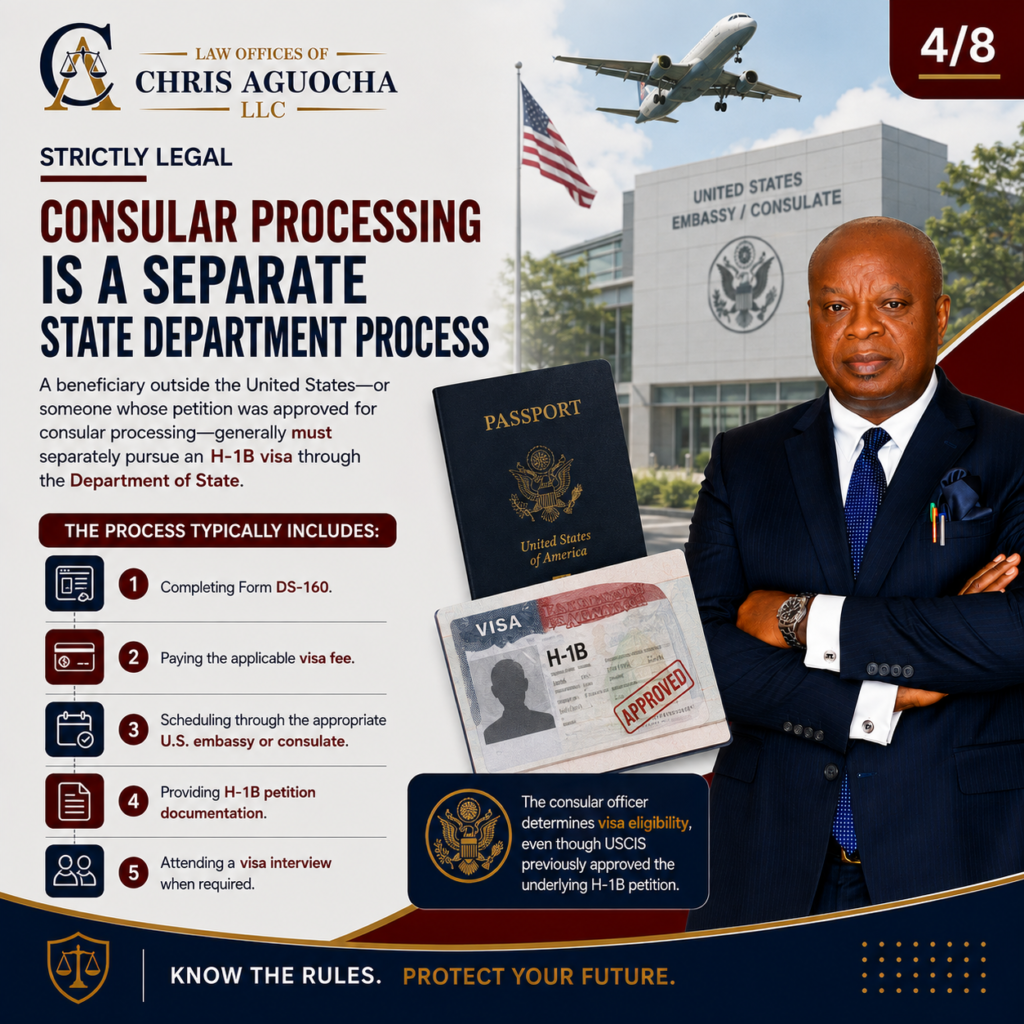
Consular Processing Is a Separate State Department Process
A beneficiary outside the United States—or someone whose petition was approved for consular processing—generally must separately pursue an H-1B visa through the Department of State.
The process typically includes:
• Completing Form DS-160.
• Paying the applicable visa fee.
• Scheduling through the appropriate U.S. embassy or consulate.
• Providing H-1B petition documentation.
• Attending a visa interview when required.
The consular officer determines visa eligibility, even though USCIS previously approved the underlying H-1B petition.
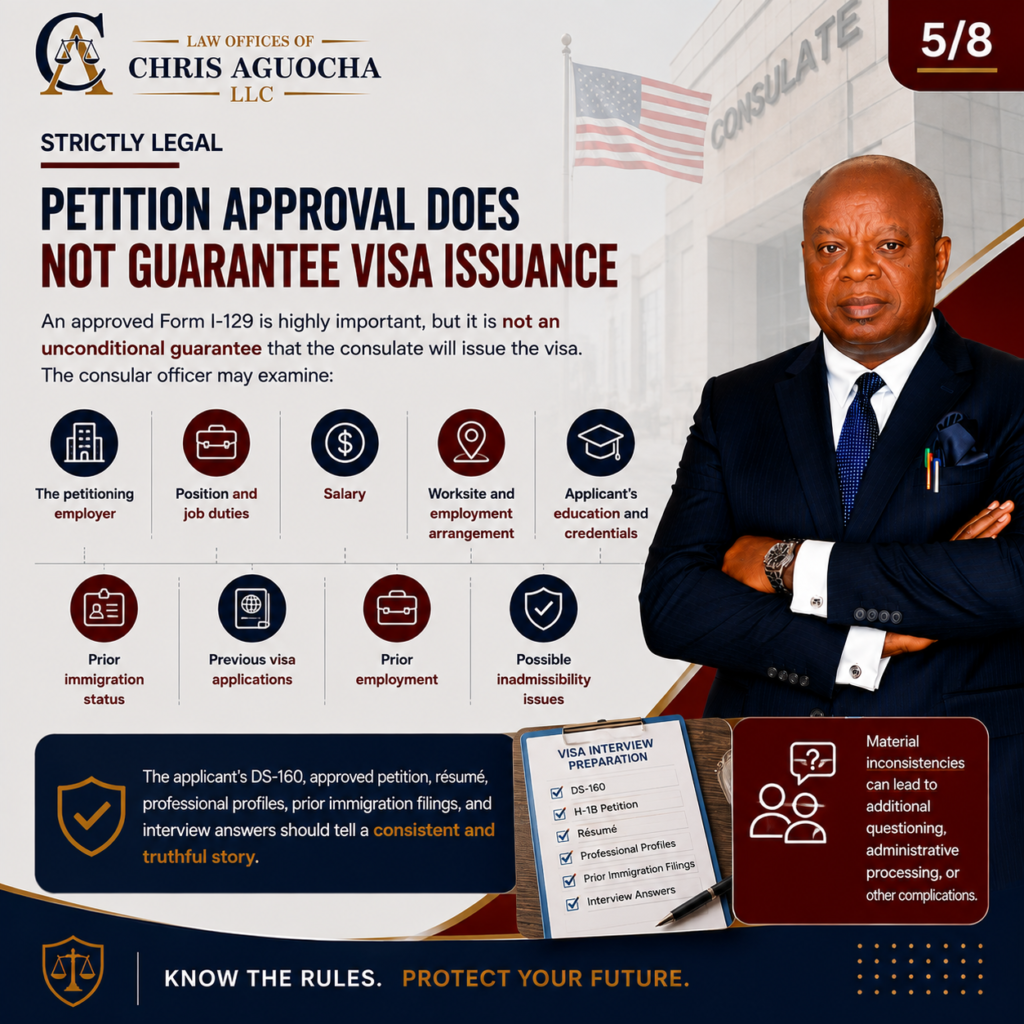
Petition Approval Does Not Guarantee Visa Issuance
An approved Form I-129 is highly important, but it is not an unconditional guarantee that the consulate will issue the visa.
The officer may examine:
• The petitioning employer.
• Position and job duties.
• Salary.
• Worksite and employment arrangement.
• Applicant’s education and credentials.
• Prior immigration status.
• Previous visa applications.
• Prior employment.
• Possible inadmissibility issues.
The applicant’s DS-160, approved petition, résumé, professional profiles, prior immigration filings, and interview answers should tell a consistent and truthful story.
Material inconsistencies can lead to additional questioning, administrative processing, or other complications.
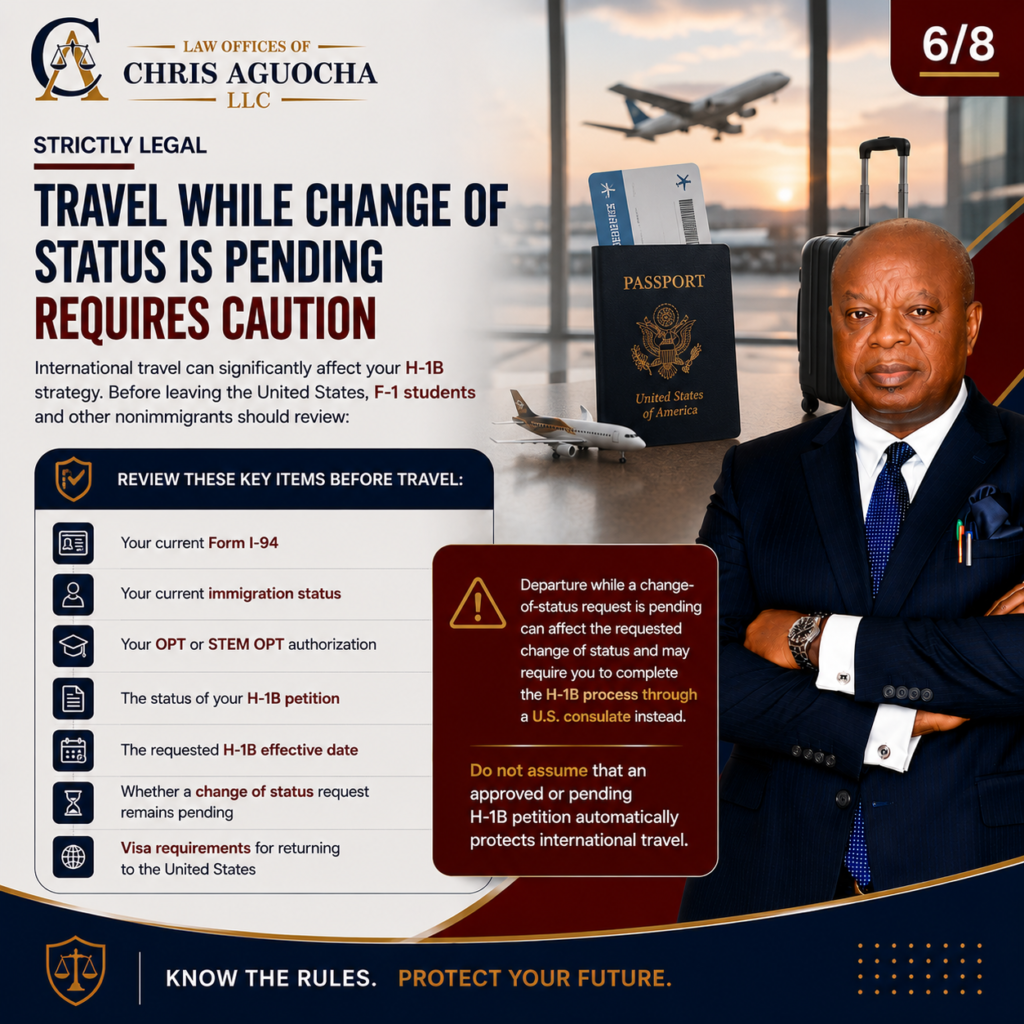
Travel While Change of Status Is Pending Requires Caution
International travel can significantly affect the strategy.
Before leaving the United States, F-1 students and other nonimmigrants should review:
• Current Form I-94.
• Current immigration status.
• OPT or STEM OPT authorization.
• H-1B petition status.
• Requested H-1B effective date.
• Whether change of status remains pending.
• Visa requirements for returning.
Departure while a change-of-status request is pending can affect the requested change of status and may require the worker to complete the H-1B process through a U.S. consulate instead.
Do not assume that an approved or pending H-1B petition automatically protects international travel.
Bottom Lines
• H-1B status inside the United States and an H-1B visa issued abroad are legally different.
• An eligible F-1 student may obtain H-1B change of status through USCIS without first attending a consular visa interview.
• USCIS approval of Form I-129 does not place an H-1B visa stamp in the passport.
• International travel may require H-1B visa processing before the worker can return.
• Consular officers may review the employer, job duties, salary, credentials, immigration history, and other eligibility issues.
• The DS-160, H-1B petition, résumé, public professional information, and interview testimony should be accurate and consistent.
• International travel should be reviewed carefully while an H-1B change-of-status request is pending.
Planning an H-1B Filing or Visa Interview?
Before filing an H-1B change of status, traveling for visa stamping, or attending a consular interview, consider having the petition, current immigration status, employment arrangement, prior filings, and travel history reviewed. An avoidable inconsistency or poorly timed departure can complicate an otherwise approvable case.
Law Offices of Chris Aguocha LLC
Office: 301-322-1304
Cell: 240-470-4364
Email: chris@aguochalawyer.com
Disclaimer: This article is for general informational purposes only and does not constitute legal advice or create an attorney-client relationship. H-1B requirements, visa-processing procedures, interview rules, and travel policies may change. Individual cases should be evaluated based on their specific facts and current law.
