
Traveling to the United States for legitimate medical treatment can be a recognized purpose for B-2 visitor classification. But medical need alone does not guarantee a visa or admission. The patient must still establish eligibility for visitor status, comply with any current nationality-based restrictions, demonstrate the ability to pay for treatment and living expenses, and leave—or timely seek an authorized extension—before the permitted stay expires.
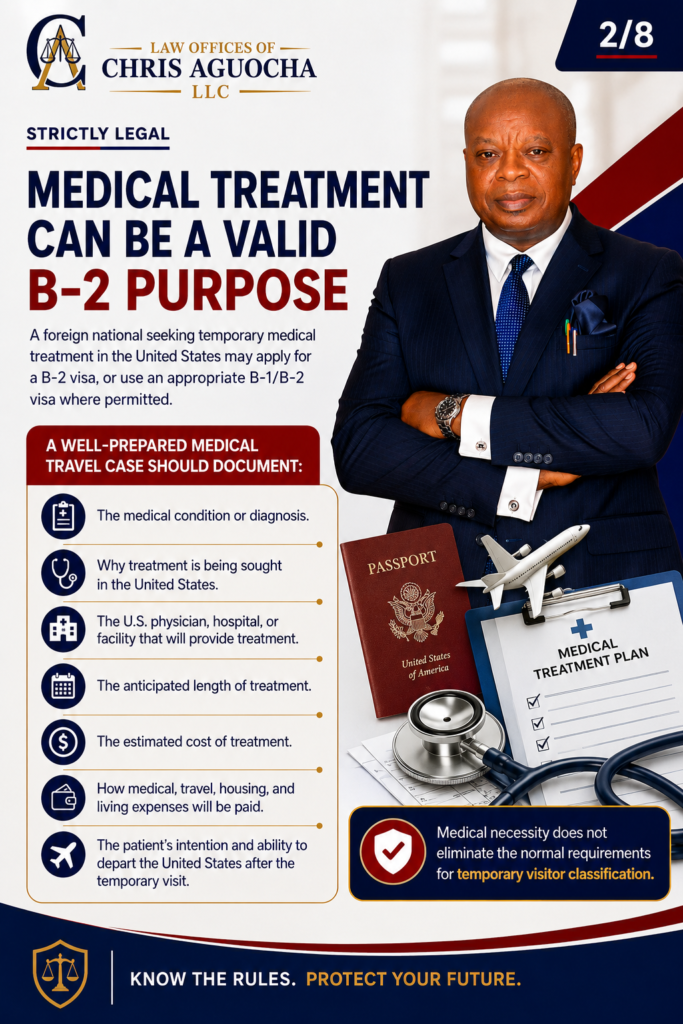
Medical Treatment Can Be a Valid B-2 Purpose
A foreign national seeking temporary medical treatment in the United States may apply for a B-2 visa, or use an appropriate B-1/B-2 visa where permitted.
A well-prepared medical travel case should generally document:
• The medical condition or diagnosis.
• Why treatment is being sought in the United States.
• The U.S. physician, hospital, or facility that will provide treatment.
• The anticipated length of treatment.
• The estimated cost of treatment.
• How medical, travel, housing, and living expenses will be paid.
• The patient’s intention and ability to depart the United States after the temporary visit.
Medical necessity does not eliminate the normal requirements for temporary visitor classification.
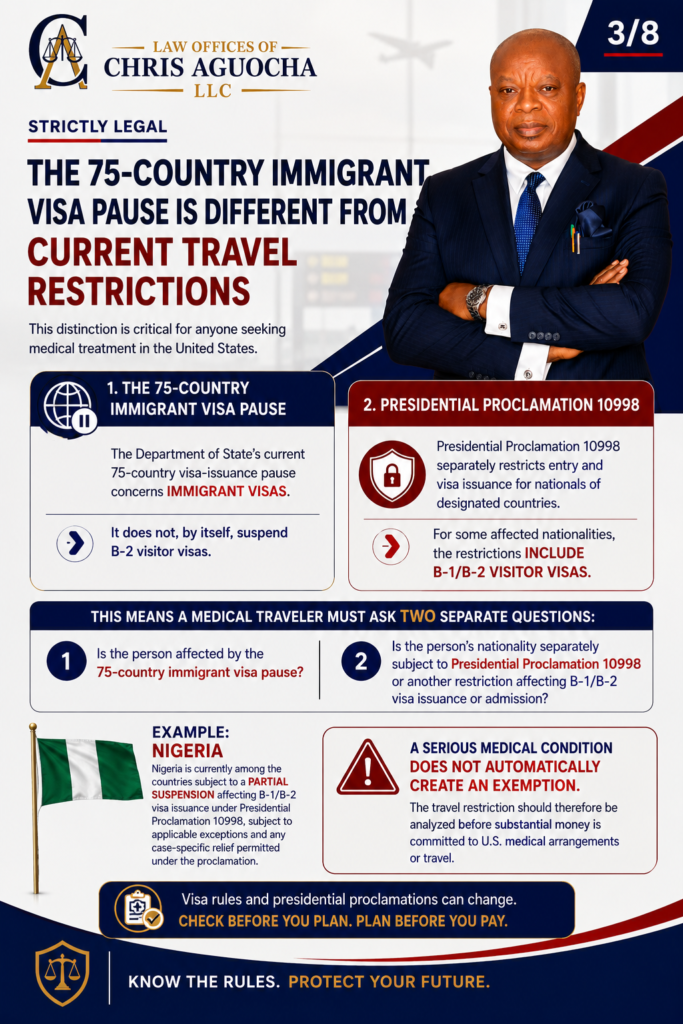
The 75-Country Immigrant Visa Pause Is Different From the Current Travel Restrictions
This distinction is critical.
The Department of State’s current 75-country visa-issuance pause concerns immigrant visas. It does not, by itself, suspend B-2 visitor visas.
However, Presidential Proclamation 10998 separately restricts entry and visa issuance for nationals of designated countries. For some affected nationalities, the restrictions include B-1/B-2 visitor visas.
This means a medical traveler must ask two separate questions:
First: Is the person affected by the 75-country immigrant visa pause?
Second: Is the person’s nationality separately subject to Presidential Proclamation 10998 or another restriction affecting B-1/B-2 visa issuance or admission?
For example, Nigeria is currently among the countries subject to a partial suspension affecting B-1/B-2 visa issuance under Presidential Proclamation 10998, subject to applicable exceptions and any case-specific relief permitted under the proclamation.
A serious medical condition does not automatically create an exemption. The travel restriction should therefore be analyzed before substantial money is committed to U.S. medical arrangements or travel.
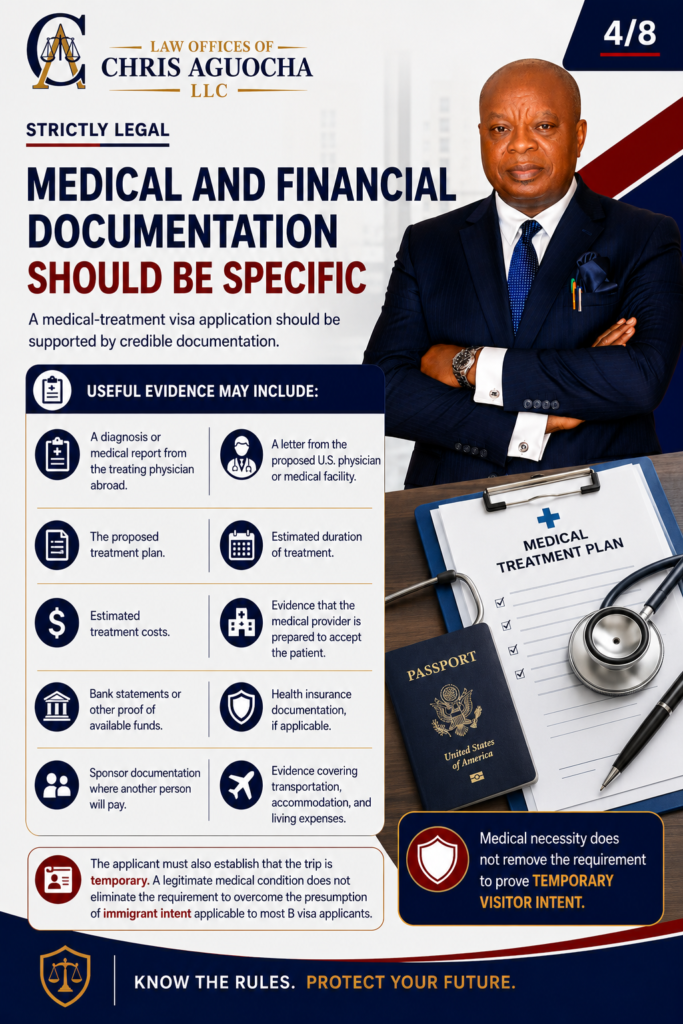
Medical and Financial Documentation Should Be Specific
A medical-treatment visa application should be supported by credible documentation.
Depending on the case, useful evidence may include:
• A diagnosis or medical report from the treating physician abroad.
• A letter from the proposed U.S. physician or medical facility.
• The proposed treatment plan.
• Estimated duration of treatment.
• Estimated treatment costs.
• Evidence that the medical provider is prepared to accept the patient.
• Bank statements or other proof of available funds.
• Health insurance documentation, if applicable.
• Sponsor documentation where another person will pay.
• Evidence covering transportation, accommodation, and living expenses.
The applicant must also establish that the trip is temporary. A legitimate medical condition does not eliminate the requirement to overcome the presumption of immigrant intent applicable to most B visa applicants.
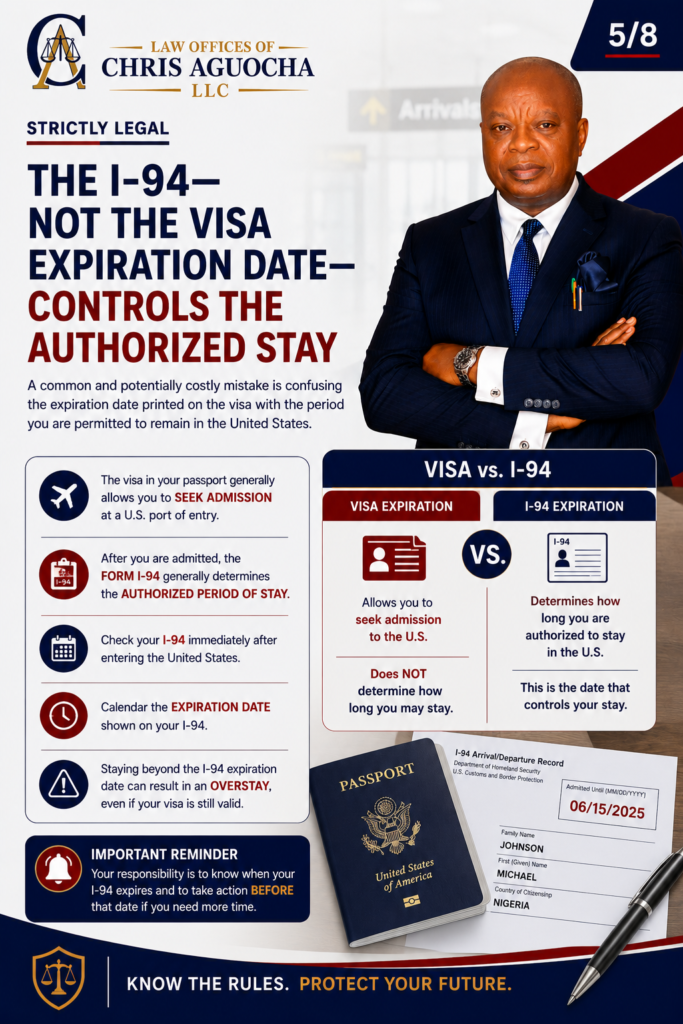
The I-94—not the Visa Expiration Date—Controls the Authorized Stay
A common and potentially costly mistake is confusing the expiration date printed on the visa with the period the traveler is permitted to remain in the United States.
The visa generally permits the traveler to seek admission at a U.S. port of entry.
After admission, the Form I-94 generally determines the authorized period of stay.
A patient should therefore check the I-94 immediately after entering the United States and calendar the expiration date.
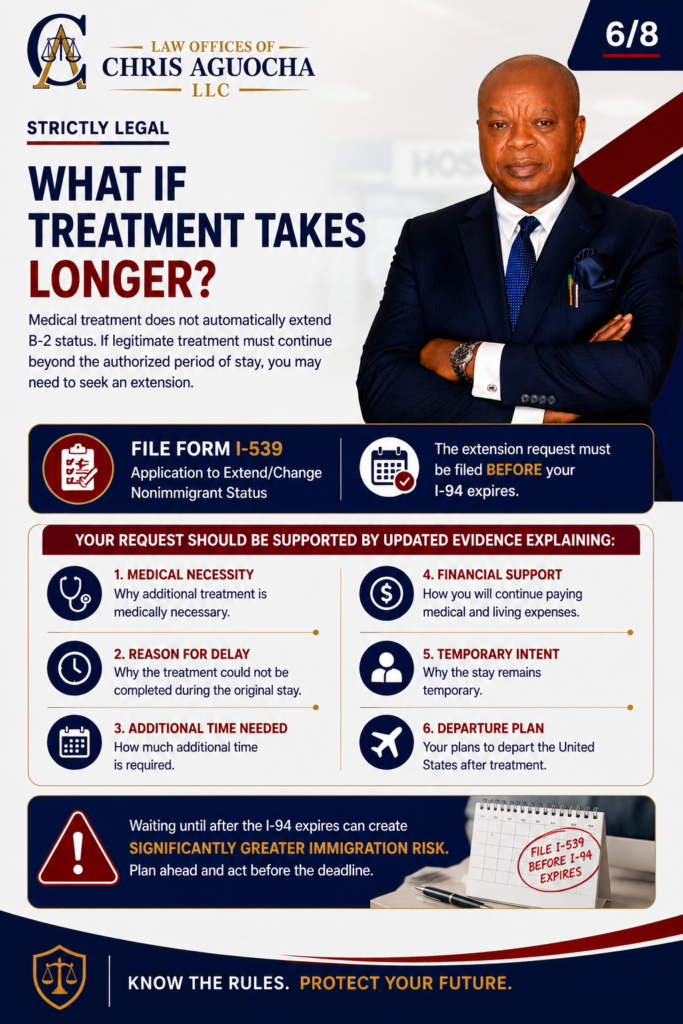
What Happens If Treatment Takes Longer Than Expected?
Medical treatment does not automatically extend B-2 status.
If legitimate treatment must continue beyond the authorized period of stay, the patient may need to seek an extension by filing Form I-539, Application to Extend/Change Nonimmigrant Status, before the I-94 expires.
The extension request should be supported by updated evidence explaining:
• Why additional treatment is medically necessary.
• Why the treatment could not be completed during the original stay.
• How much additional time is required.
• How the patient will continue paying medical and living expenses.
• Why the stay remains temporary.
• The patient’s plans to depart after treatment.
Waiting until after the I-94 expires can create significantly greater immigration risk.
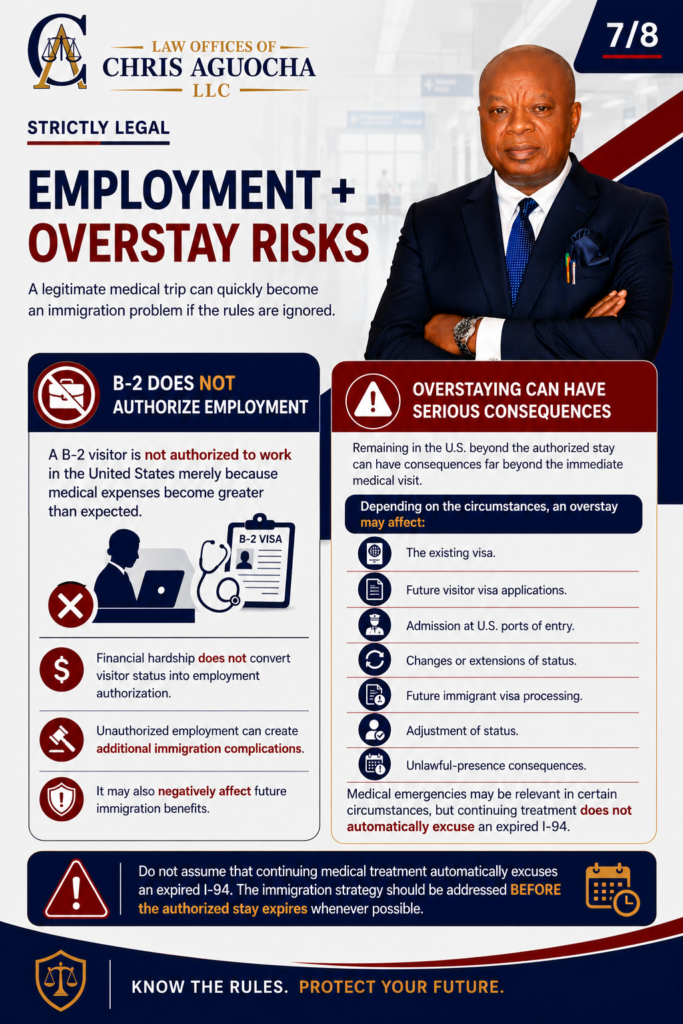
Medical Treatment Does Not Authorize Employment
A B-2 visitor is not authorized to work in the United States merely because medical expenses become greater than expected.
Financial hardship does not convert visitor status into employment authorization. Unauthorized employment can create additional immigration complications and may affect future immigration benefits.
Overstaying Can Turn a Medical Trip Into an Immigration Problem
Remaining in the United States beyond the authorized stay can have consequences far beyond the immediate medical visit.
Depending on the circumstances, an overstay may affect:
• The existing visa.
• Future visitor visa applications.
• Admission at U.S. ports of entry.
• Changes or extensions of status.
• Future immigrant visa processing.
• Adjustment of status.
• Unlawful-presence consequences.
Medical emergencies may be relevant in certain circumstances, but a patient should not assume that continuing treatment automatically excuses an expired I-94.
The immigration strategy should be addressed before the authorized stay expires whenever possible.
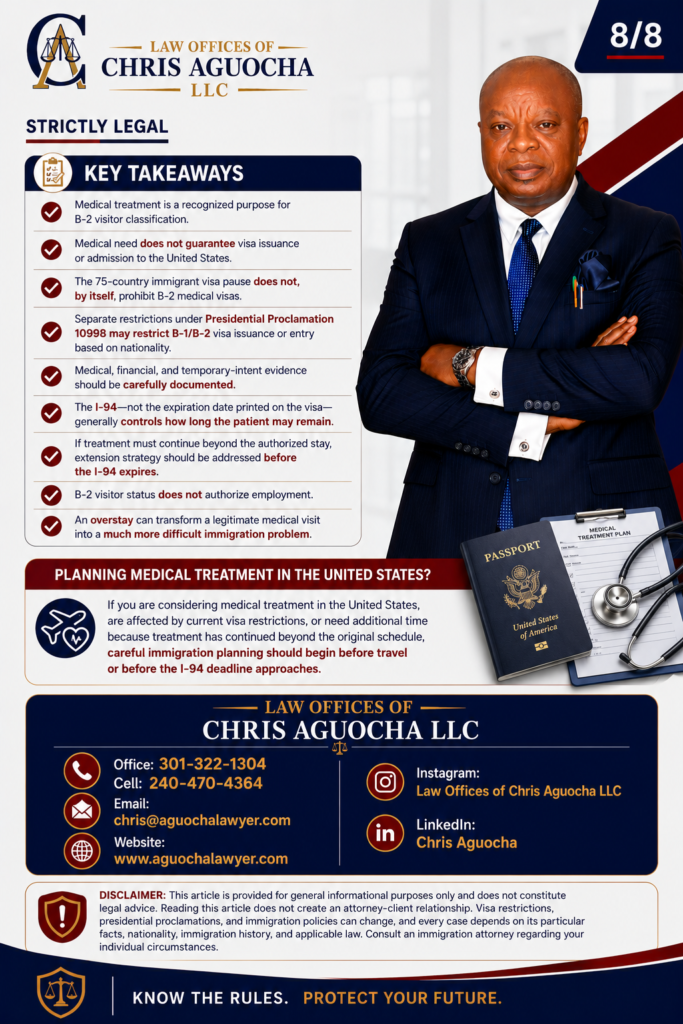
Key Takeaways
• Medical treatment is a recognized purpose for B-2 visitor classification.
• Medical need does not guarantee visa issuance or admission to the United States.
• The 75-country immigrant visa pause does not, by itself, prohibit B-2 medical visas.
• Separate restrictions under Presidential Proclamation 10998 may restrict B-1/B-2 visa issuance or entry based on nationality.
• Medical, financial, and temporary-intent evidence should be carefully documented.
• The I-94—not the expiration date printed on the visa—generally controls how long the patient may remain.
• If treatment must continue beyond the authorized stay, extension strategy should be addressed before the I-94 expires.
• B-2 visitor status does not authorize employment.
• An overstay can transform a legitimate medical visit into a much more difficult immigration problem.
Planning Medical Treatment in the United States?
If you are considering medical treatment in the United States, are affected by current visa restrictions, or need additional time because treatment has continued beyond the original schedule, careful immigration planning should begin before travel or before the I-94 deadline approaches.
Law Offices of Chris Aguocha LLC
Office: 301-322-1304
Cell: 240-470-4364
Email: chris@aguochalawyer.com
Disclaimer: This article is provided for general informational purposes only and does not constitute legal advice. Reading this article does not create an attorney-client relationship. Visa restrictions, presidential proclamations, and immigration policies can change, and every case depends on its particular facts, nationality, immigration history, and applicable law. Consult an immigration attorney regarding your individual circumstances.
