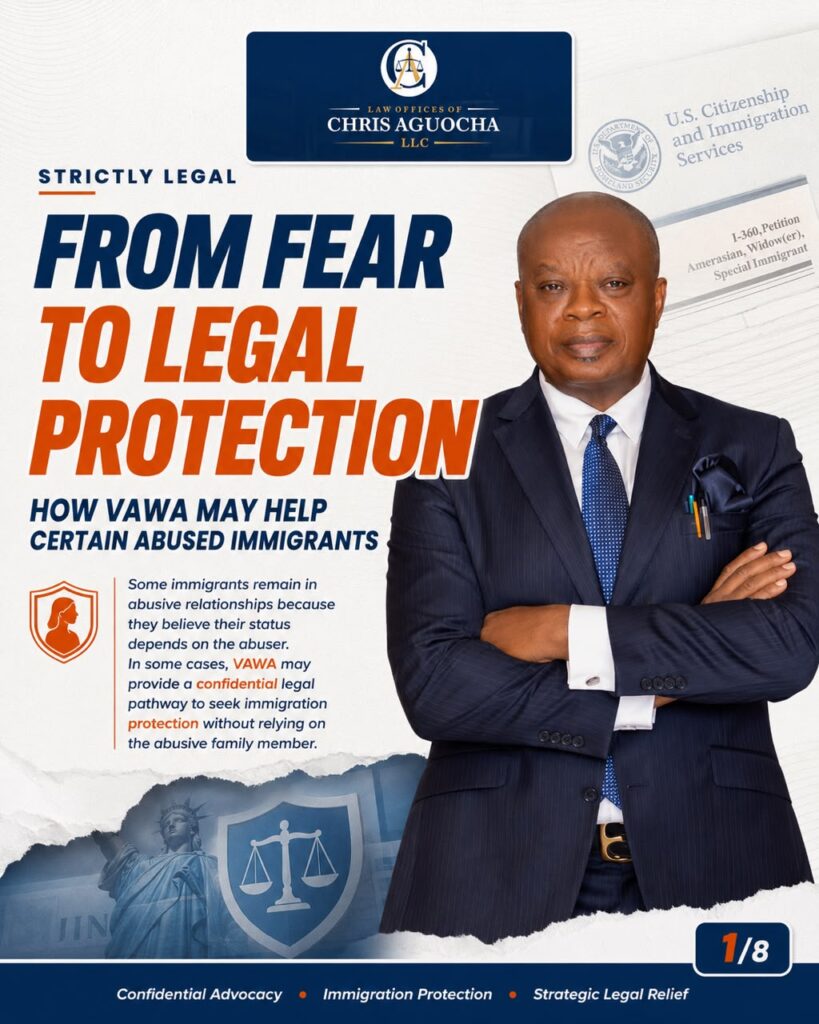
Many immigrants remain in abusive relationships because they believe their immigration status depends entirely on the abusive family member. In some cases, the Violence Against Women Act (VAWA) provides a confidential legal pathway that allows eligible individuals to seek immigration benefits without relying on the abuser.
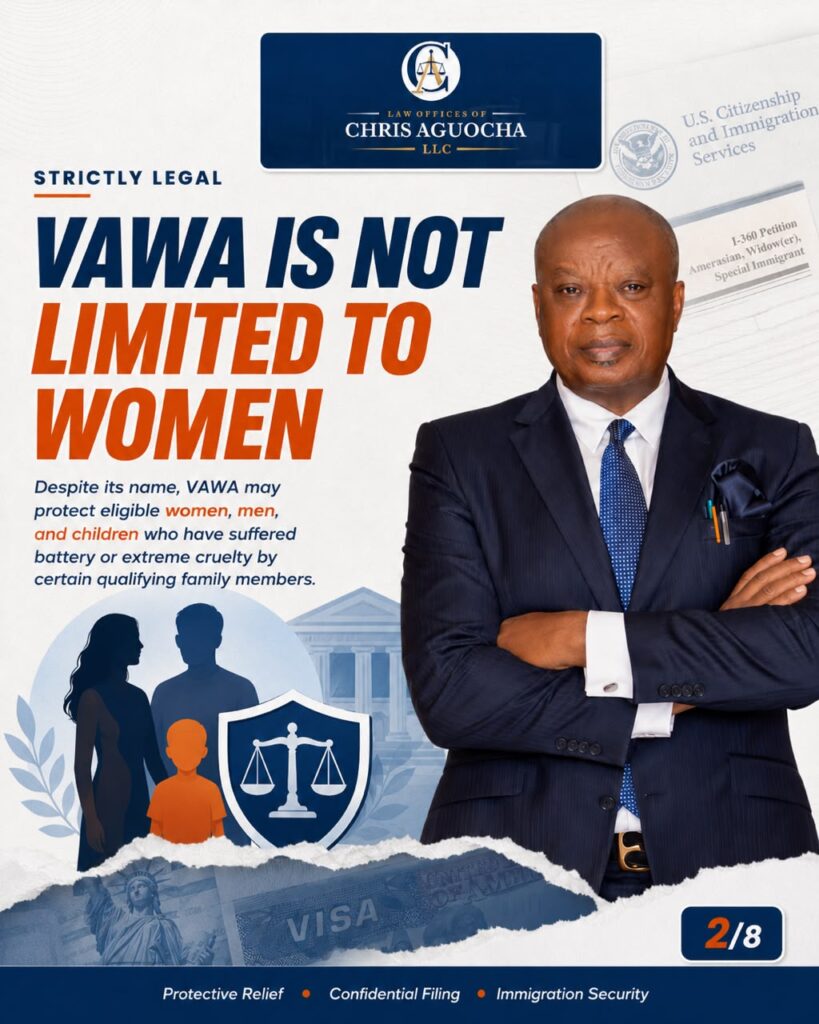
VAWA Is Not Limited to Women
Despite its name, VAWA may protect eligible women, men, and children who have suffered battery or extreme cruelty by certain qualifying family members.
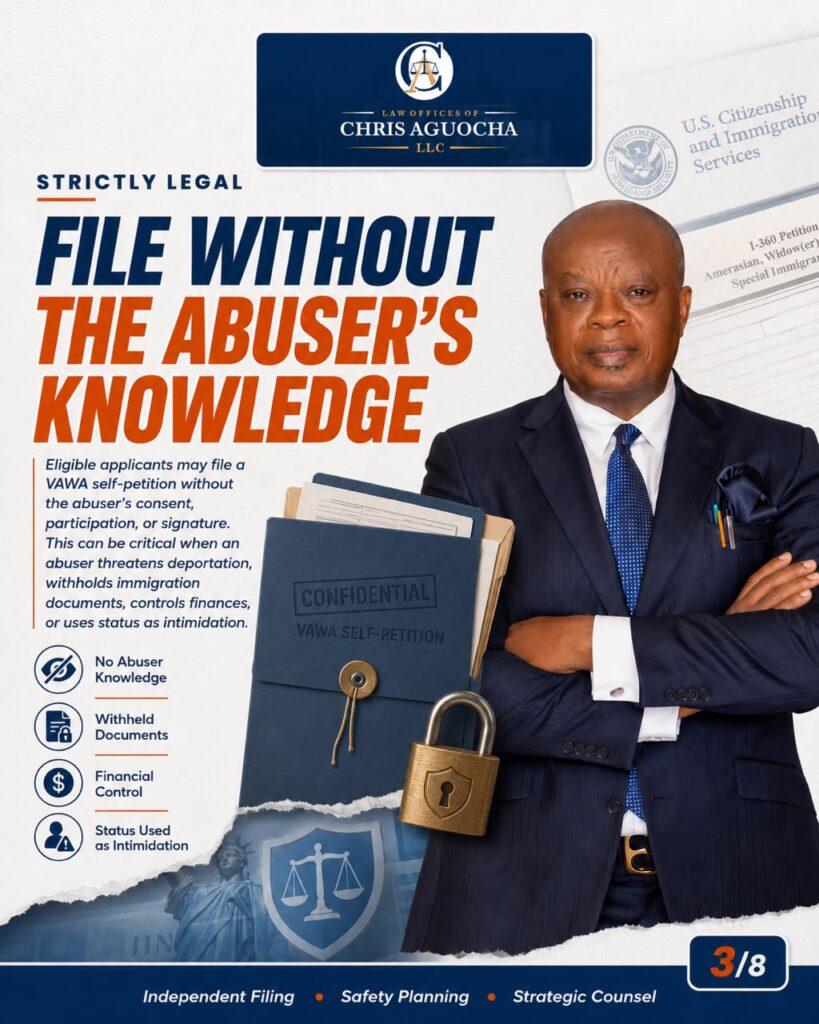
You May Be Able to File Without the Abuser’s Knowledge
Eligible applicants may file a VAWA self-petition without the abuser’s consent, participation, or signature. This can be especially important when an abuser threatens deportation, withholds immigration documents, controls finances, or uses immigration status as a means of intimidation.
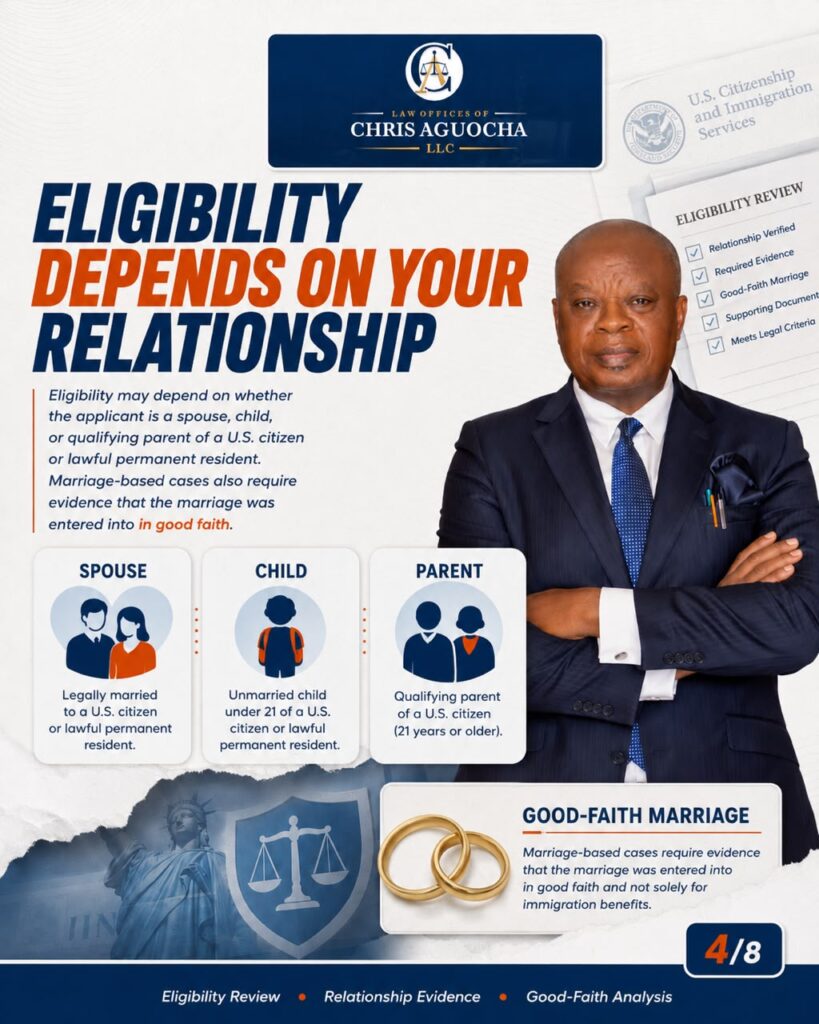
Eligibility Depends on Your Relationship
Not every domestic violence survivor qualifies for VAWA. Eligibility generally depends on the relationship between the applicant and the abuser, including certain:
• Spouses of U.S. citizens or lawful permanent residents.
• Children of U.S. citizens or lawful permanent residents.
• Parents of U.S. citizen sons or daughters who are at least 21 years old.
Marriage-based cases also require evidence that the marriage was entered into in good faith.
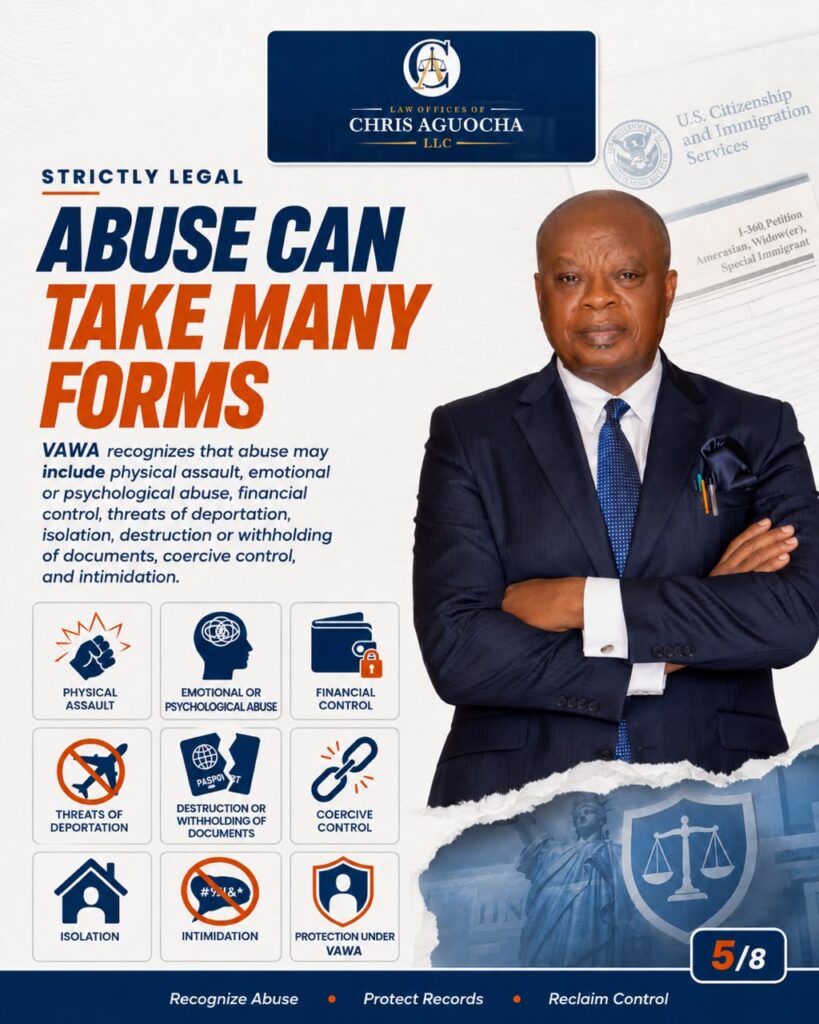
Abuse Can Take Many Forms
VAWA recognizes that abuse is not limited to physical violence. Depending on the facts, abuse may include:
• Physical assault.
• Emotional or psychological abuse.
• Financial control.
• Threats of deportation.
• Isolation from family and friends.
• Destruction or withholding of important documents.
• Coercive control and intimidation.
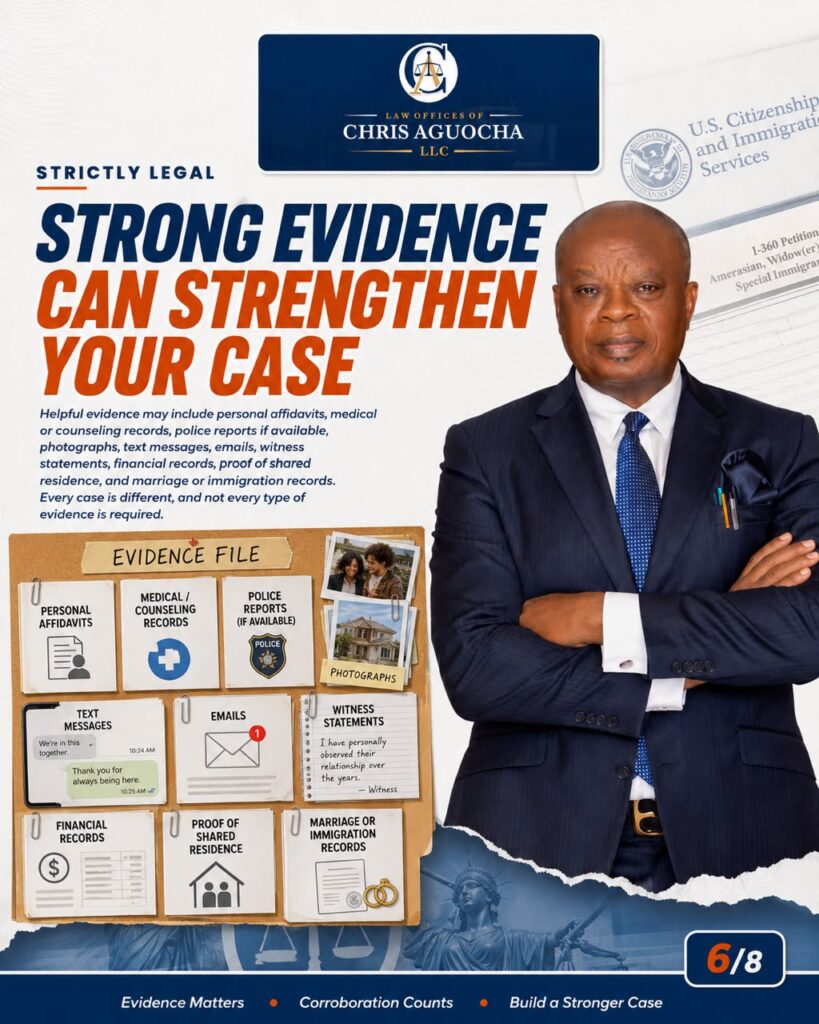
Strong Evidence Can Strengthen Your Case
Evidence may include:
• Personal affidavits.
• Medical or counseling records.
• Police reports, if available.
• Photographs.
• Text messages and emails.
• Witness statements.
• Financial records.
• Proof of shared residence.
• Marriage and immigration records.
Every case is different, and not every type of evidence is required.
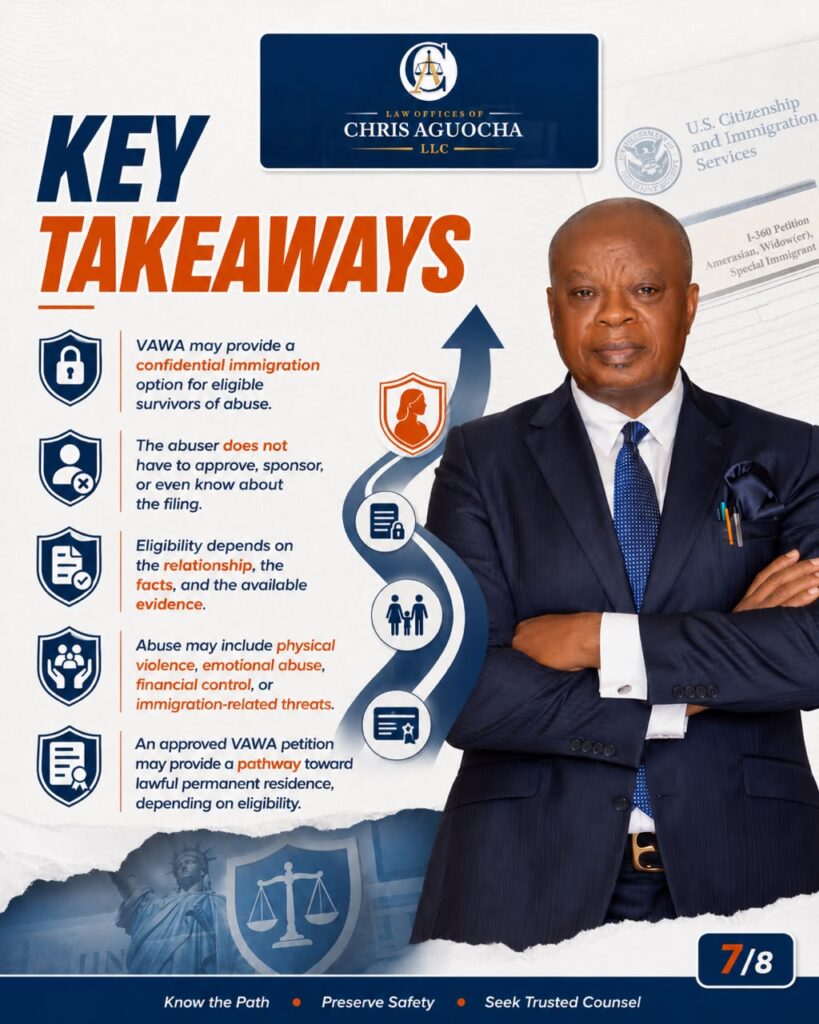
Key Takeaways
- VAWA may provide a confidential immigration option for eligible survivors of abuse.
- The abuser does not have to approve, sponsor, or even know about the filing.
- Eligibility depends on the relationship, the facts, and the available evidence.
- Abuse may include physical violence, emotional abuse, financial control, or immigration-related threats.
- An approved VAWA petition may provide a pathway toward lawful permanent residence, depending on the individual’s eligibility.
Need Confidential Immigration Assistance?
Law Offices of Chris Aguocha LLC provides compassionate and experienced legal representation for VAWA self-petitions, family-based immigration, waivers, adjustment of status, and other immigration matters.
Office: 301-322-1304
Cell: 240-470-4364
Email: chris@aguochalawyer.com
Disclaimer: This article is provided for general informational purposes only and does not constitute legal advice. Reading this article does not create an attorney-client relationship. Every immigration case is unique, and you should consult an attorney regarding your specific legal circumstances.
