



Many parents assume that a child’s age alone protects them from immigration enforcement. While children may receive important legal protections, being a minor does not automatically prevent immigration custody, court proceedings, or other legal consequences.
Children May Still Be Subject to Immigration Proceedings
Depending on the circumstances, a child may be placed in immigration proceedings, transferred to government custody, or released to a qualified sponsor while their immigration case continues.
Every child’s situation should be evaluated individually.
A Child’s Classification Can Affect the Entire Case
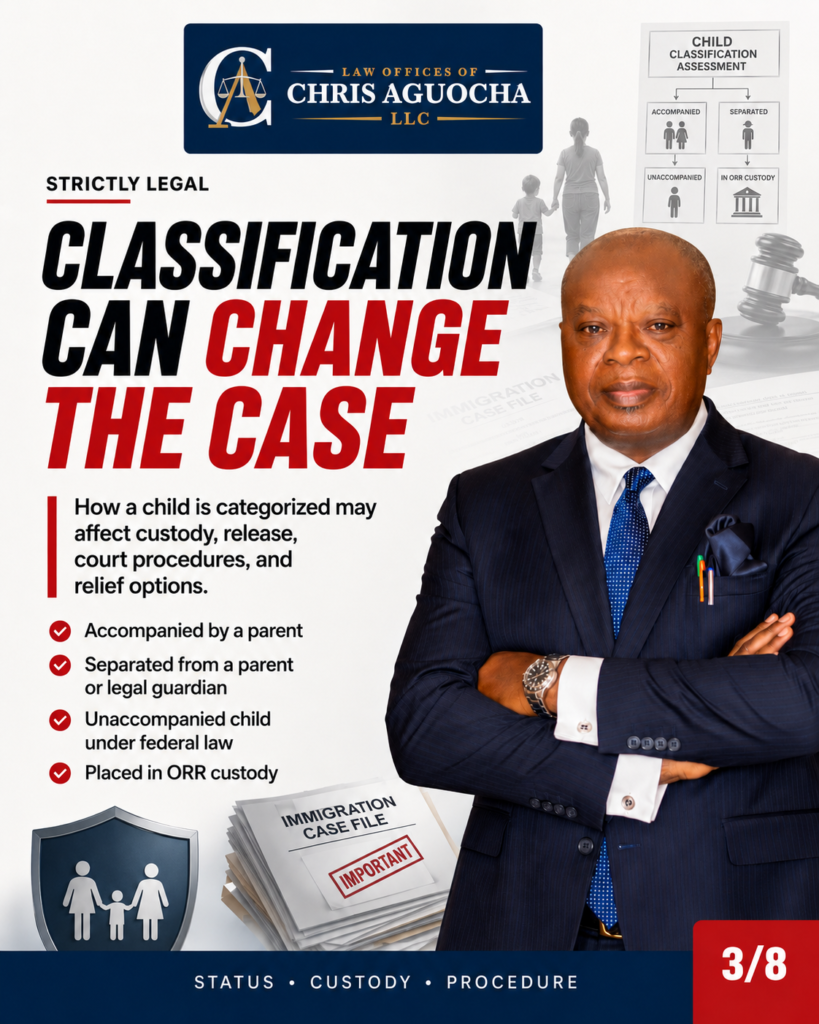
Immigration procedures often depend on how a child is classified, including whether the child is:
• Accompanied by a parent.
• Separated from a parent or legal guardian.
• Considered an unaccompanied child under federal law.
• Placed in the custody of the Office of Refugee Resettlement (ORR).
These classifications may affect custody decisions, release procedures, immigration court proceedings, and available forms of relief.
Every Child’s Immigration Options Are Different
Depending on the facts, potential forms of relief may include:
• Asylum
• Special Immigrant Juvenile Status (SIJS)
• Family-based immigration
• U visas
• T visas
• Other humanitarian protections
Eligibility depends on each child’s individual circumstances, immigration history, and applicable law.
Be Prepared Before an Emergency Occurs
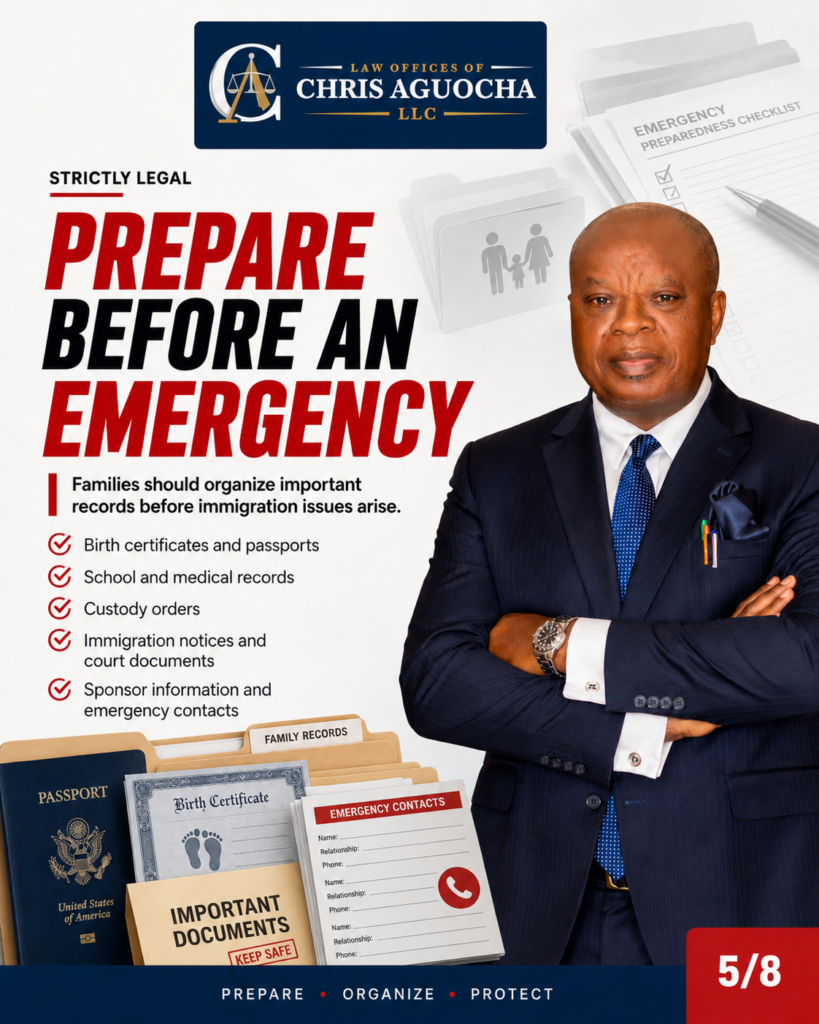
Parents and caregivers should organize important documents, including:
• Birth certificates and passports.
• School and medical records.
• Custody orders, if applicable.
• Immigration notices and court documents.
• Sponsor information and emergency contacts.
Keeping these records readily available can help protect a child’s legal interests if immigration issues arise.
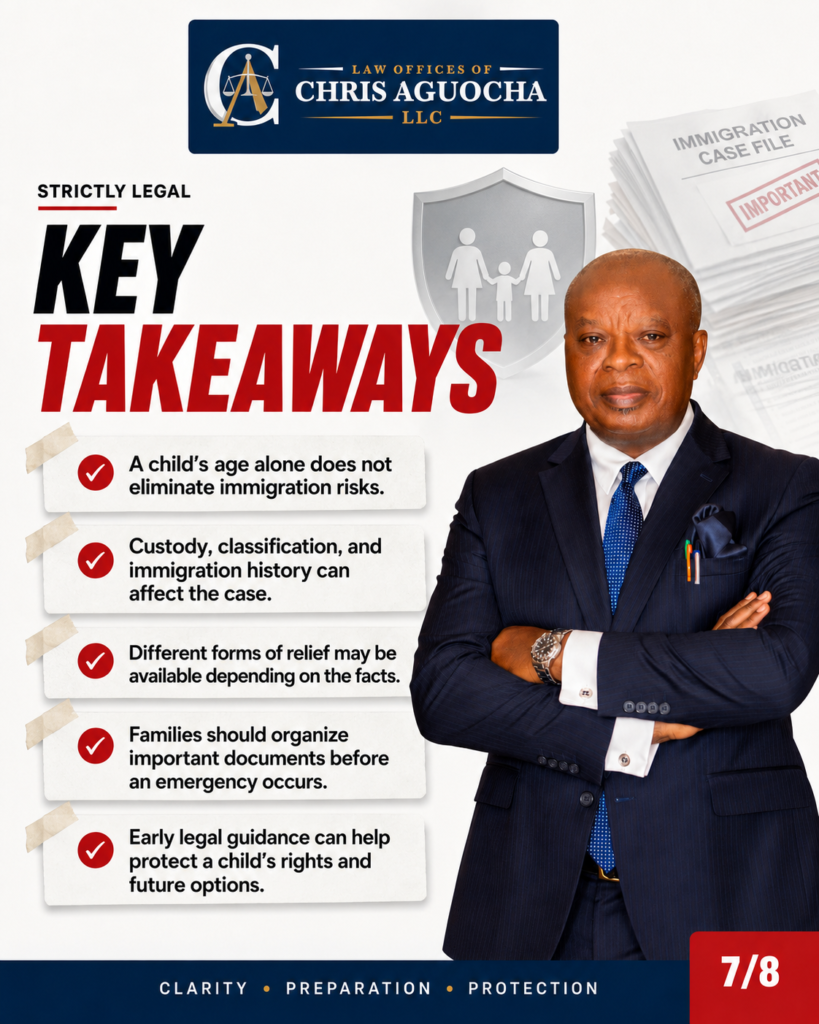
Key Takeaways
• A child’s age alone does not eliminate immigration risks.
• Custody, classification, and immigration history can significantly affect a child’s case.
• Different forms of immigration relief may be available depending on the facts.
• Families should organize important documents before an emergency occurs.
• Early legal guidance can help protect a child’s rights and future immigration options.
Need Immigration Guidance for Your Family?
Law Offices of Chris Aguocha LLC provides experienced legal representation in family-based immigration, asylum, SIJS, VAWA, removal defense, and other humanitarian immigration matters.
Office: 301-322-1304
Cell: 240-470-4364
Email: chris@aguochalawyer.com
Disclaimer: This article is provided for general informational purposes only and does not constitute legal advice. Reading this article does not create an attorney-client relationship. Every immigration matter is unique, and you should consult an attorney regarding your specific legal circumstances.
