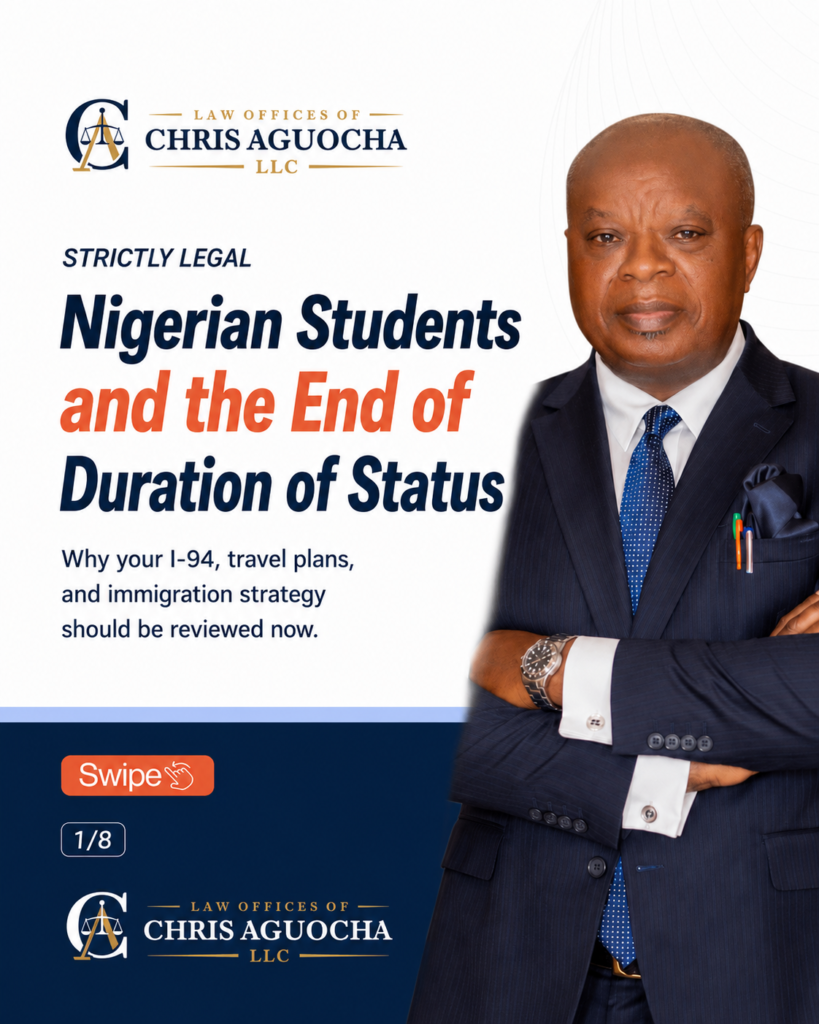




For decades, many F-1 students and J-1 exchange visitors were admitted to the United States for Duration of Status (D/S), allowing them to remain in the country as long as they maintained their status and complied with their academic or exchange program requirements.
Beginning September 15, 2026, however, DHS is replacing the D/S system with fixed periods of admission for F, J, and I nonimmigrants. This change makes the I-94 “Admit Until Date” one of the most important immigration deadlines students must monitor.
Your I-94 Controls Your Authorized Stay
Many students mistakenly believe that the expiration date on their visa stamp determines how long they may remain in the United States. It generally does not.
The visa allows a person to request admission at a U.S. port of entry. Once admitted, the Form I-94 governs the authorized period of stay.
Students should regularly compare:
• Their Form I-94.
• Form I-20 or DS-2019.
• Passport validity.
• SEVIS record.
• OPT or STEM OPT timeline.
• Planned international travel.
A mismatch between these documents can create significant immigration problems.
International Travel May Change Your Immigration Timeline
The DHS rule contains transition provisions for many students who are already in the United States before the effective date. However, international travel after the rule takes effect may result in admission under the new fixed-period system and the issuance of a new date-specific I-94.
Students enrolled in lengthy degree programs, doctoral research, or extended practical training should carefully evaluate the immigration consequences before leaving the United States.
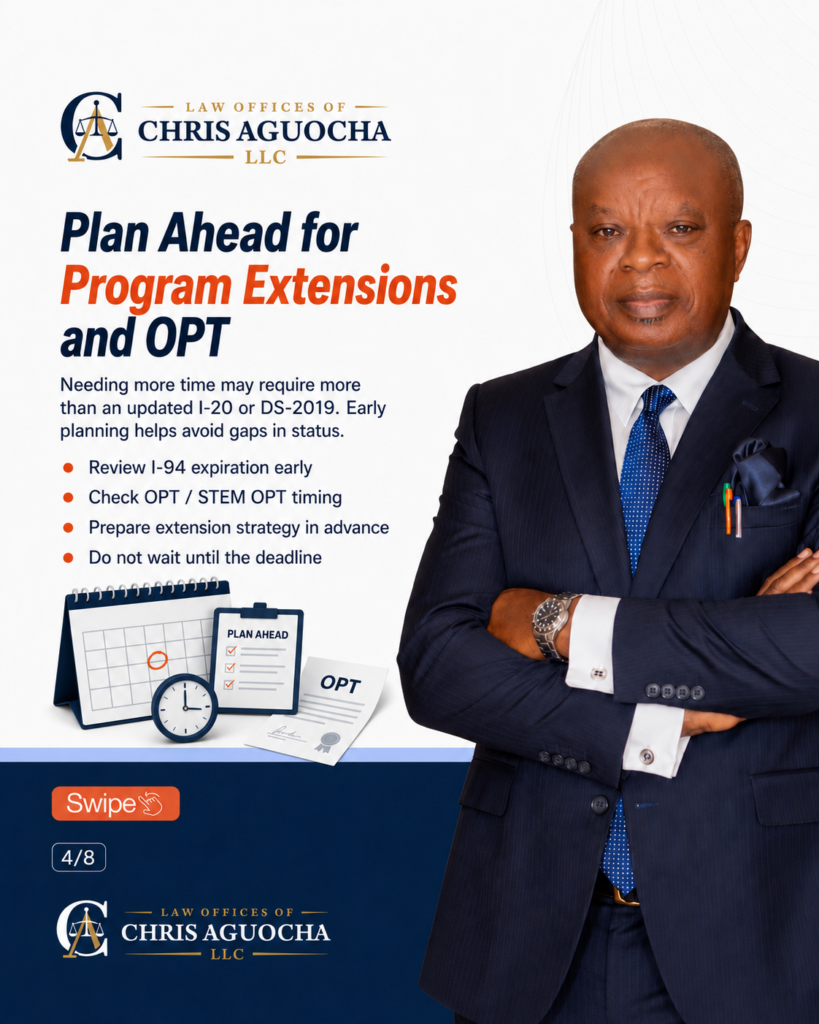
Plan Ahead for Program Extensions and OPT
If additional time will be needed to complete a program, students should begin planning well before the I-94 expires.
Depending on the circumstances, maintaining lawful status may require more than obtaining an updated Form I-20 or DS-2019. Some students may also need to file an application with USCIS for an extension of stay under the new rule. Early planning can help avoid unnecessary gaps in lawful status.
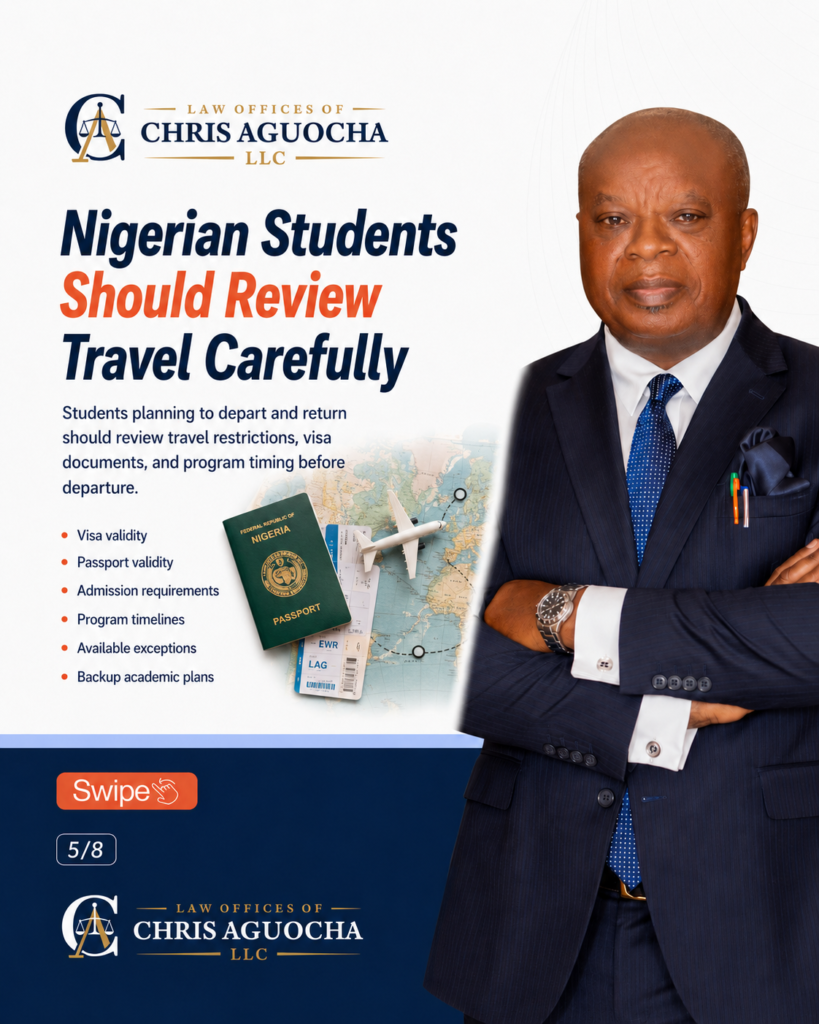
Nigerian Students Should Also Review International Travel Carefully
Nigerian students studying in the United States should evaluate both their immigration status and any current visa issuance or travel restrictions that could affect future international travel.
Students outside the United States—or those planning to depart and return—should review:
• Visa validity.
• Passport validity.
• Admission requirements.
• Program timelines.
• Available exceptions, if any.
• Alternative academic plans if travel becomes difficult.
Careful planning before departure is often far easier than resolving immigration problems after they arise.
Protect Your Future Immigration Options
Missing an I-94 expiration date or failing to maintain lawful status can affect:
• Optional Practical Training (OPT).
• STEM OPT.
• H-1B eligibility.
• Future employment-based immigration.
• Family-based immigration benefits.
• Adjustment of status.
• Consular processing.
Students should maintain complete copies of their I-94 records, Forms I-20 or DS-2019, visa stamps, EAD cards, SEVIS updates, and all immigration filings.
Key Takeaways
• The visa stamp generally does not determine how long you may remain in the United States—the I-94 does.
• Beginning September 15, 2026, many F-1 and J-1 students will receive fixed periods of admission instead of Duration of Status (D/S).
• International travel may affect how the new rules apply and result in a new date-specific I-94.
• Program extensions, OPT, STEM OPT, transfers, and degree changes should be reviewed well before immigration deadlines arise.
• Early legal guidance can help protect your lawful status and long-term immigration goals.
Need Guidance on Your Student Immigration Status?
Law Offices of Chris Aguocha LLC provides experienced representation to international students, exchange visitors, professionals, and families in matters involving F-1 and J-1 status, SEVIS compliance, reinstatement, OPT, STEM OPT, employment-based immigration, and other complex immigration matters.
Office: 301-322-1304
Cell: 240-470-4364
Email: chris@aguochalawyer.com
Disclaimer: This article is provided for general informational purposes only and does not constitute legal advice. Reading this article does not create an attorney-client relationship. Immigration laws and policies change frequently, and every case is unique. You should consult an attorney regarding your specific legal circumstances
