

A collision on I-95, I-695, the Capital Beltway, or another major highway can have life-changing consequences. Although the legal principles governing negligence remain the same, highway crashes often involve more serious injuries, more complex liability issues, and larger insurance claims than routine roadway accidents.
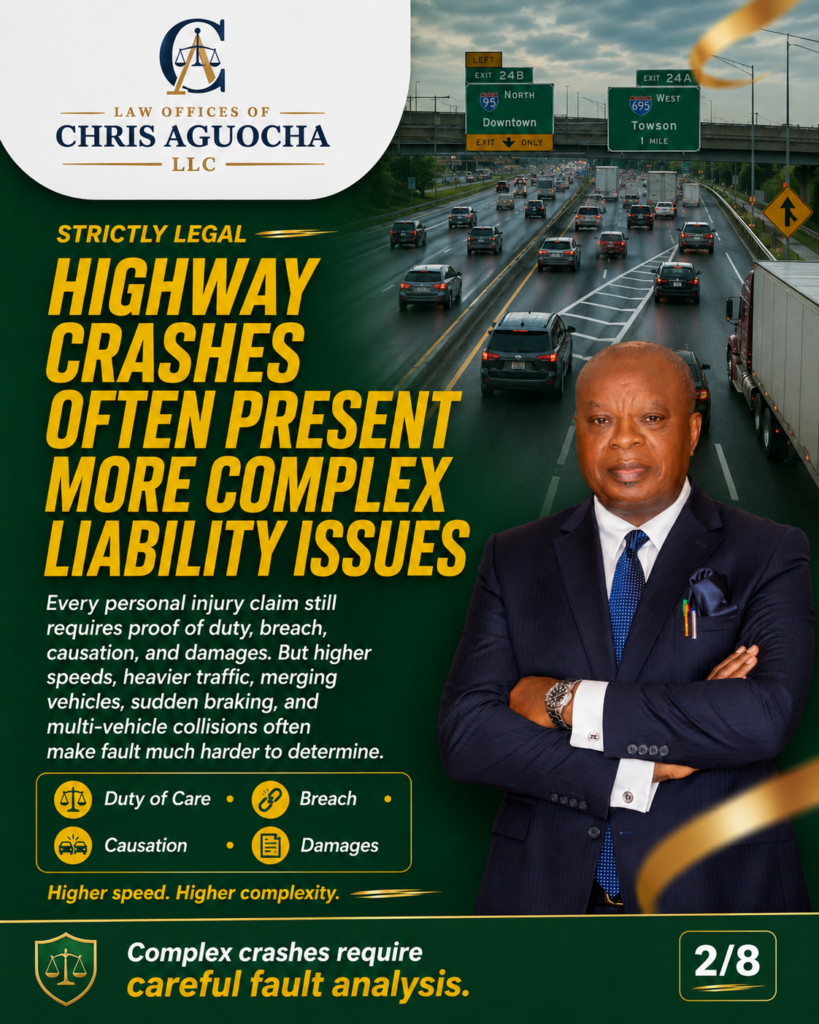
Highway Crashes Often Present More Complex Liability Issues
Every personal injury claim still requires proof of:
• Duty of care.
• Breach of that duty.
• Causation.
• Damages.
However, higher speeds, heavier traffic, merging vehicles, sudden braking, and multi-vehicle collisions can make determining fault far more complicated than in a typical two-car accident.
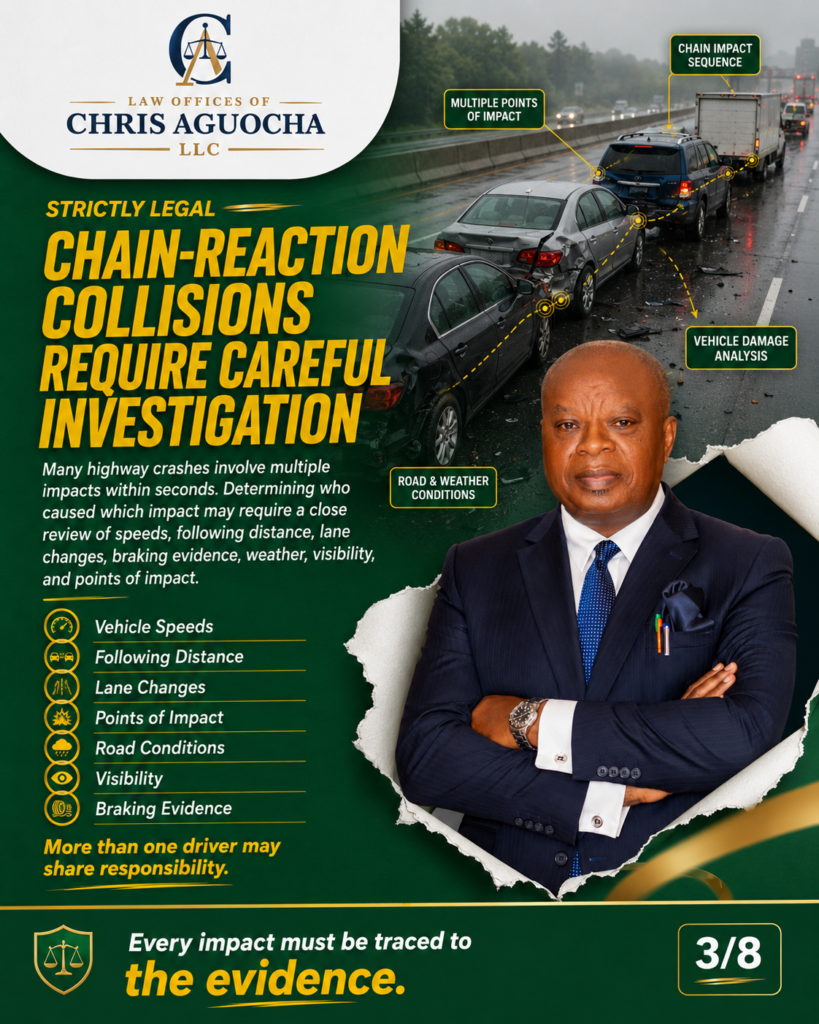
Chain-Reaction Collisions Require Careful Investigation
Many highway accidents involve multiple impacts occurring within seconds.
An investigation may examine:
• Vehicle speeds.
• Following distances.
• Lane changes.
• Points of impact.
• Weather and road conditions.
• Visibility.
• Braking evidence.
• Whether each driver had a reasonable opportunity to avoid the collision.
In a chain-reaction crash, more than one driver may bear responsibility, and determining causation often requires a thorough review of the evidence.
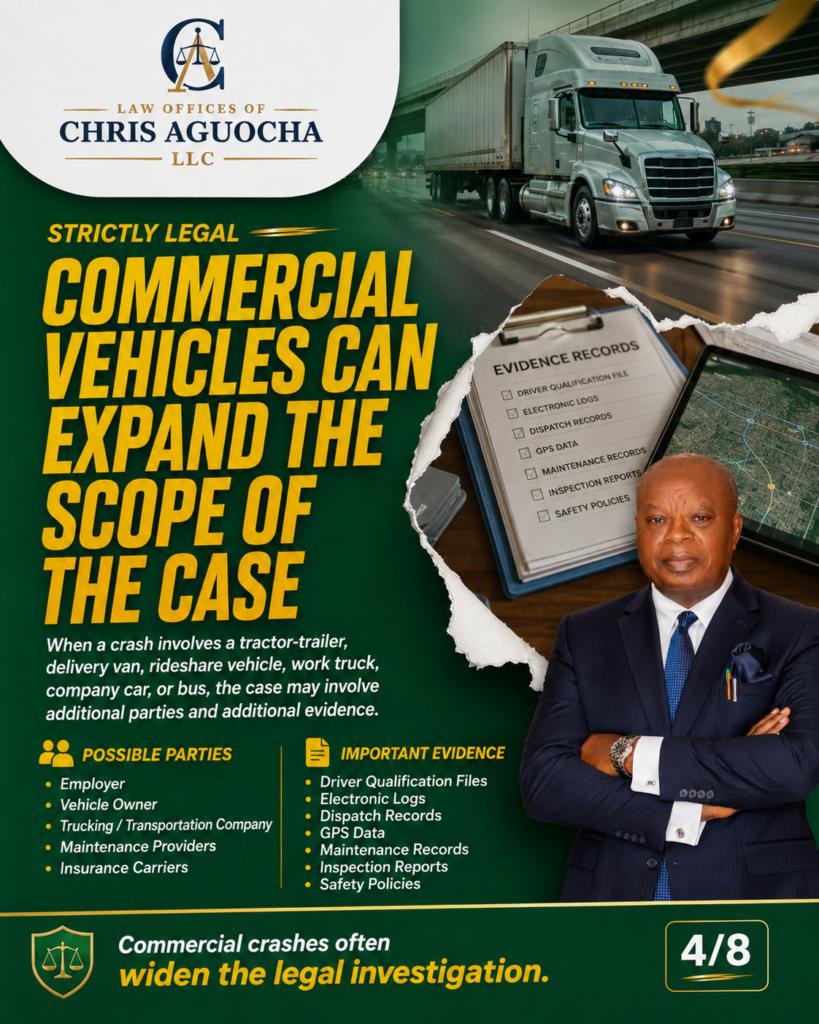
Commercial Vehicles Can Expand the Scope of the Case
When a crash involves a tractor-trailer, delivery vehicle, work truck, rideshare vehicle, company car, or bus, additional parties may become relevant.
Depending on the facts, the investigation may include:
• The employer.
• The vehicle owner.
• A trucking or transportation company.
• Maintenance providers.
• Insurance carriers.
Important evidence may include driver qualification files, electronic logging data, dispatch records, GPS information, maintenance records, inspection reports, and company safety policies. Prompt preservation of this evidence is often critical.
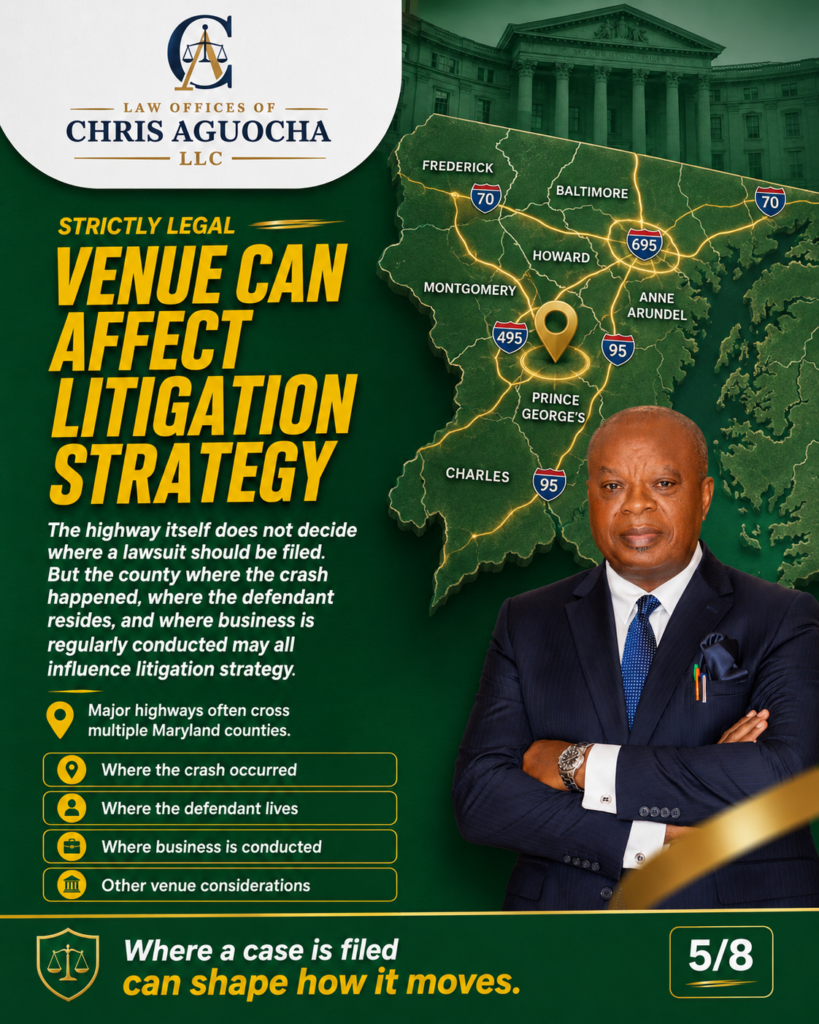
Venue Can Affect Litigation Strategy
The highway itself does not determine where a lawsuit should be filed. However, the county where the collision occurred, where the defendant resides or regularly conducts business, and other venue considerations may influence litigation strategy.
Because major highways often cross multiple Maryland counties, determining the proper venue should be part of the case evaluation from the outset.
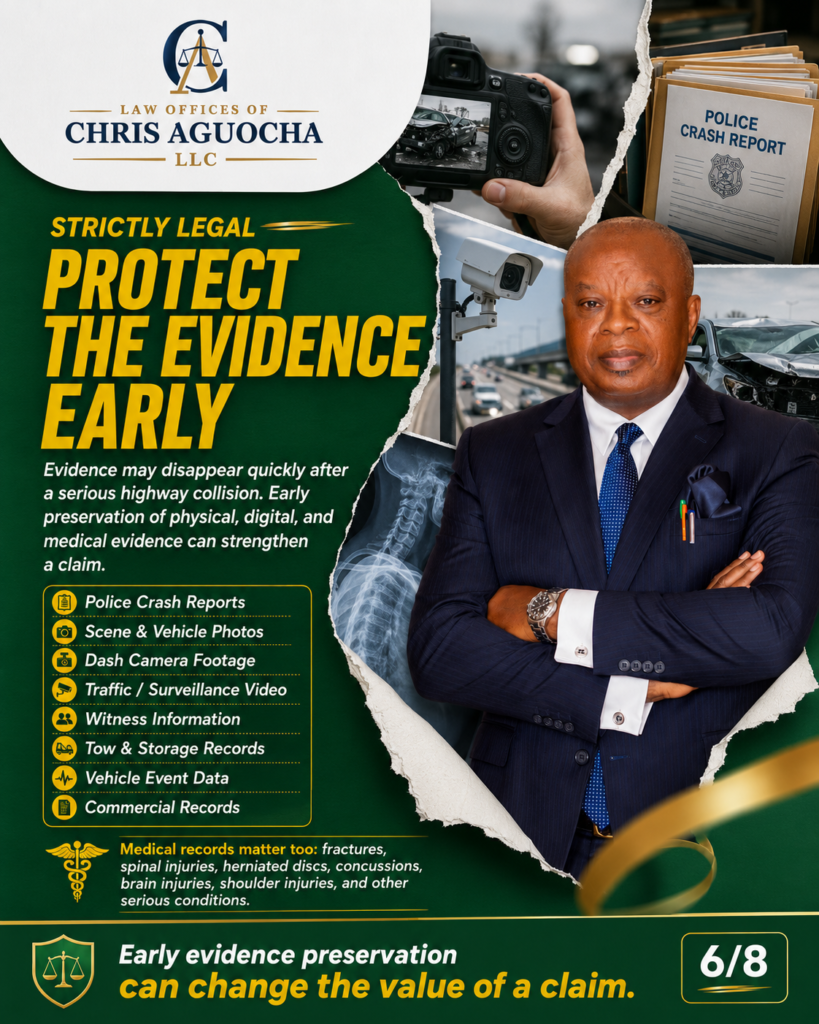
Protect the Evidence Early
Evidence may disappear quickly after a serious highway collision.
Important evidence may include:
• Police crash reports.
• Photographs of the scene and vehicles.
• Dash camera recordings.
• Traffic camera or nearby surveillance footage.
• Witness information.
• Tow and storage records.
• Vehicle event data.
• Commercial vehicle records, when applicable.
Medical evidence is equally important. Highway crashes frequently result in injuries such as fractures, spinal injuries, herniated discs, concussions, traumatic brain injuries, shoulder injuries, and other conditions that may require extensive treatment and long-term care.
Insurance Coverage Should Be Carefully Evaluated
Key Takeaways
• Highway crashes often involve more complex liability issues, more severe injuries, and greater insurance exposure than many other motor vehicle accidents.
• Chain-reaction collisions require careful investigation to determine how each impact occurred and who may be legally responsible.
• Commercial vehicle accidents may involve multiple defendants and additional evidence that should be preserved promptly.
• Venue, insurance coverage, and medical documentation should be evaluated early in the litigation process.
• Prompt legal guidance can help preserve evidence, protect your rights, and strengthen your claim.
Injured in a Highway Accident?
Law Offices of Chris Aguocha LLC represents individuals injured in motor vehicle collisions throughout Maryland, including accidents involving commercial trucks, rideshare vehicles, buses, company vehicles, and multi-vehicle highway crashes. We work to protect our clients’ rights and pursue the compensation they deserve.
Office: 301-322-1304
Cell: 240-470-4364
Email: chris@aguochalawyer.com
Disclaimer: This article is provided for general informational purposes only and does not constitute legal advice. Reading this article does not create an attorney-client relationship. Every personal injury case is unique, and you should consult an attorney regarding your specific legal circumstances.
