
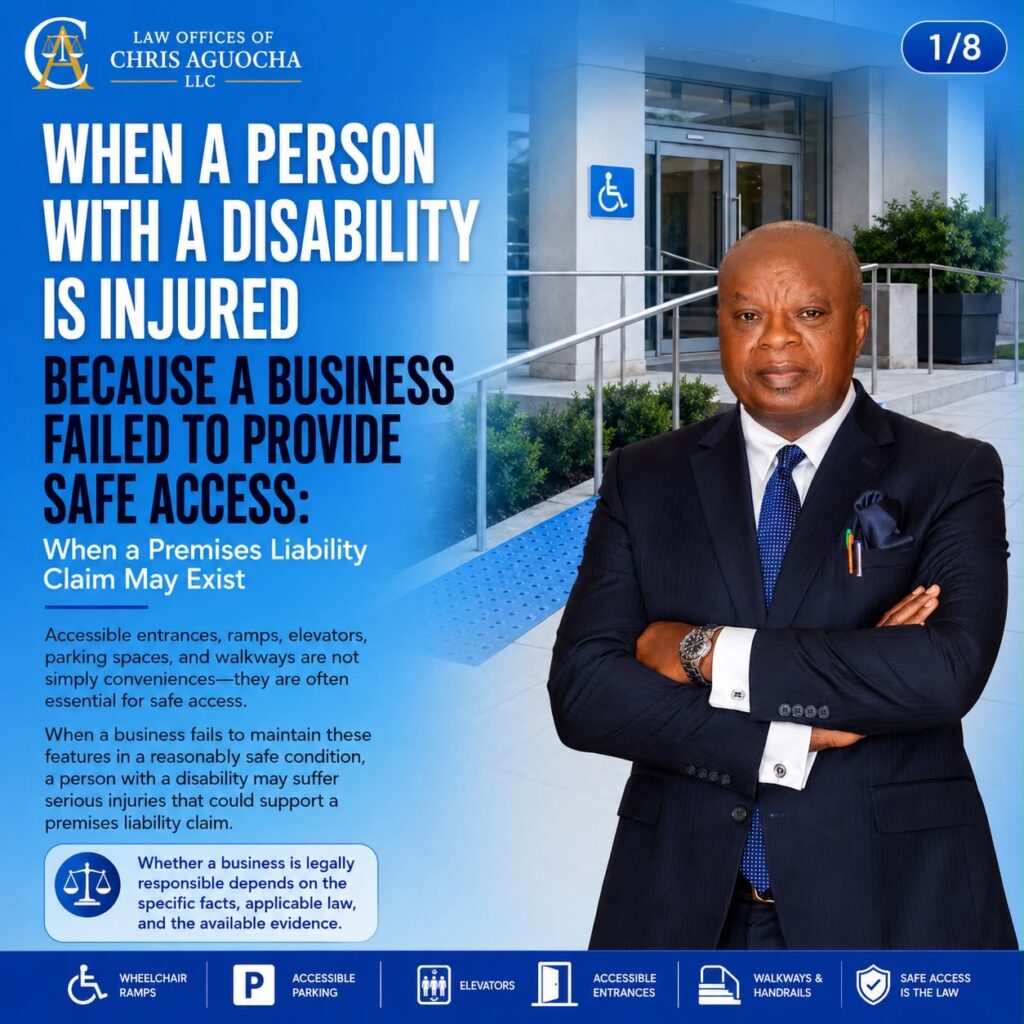
Accessible entrances, ramps, elevators, parking spaces, and walkways are not simply conveniences—they are often essential for safe access. When a business fails to maintain these features in a reasonably safe condition, a person with a disability may suffer serious injuries that could support a premises liability claim.
Whether a business is legally responsible depends on the specific facts, applicable law, and the available evidence.
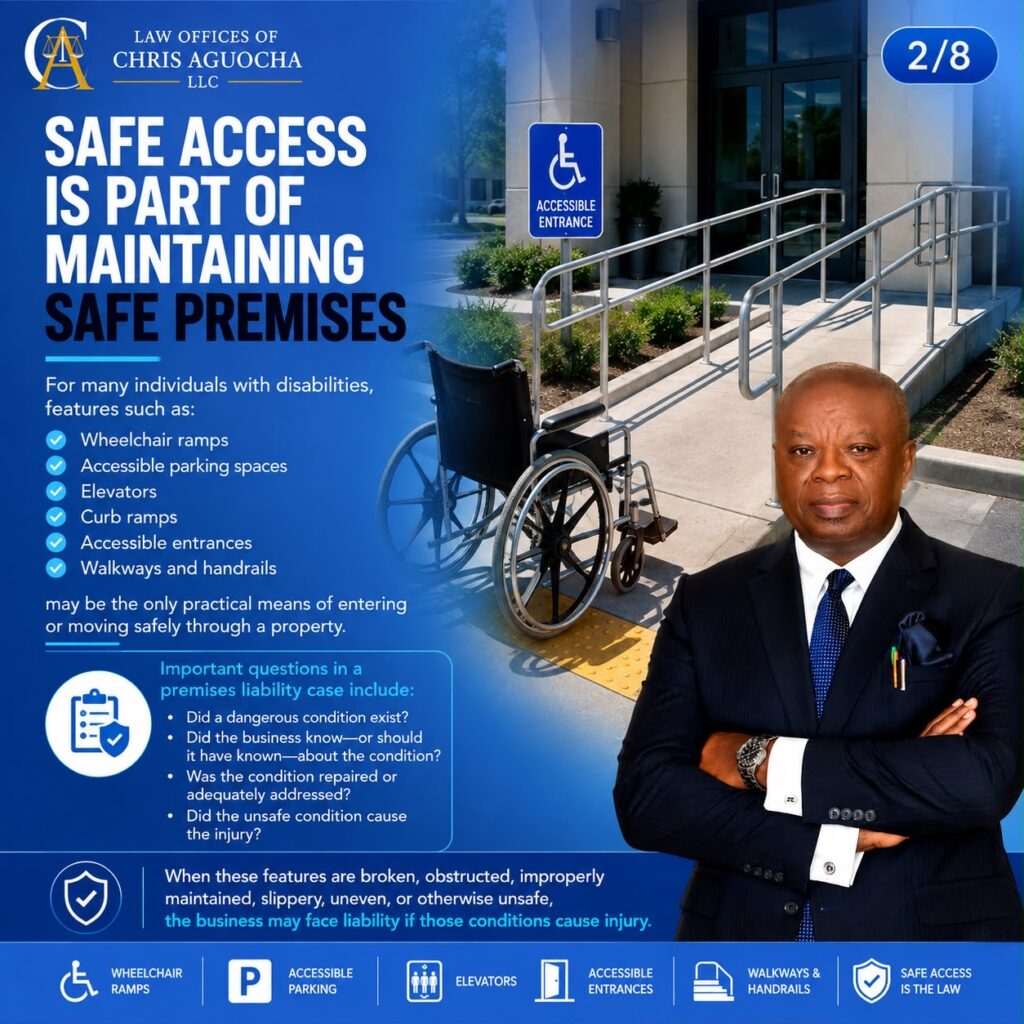
Safe Access Is Part of Maintaining Safe Premises
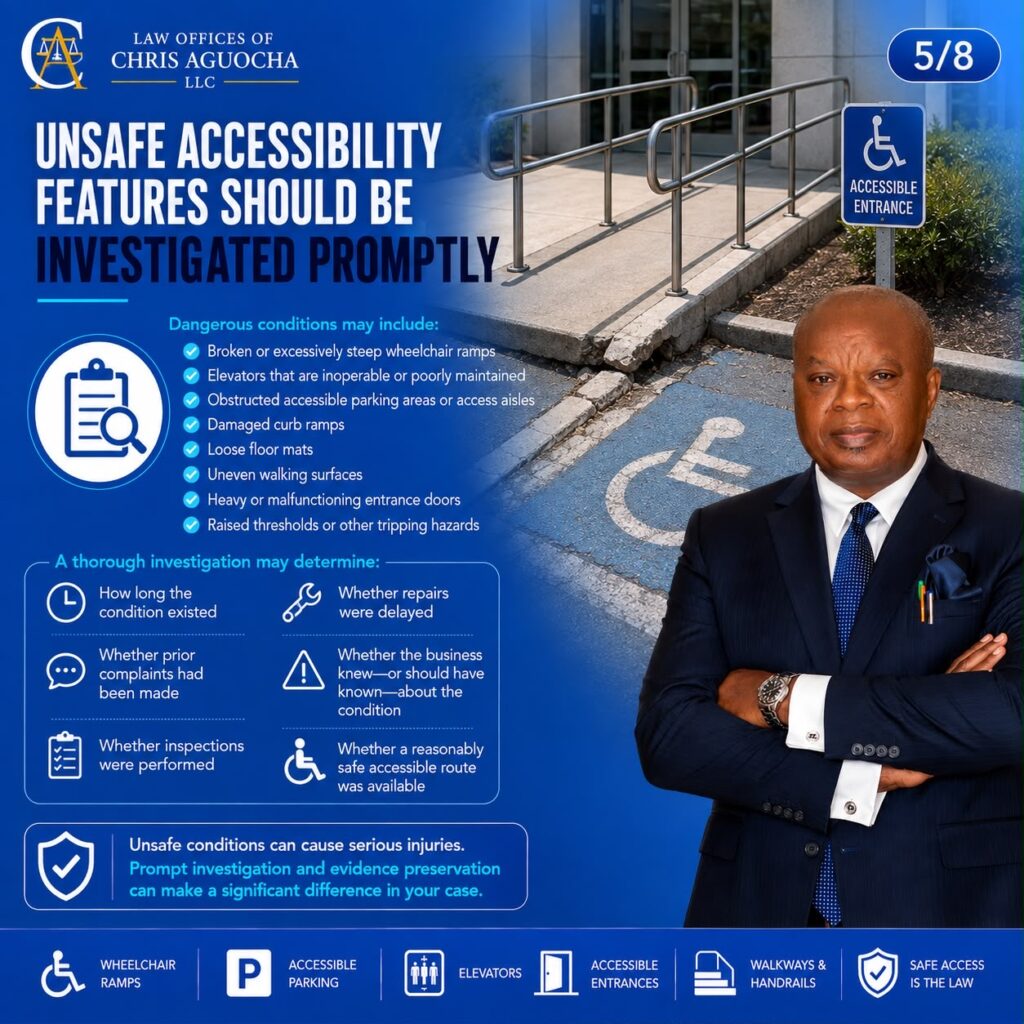
For many individuals with disabilities, features such as:
• Wheelchair ramps.
• Accessible parking spaces and access aisles.
• Elevators.
• Curb ramps.
• Accessible entrances.
• Walkways and handrails.
may be the only practical means of entering or moving safely through a property.
If these features are broken, obstructed, improperly maintained, slippery, uneven, or otherwise unsafe, the business may face liability if those conditions cause injury.
In a premises liability case, important questions often include:
• Did a dangerous condition exist?
• Did the business know—or should it have known—about the condition?
• Was the condition repaired or adequately addressed?
• Did the unsafe condition cause the injury?
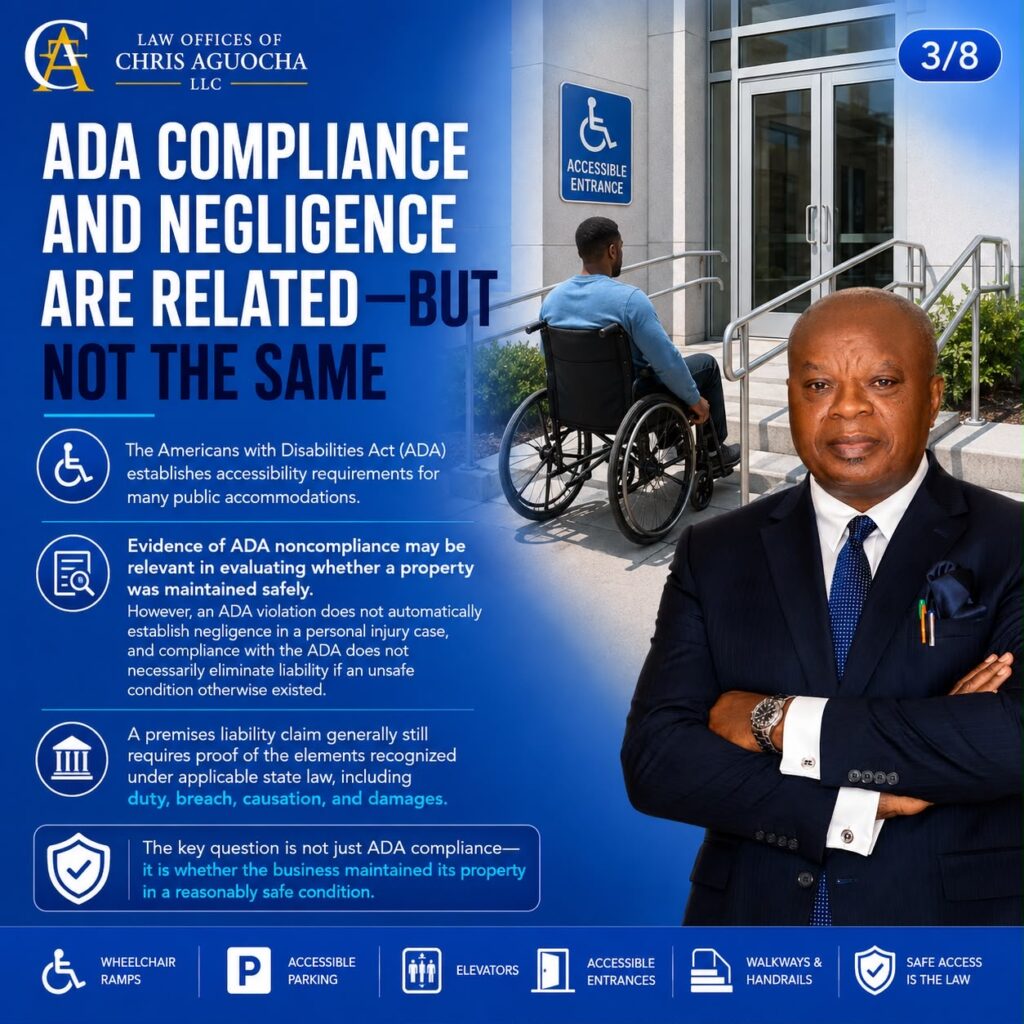
ADA Compliance and Negligence Are Related—But Not the Same
The Americans with Disabilities Act establishes accessibility requirements for many public accommodations.
Evidence of ADA noncompliance may be relevant in evaluating whether a property was maintained safely. However, an ADA violation does not automatically establish negligence in a personal injury case, and compliance with the ADA does not necessarily eliminate liability if an unsafe condition otherwise existed.
A premises liability claim generally still requires proof of the elements recognized under applicable state law, including duty, breach, causation, and damages.
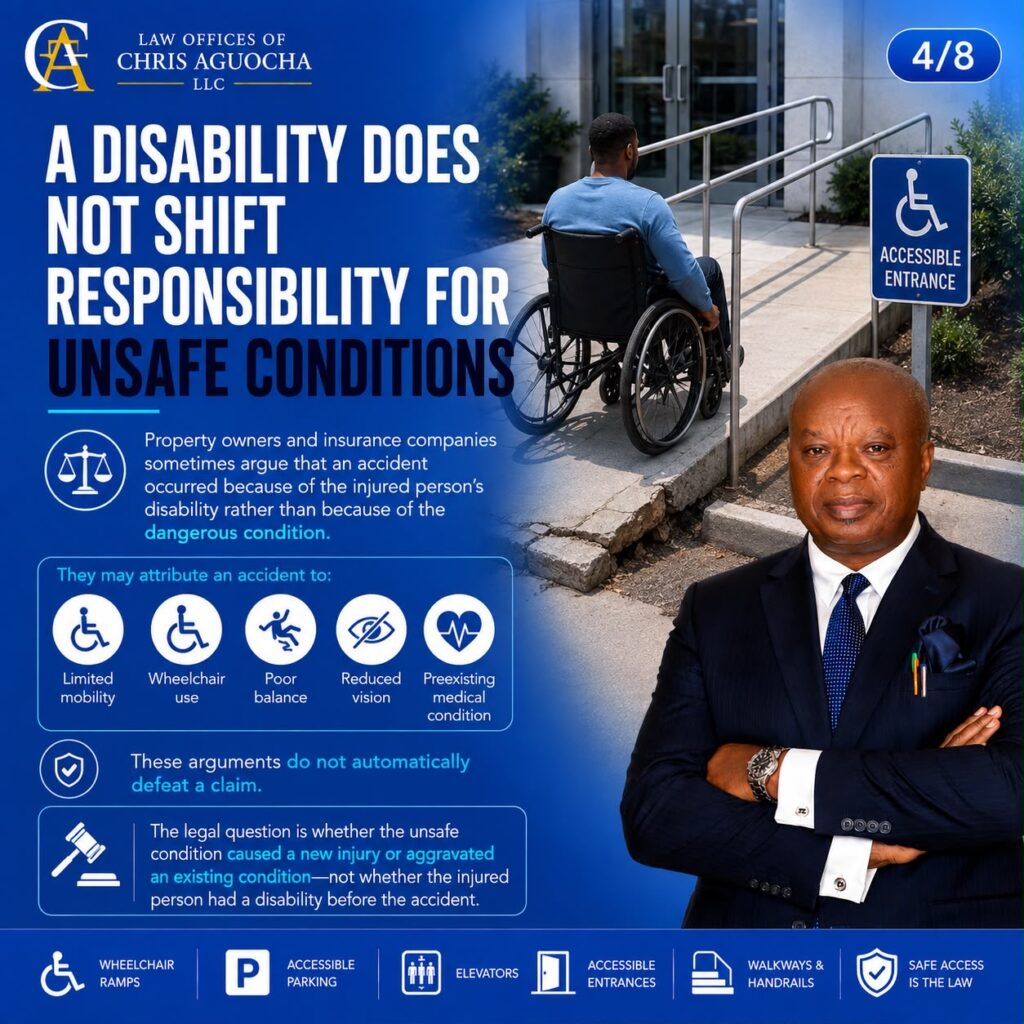
A Disability Does Not Shift Responsibility for Unsafe Conditions
Property owners and insurance companies sometimes argue that an accident occurred because of the injured person’s disability rather than because of the dangerous condition.
For example, they may attribute an accident to:
• Limited mobility.
• Wheelchair use.
• Poor balance.
• A preexisting medical condition.
• Reduced vision or other physical limitations.
These arguments do not automatically defeat a claim.
The legal question is whether the unsafe condition caused a new injury or aggravated an existing condition—not whether the injured person had a disability before the accident.
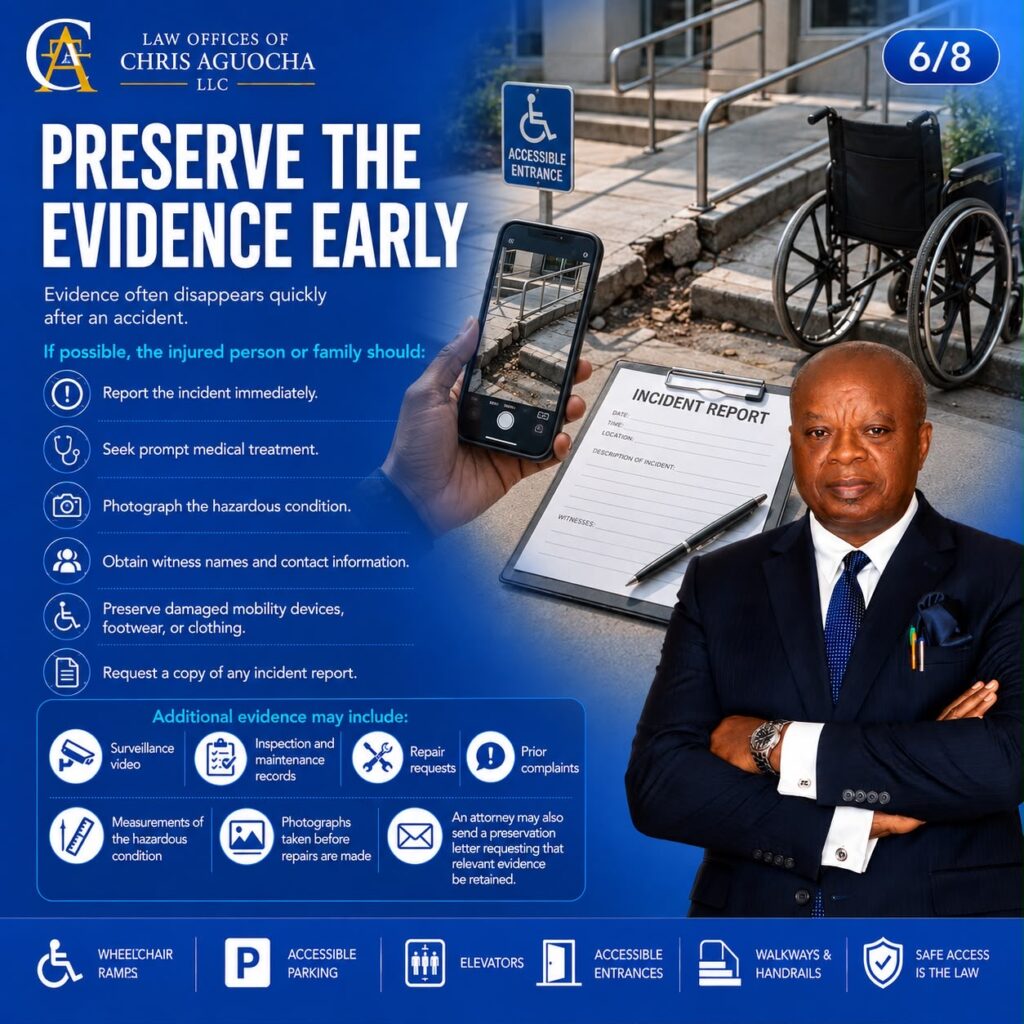
Preserve the Evidence Early
Evidence often disappears quickly after an accident.
If possible, the injured person or family should:
• Report the incident immediately.
• Seek prompt medical treatment.
• Photograph the hazardous condition.
• Obtain witness names and contact information.
• Preserve damaged mobility devices, footwear, or clothing.
• Request a copy of any incident report.
Additional evidence may include:
• Surveillance video.
• Inspection and maintenance records.
• Repair requests.
• Prior complaints.
• Measurements of the hazardous condition.
• Photographs taken before repairs are made.
An attorney may also send a preservation letter requesting that relevant evidence be retained.
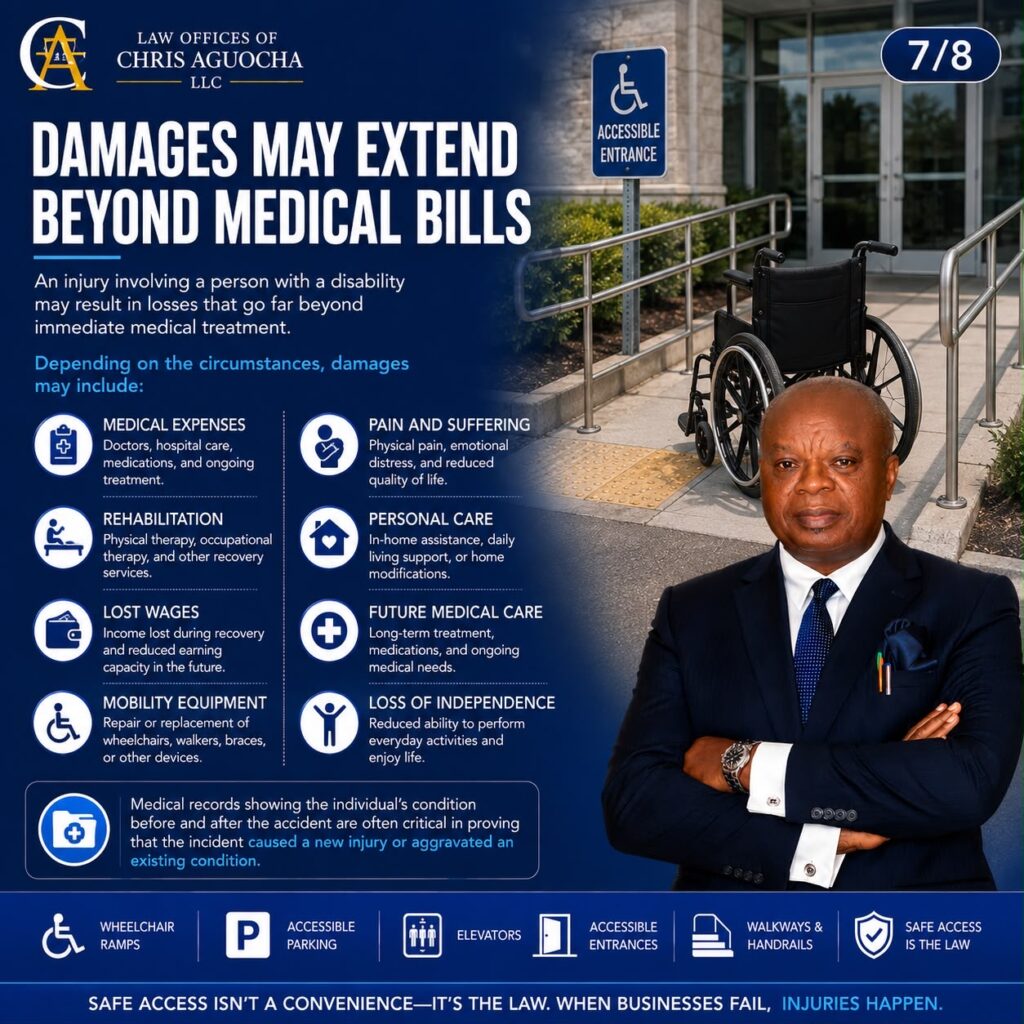
Damages May Extend Beyond Medical Bills
An injury involving a person with a disability may result in losses beyond immediate medical treatment.
Depending on the circumstances, damages may include:
• Medical expenses.
• Rehabilitation.
• Lost wages or reduced earning capacity.
• Pain and suffering.
• Repair or replacement of mobility equipment.
• Personal care or home assistance.
• Future medical treatment.
• Loss of independence or reduced quality of life.
Medical records documenting the individual’s condition before and after the accident may be particularly important in establishing whether the incident caused a new injury or aggravated an existing condition.
Key Takeaways
• Accessible features are safety features and should be maintained in a reasonably safe condition.
• Evidence of ADA noncompliance may support a premises liability claim, but it does not automatically establish negligence.
• A property owner cannot automatically avoid liability by blaming an injured person’s disability.
• Prompt preservation of photographs, surveillance video, maintenance records, witness information, and medical evidence can strengthen a claim.
• Compensation may include medical treatment, rehabilitation, damaged mobility equipment, lost income, future care, and other legally recoverable damages.
Injured Because a Property Was Not Safely Maintained?
Law Offices of Chris Aguocha LLC represents individuals injured in premises liability cases throughout Maryland, including accidents involving unsafe walkways, ramps, elevators, parking areas, and other dangerous property conditions. We investigate the facts, preserve critical evidence, and pursue compensation for clients who have been injured because reasonable safety measures were not maintained.
Office: 301-322-1304
Cell: 240-470-4364
Email: chris@aguochalawyer.com
Disclaimer: This article is provided for general informational purposes only and does not constitute legal advice. Reading this article does not create an attorney-client relationship. Every premises liability case depends on its specific facts, applicable law, and available evidence. Consult an attorney regarding your individual legal circumstances.
