
After a serious car accident, many people focus on repairing or replacing their vehicle. However, a personal injury claim may involve far more than property damage. Depending on the facts of the case, an injured person may be entitled to compensation for a variety of economic and non-economic losses.
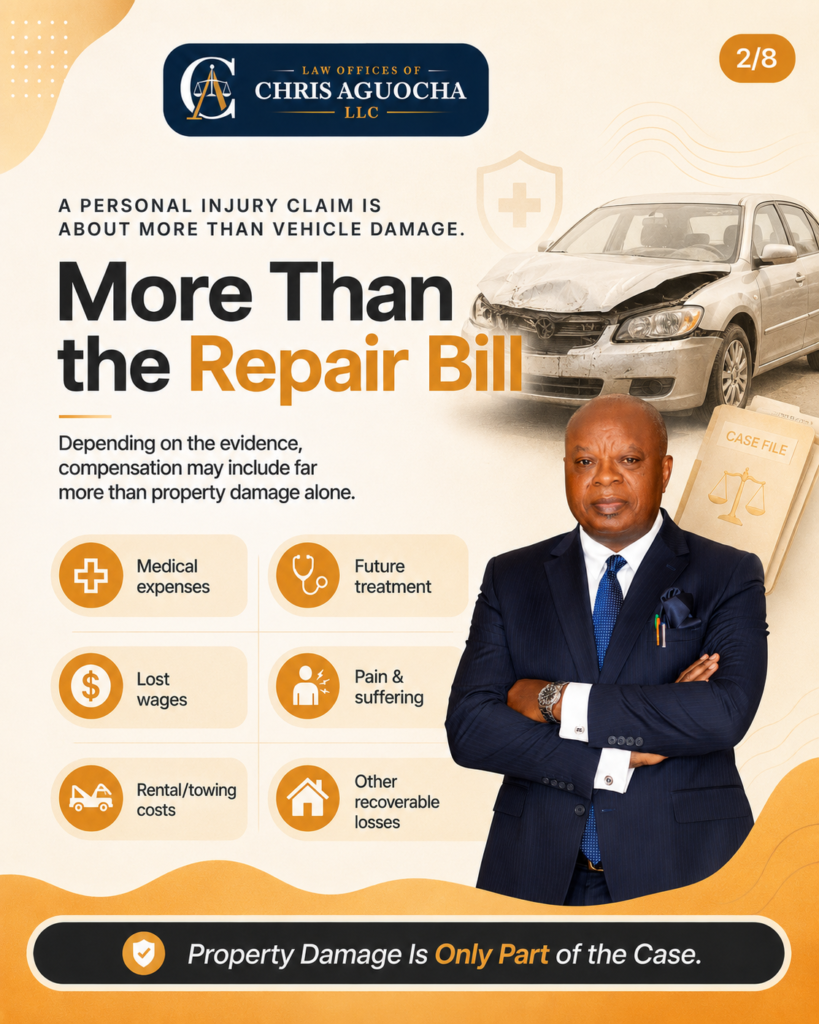
A Personal Injury Claim Is About More Than Vehicle Damage
The cost of repairing a vehicle is only one part of the claim. Depending on the evidence, compensation may include:
• Medical expenses.
• Future medical treatment.
• Lost wages.
• Loss of future earning capacity.
• Pain and suffering.
• Permanent impairment or disability.
• Rental vehicle expenses.
• Towing and storage charges.
• Damage to personal property.
• Other legally recoverable losses.
Every case depends on the facts, available insurance coverage, and the evidence supporting the claim.
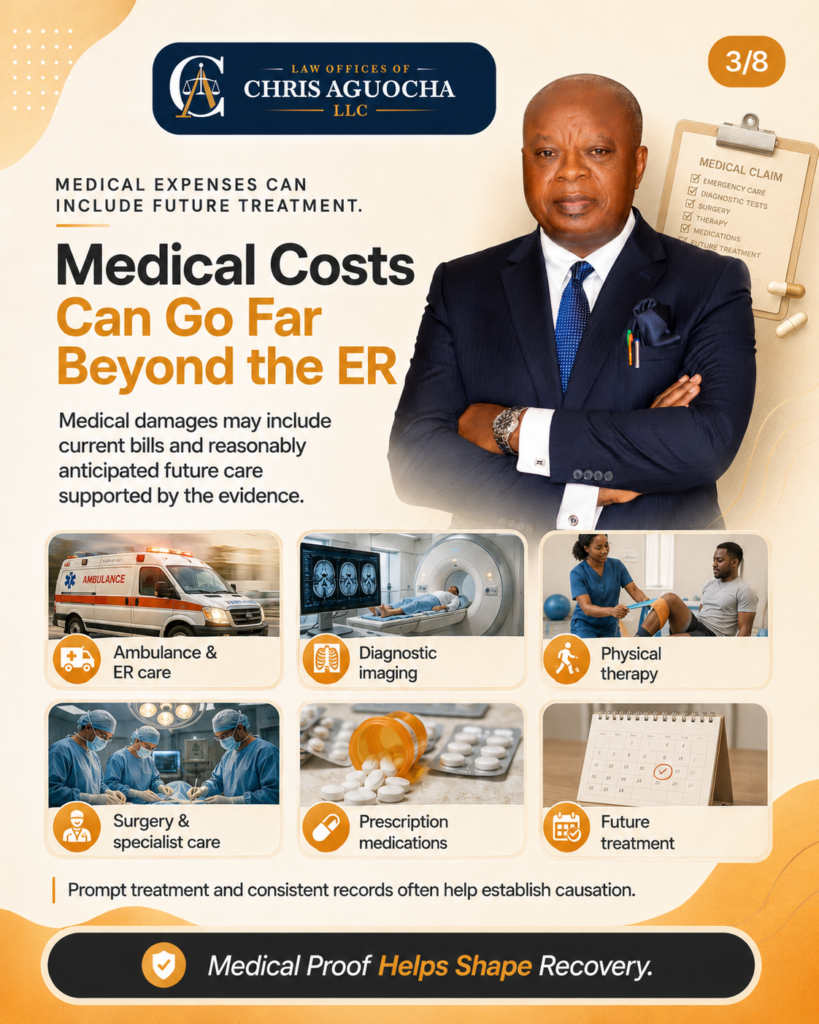
Medical Expenses Can Include Future Treatment
Medical damages may include:
• Ambulance transportation.
• Emergency room care.
• Urgent care visits.
• Diagnostic imaging.
• Physical therapy.
• Chiropractic treatment.
• Specialist care.
• Surgery.
• Prescription medications.
• Medical equipment.
• Reasonably anticipated future medical care supported by the evidence.
Insurance companies frequently dispute whether treatment was caused by the accident or by a pre-existing condition. Prompt medical attention, consistent treatment, and well-documented medical records often play an important role in establishing causation.
In Maryland, Personal Injury Protection (PIP) benefits may provide limited payment for certain medical expenses and lost wages, depending on the policy. However, PIP benefits alone often do not fully compensate victims with significant injuries.
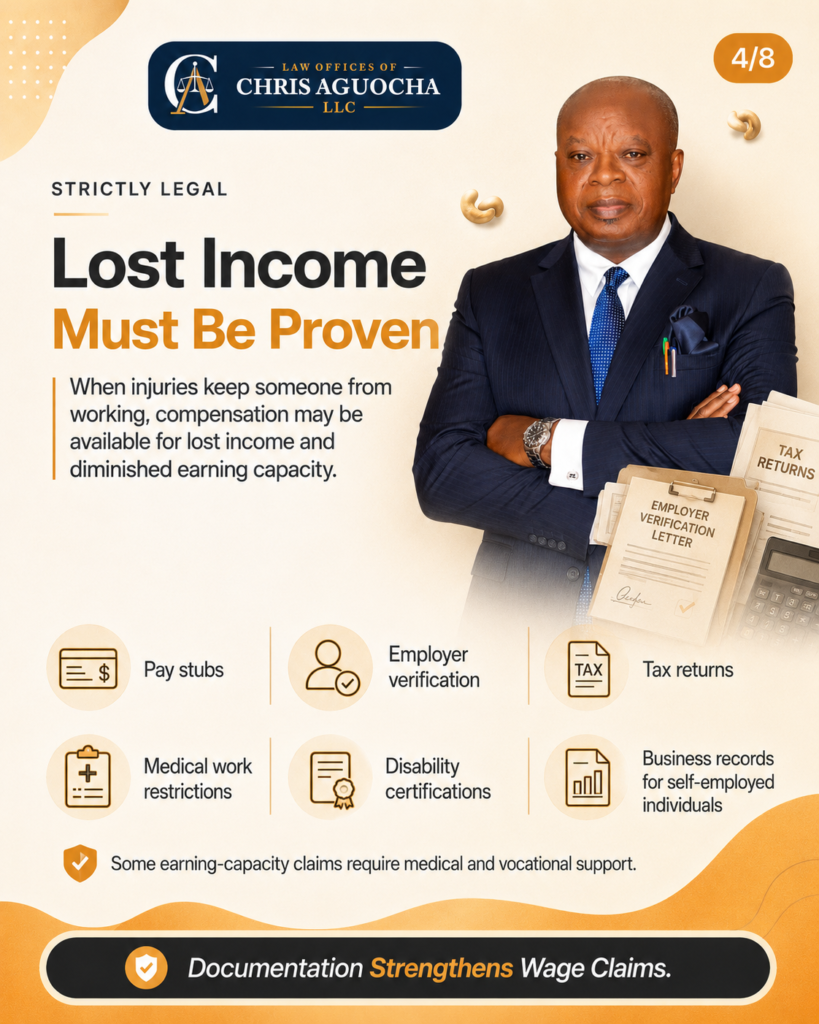
Lost Income Must Be Supported by Evidence
When injuries prevent someone from working, compensation may be available for lost income.
Helpful documentation includes:
• Pay stubs.
• Employer verification.
• Tax returns.
• Medical work restrictions.
• Disability certifications.
• Business records for self-employed individuals.
Claims involving diminished earning capacity may require additional medical and vocational evidence.
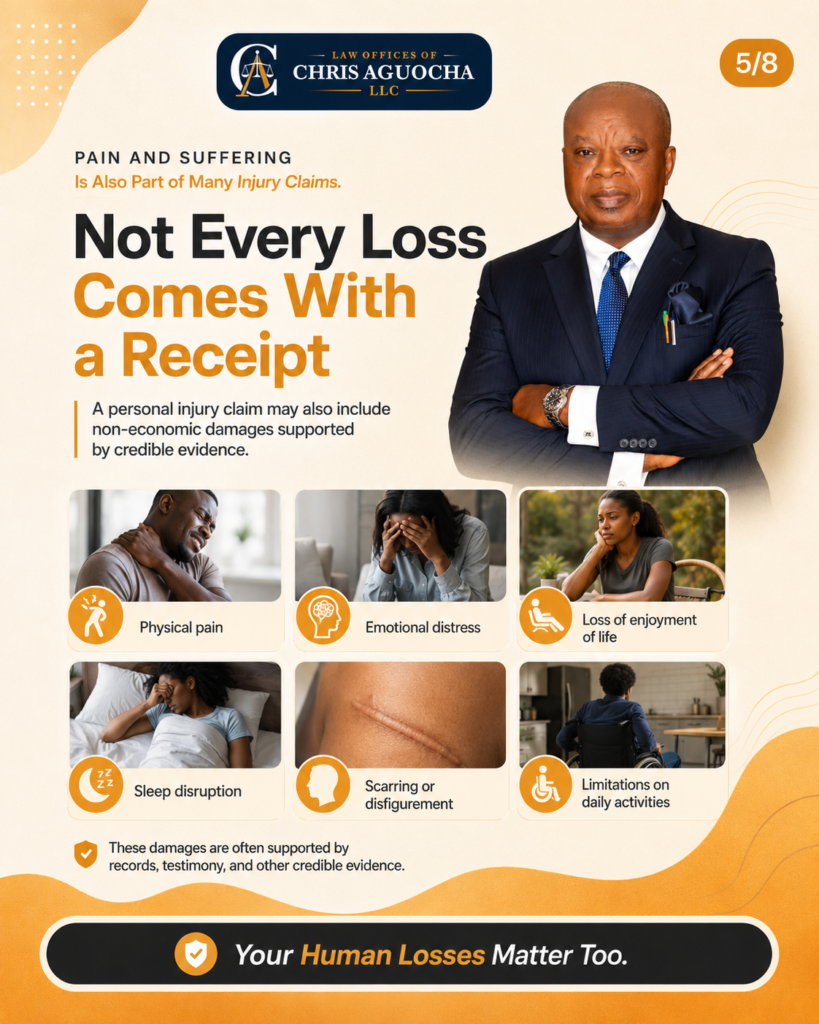
Pain and Suffering Is Also Part of Many Injury Claims
A personal injury claim may also include compensation for non-economic damages, such as:
• Physical pain.
• Emotional distress.
• Loss of enjoyment of life.
• Sleep disruption.
• Permanent scarring or disfigurement.
• Limitations on daily activities.
These damages are typically supported by medical records, testimony, and other credible evidence.
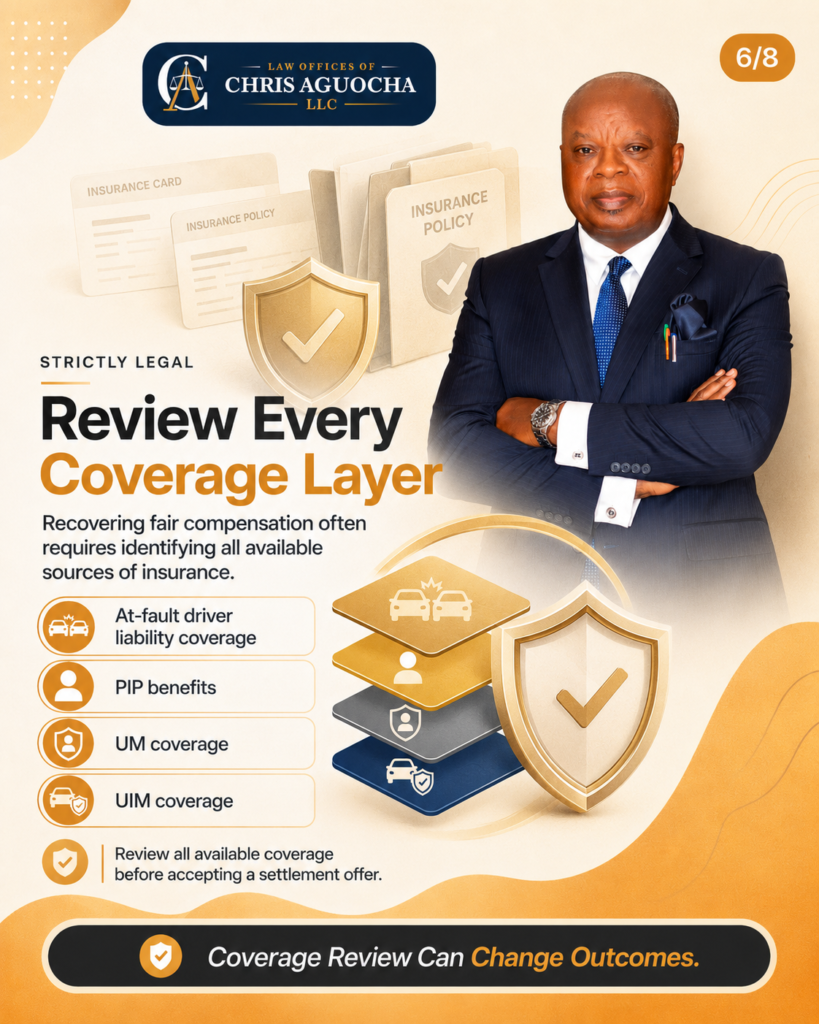
Review All Available Insurance Coverage
Recovering fair compensation requires evaluating all available sources of insurance coverage.
Depending on the circumstances, this may include:
• The at-fault driver’s liability insurance.
• Your own Personal Injury Protection (PIP) benefits, if applicable.
• Uninsured Motorist (UM) coverage.
• Underinsured Motorist (UIM) coverage.
Reviewing all available coverage before accepting a settlement offer is essential.
Key Takeaways
• A serious car accident claim often involves much more than repairing your vehicle.
• Medical expenses, lost income, pain and suffering, and future damages may all be recoverable, depending on the facts and applicable law.
• Medical records, wage documentation, and insurance information are critical to valuing a claim.
• PIP, liability, UM, and UIM coverage should all be reviewed before settlement.
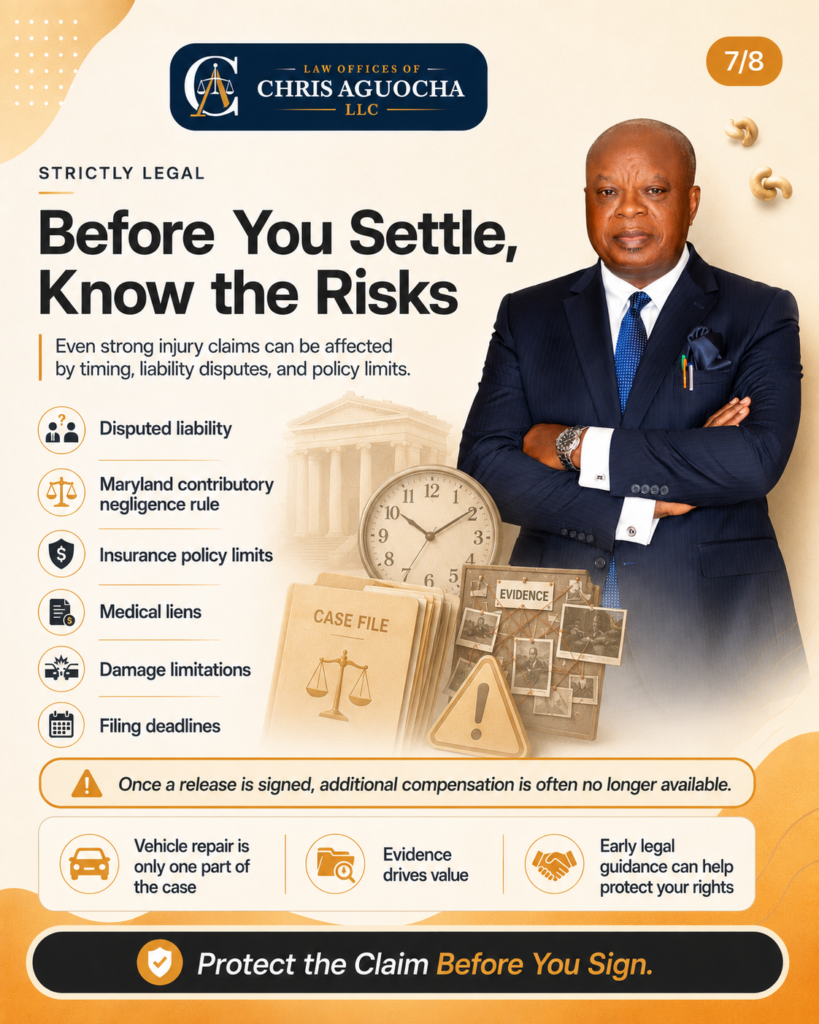
• Legal guidance can help protect your rights before accepting an insurance offer or signing a release.
Injured in a Maryland Car Accident?
Law Offices of Chris Aguocha LLC represents individuals injured in motor vehicle accidents throughout Maryland. We assist clients in pursuing compensation for medical expenses, lost income, pain and suffering, property damage, uninsured and underinsured motorist claims, and other recoverable losses.
Office: 301-322-1304
Cell: 240-470-4364
Email: chris@aguochalawyer.com
Disclaimer: This article is provided for general informational purposes only and does not constitute legal advice. Reading this article does not create an attorney-client relationship. Every personal injury case is unique, and you should consult an attorney regarding your specific legal circumstances.
