



Becoming a U.S. citizen is an important milestone, but naturalization involves much more than passing the English and civics tests. When you file Form N-400, USCIS may review not only whether you qualify for citizenship today, but also whether you have maintained eligibility throughout your time as a lawful permanent resident.
Taking time to identify potential issues before filing can help avoid delays, denials, or, in some cases, more serious immigration consequences.
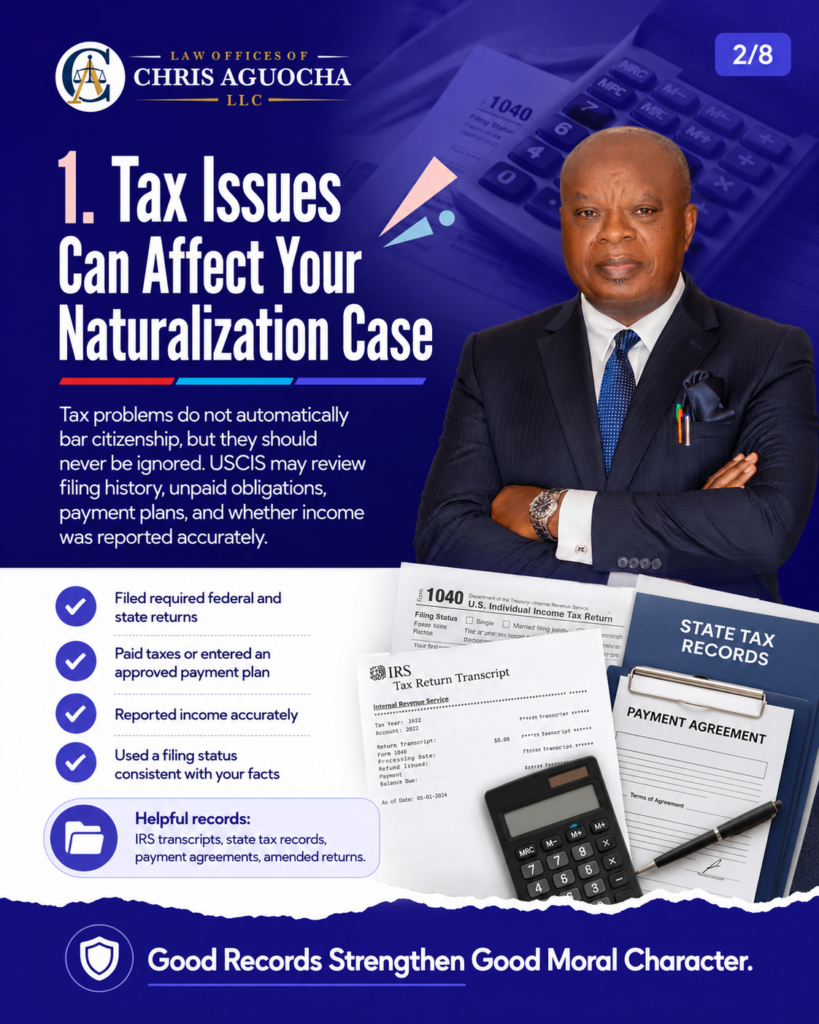
1. Tax Issues Can Affect Your Naturalization Case
Tax problems do not automatically prevent naturalization, but they should never be overlooked.
USCIS may review whether an applicant has:
• Filed required federal and state tax returns.
• Paid outstanding tax obligations or entered into an approved payment plan.
• Accurately reported income.
• Used a filing status consistent with the applicant’s immigration history and family circumstances.
Before filing, consider obtaining:
• IRS tax transcripts.
• State tax records.
• Documentation of any payment agreements.
• Amended tax returns, if applicable.
• Supporting records from your tax professional.
Accurate and complete tax records can help demonstrate compliance with U.S. law and support a finding of good moral character.
2. Extended Travel May Affect Continuous Residence
Naturalization applicants generally must satisfy both continuous residence and physical presence requirements.
Absences from the United States of more than six months but less than one year may create a rebuttable presumption that continuous residence has been interrupted. Longer absences can create even more significant legal issues, depending on the circumstances and any applicable exceptions.
Before filing, carefully review:
• All international travel.
• Passport stamps.
• Travel itineraries.
• Form I-94 travel history, where available.
• Employment records.
• Lease or mortgage documents.
• Tax returns.
• Other evidence showing continued ties to the United States.
A careful review of travel history can help determine whether additional documentation is needed.
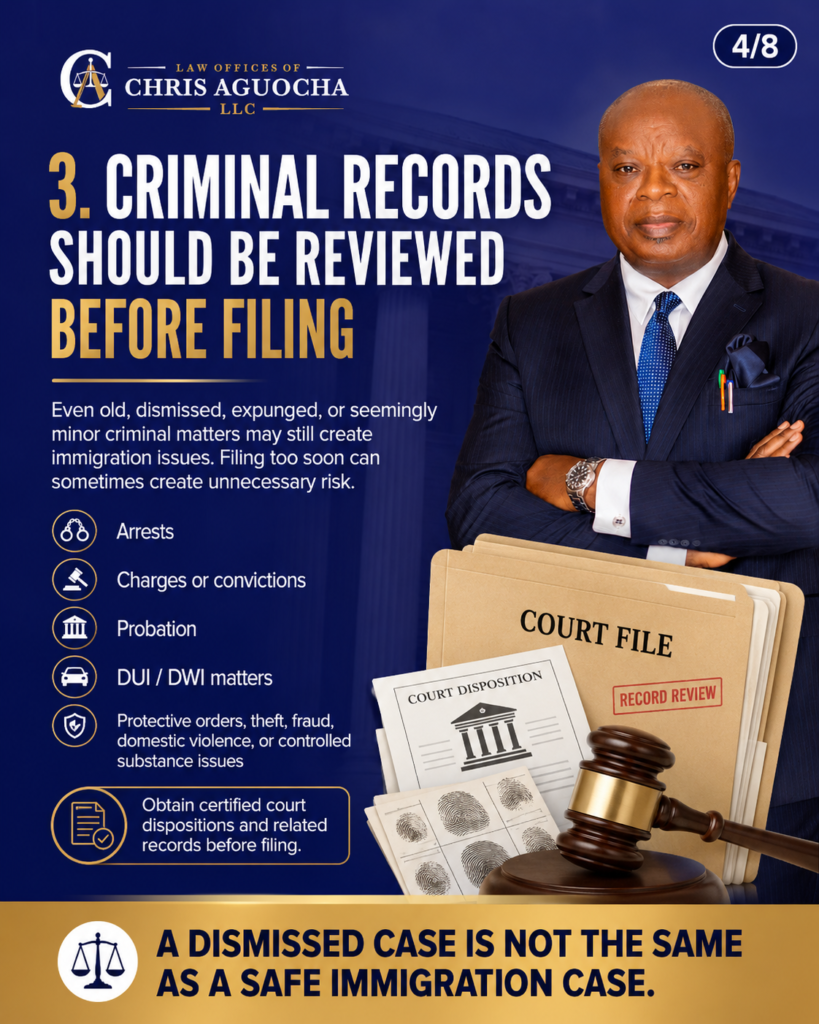
3. Criminal Records Should Be Reviewed Before Filing
Even an old, dismissed, expunged, or seemingly minor criminal matter may have immigration consequences.
USCIS may examine issues involving:
• Arrests.
• Criminal charges.
• Convictions.
• Probation.
• Protective orders.
• DUI or DWI offenses.
• Theft or fraud-related offenses.
• Domestic violence allegations.
• Controlled substance violations.
Applicants should obtain certified court dispositions and, where appropriate, related police or probation records before submitting Form N-400.
In some cases, filing too soon may expose an applicant to unnecessary immigration risk.
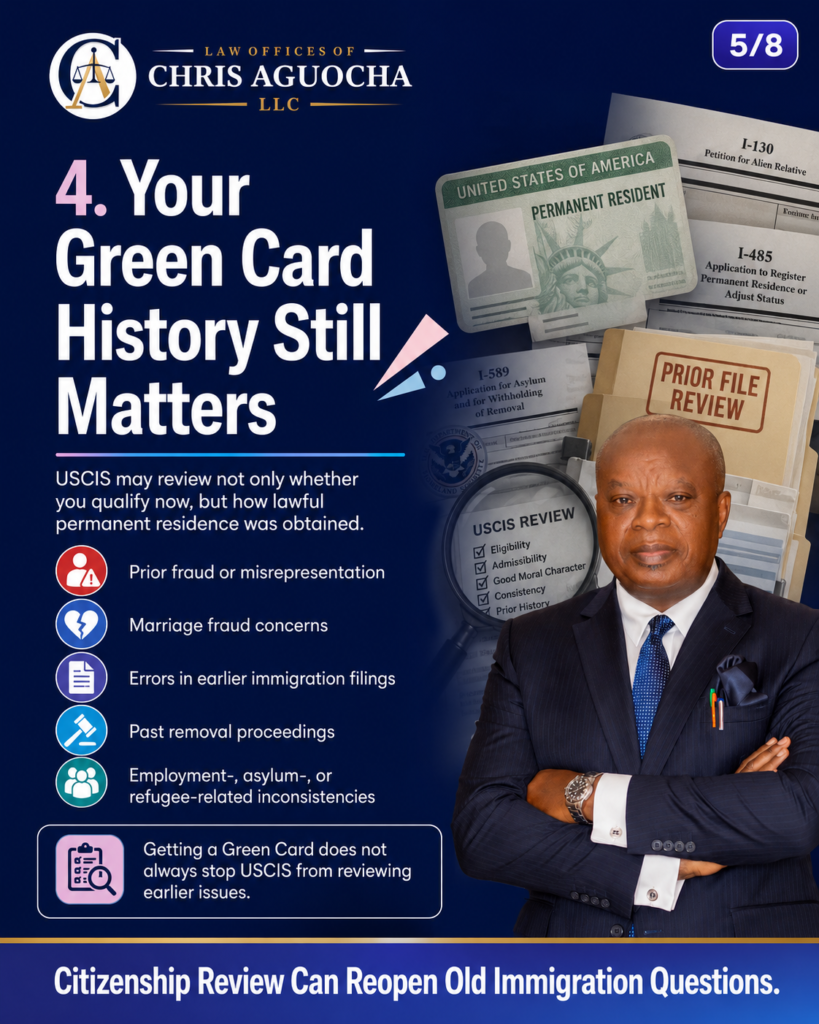
4. Your Green Card History Still Matters
One of the most overlooked aspects of naturalization is that USCIS may review how lawful permanent resident status was obtained.
Potential issues may include:
• Prior immigration fraud or misrepresentation.
• Marriage fraud concerns.
• Inaccurate information in earlier immigration applications.
• Prior removal or deportation proceedings.
• Problems involving asylum or refugee claims.
• Employment-based immigration inconsistencies.
• Other admissibility concerns.
Receiving a Green Card does not necessarily prevent USCIS from examining whether permanent resident status was lawfully obtained if that issue becomes relevant during the naturalization process.
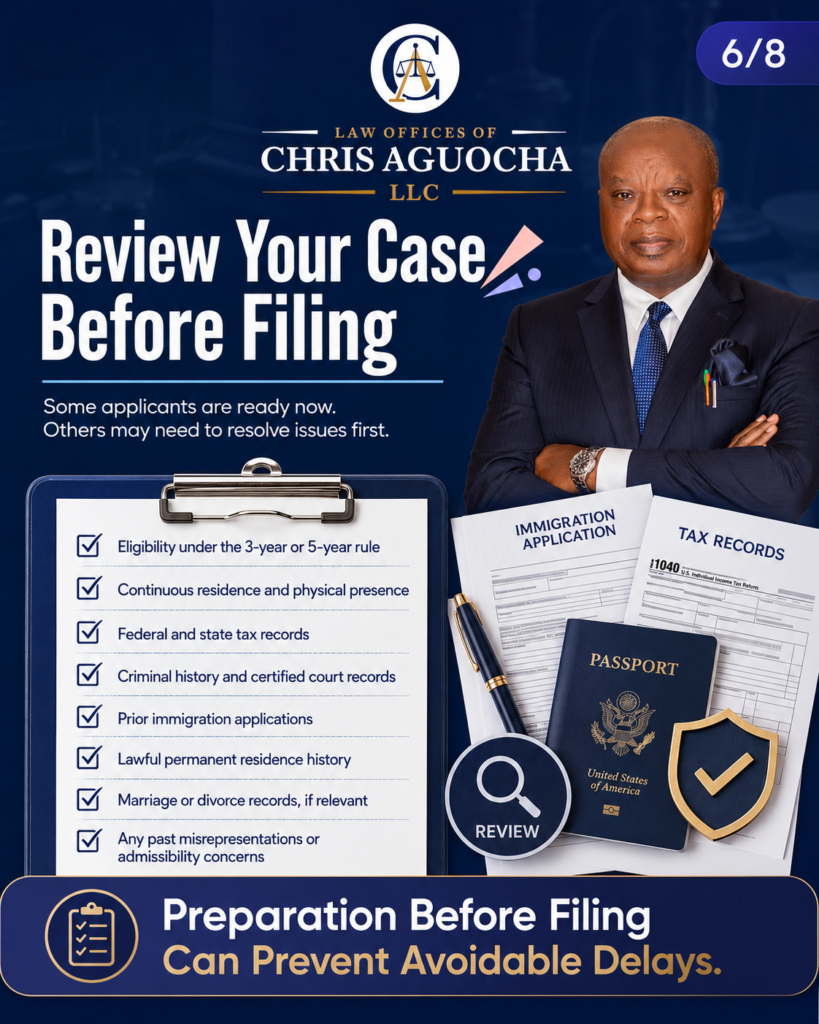
Review Your Case Before Filing
Before submitting Form N-400, consider reviewing:
• Your eligibility under the three-year or five-year rule.
• Continuous residence and physical presence.
• Federal and state tax records.
• Criminal history and certified court records.
• Prior immigration applications.
• Your lawful permanent residence history.
• Marriage or divorce records, if applicable.
• Any prior immigration misrepresentations or admissibility concerns.
Some applicants are ready to file immediately. Others may benefit from addressing potential issues before submitting an application.
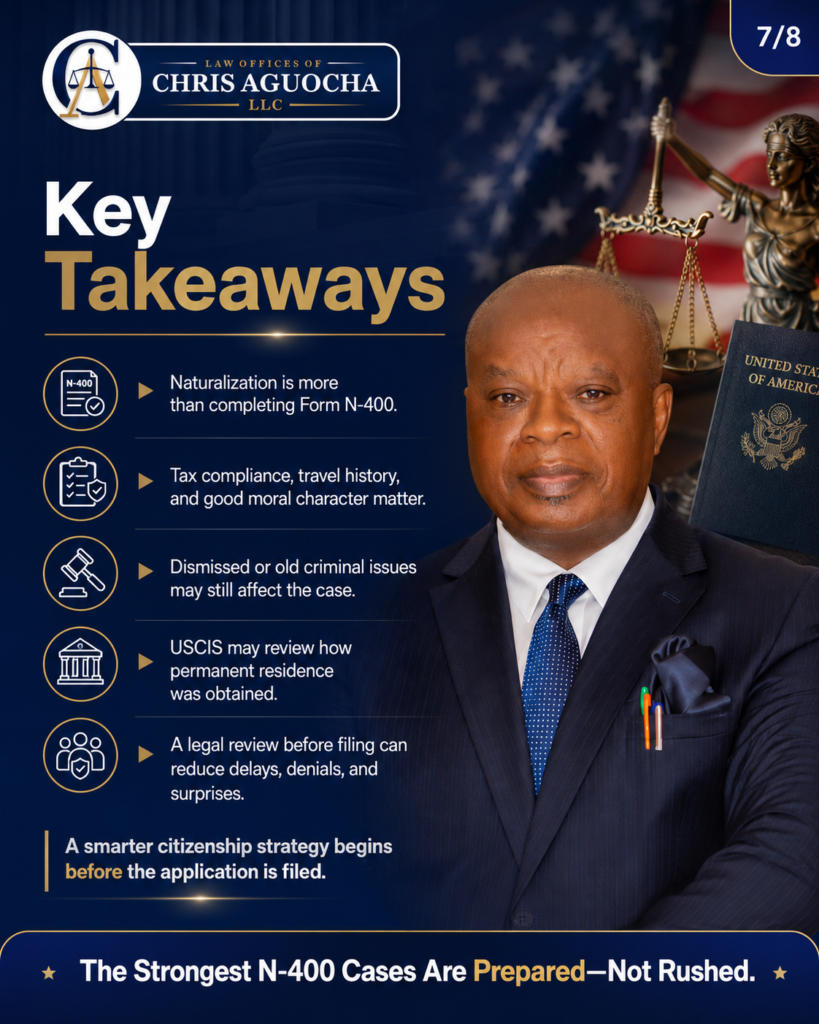
Key Takeaways
• Naturalization involves much more than completing Form N-400 and passing the civics test.
• Tax compliance, travel history, and good moral character should be carefully reviewed before filing.
• Criminal matters—including some dismissed or expunged cases—may still have immigration consequences.
• USCIS may review how lawful permanent resident status was obtained during the naturalization process.
• An experienced legal review before filing can help identify potential issues and reduce unnecessary delays or complications.
Planning to Apply for U.S. Citizenship?
Law Offices of Chris Aguocha LLC assists lawful permanent residents with naturalization, N-400 applications, citizenship interview preparation, complex immigration history reviews, waivers, and other immigration matters. We work with clients to identify potential issues before filing and help them pursue citizenship with confidence.
Office: 301-322-1304
Cell: 240-470-4364
Email: chris@aguochalawyer.com
Disclaimer: This article is provided for general informational purposes only and does not constitute legal advice. Reading this article does not create an attorney–client relationship. Every immigration case is unique, and you should consult an attorney regarding your specific legal circumstances.
