

After a car accident, it is not uncommon for an insurance company to contact an injured person within days—or even hours—with a settlement offer. While a quick payment may seem attractive, accepting an early offer before the full extent of your injuries is known can have lasting legal and financial consequences.
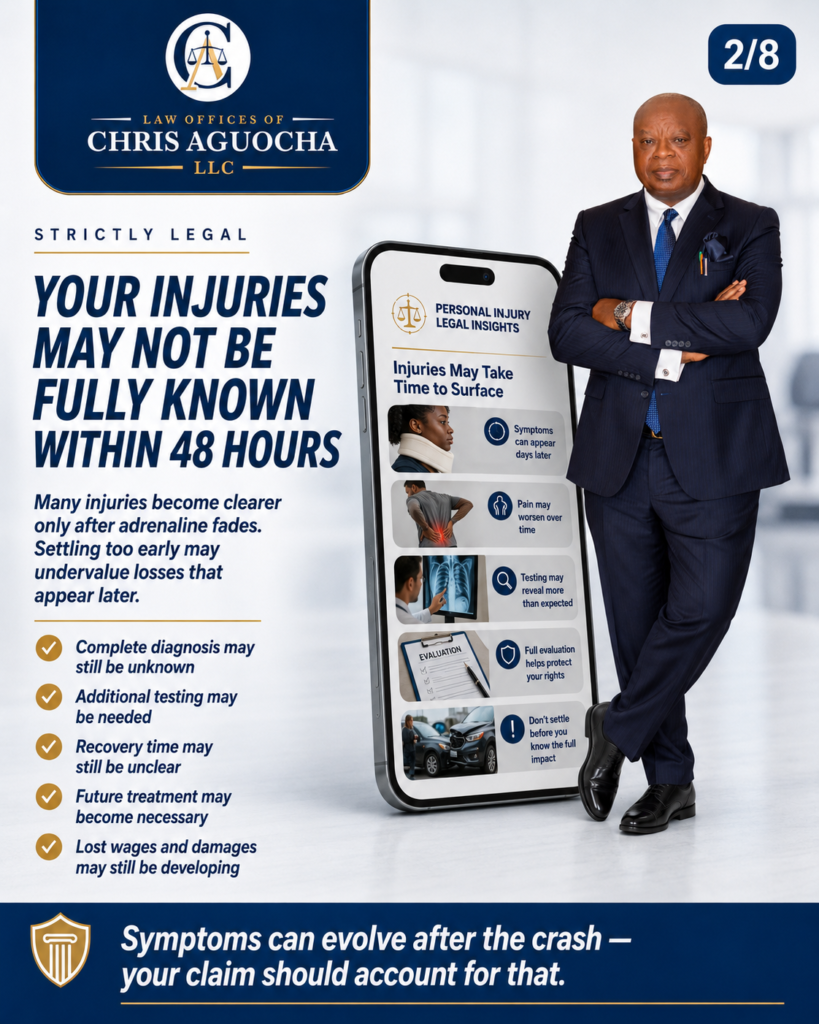
Your Injuries May Not Be Fully Known Within 48 Hours
Many injuries do not immediately produce severe symptoms. Neck pain, back injuries, shoulder injuries, concussions, and nerve-related conditions may become more apparent only after the body’s initial adrenaline response subsides.
During the first few days after a collision, you may not yet know:
• Your complete diagnosis.
• Whether additional testing is necessary.
• The length of your recovery.
• Whether future treatment will be required.
• The extent of your lost wages or other damages.
Settling too early may prevent you from seeking compensation for losses that become apparent later.
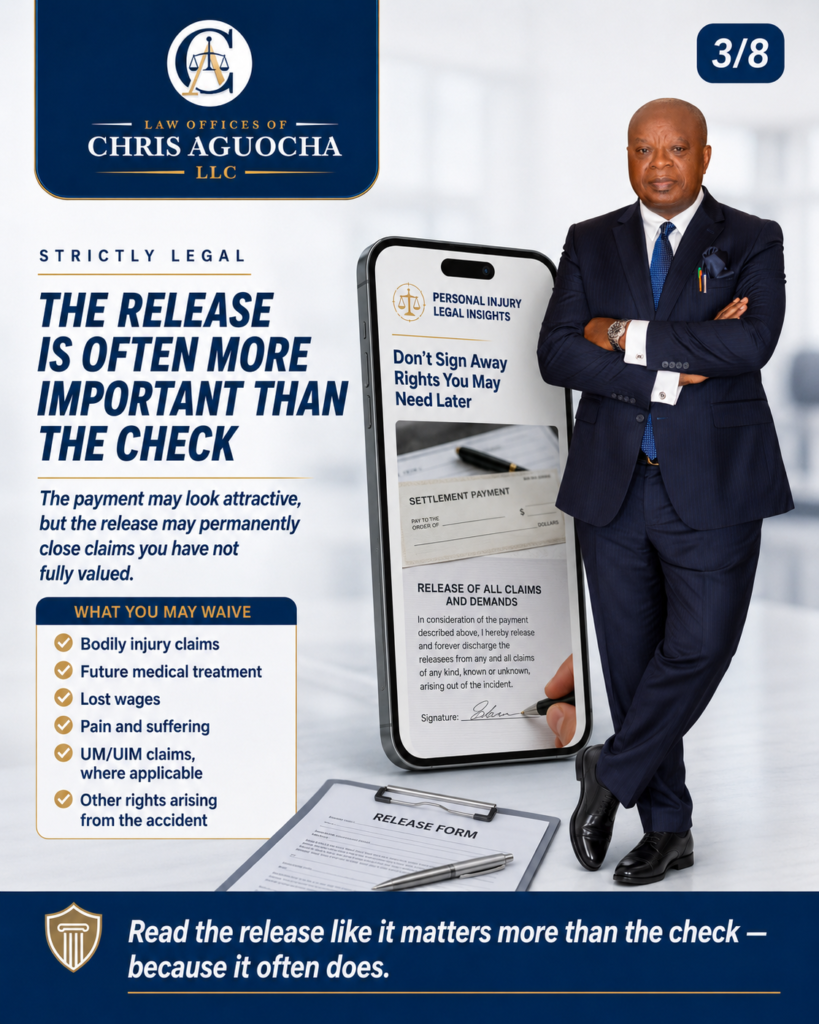
The Release Is Often More Important Than the Check
Most settlement offers require the injured person to sign a release of claims.
Depending on its language, a release may permanently resolve claims involving:
• Bodily injuries.
• Future medical treatment.
• Lost wages.
• Pain and suffering.
• Uninsured or Underinsured Motorist (UM/UIM) claims, where applicable.
• Other legal rights arising from the accident.
Before signing any release, it is important to understand exactly which claims are being resolved.
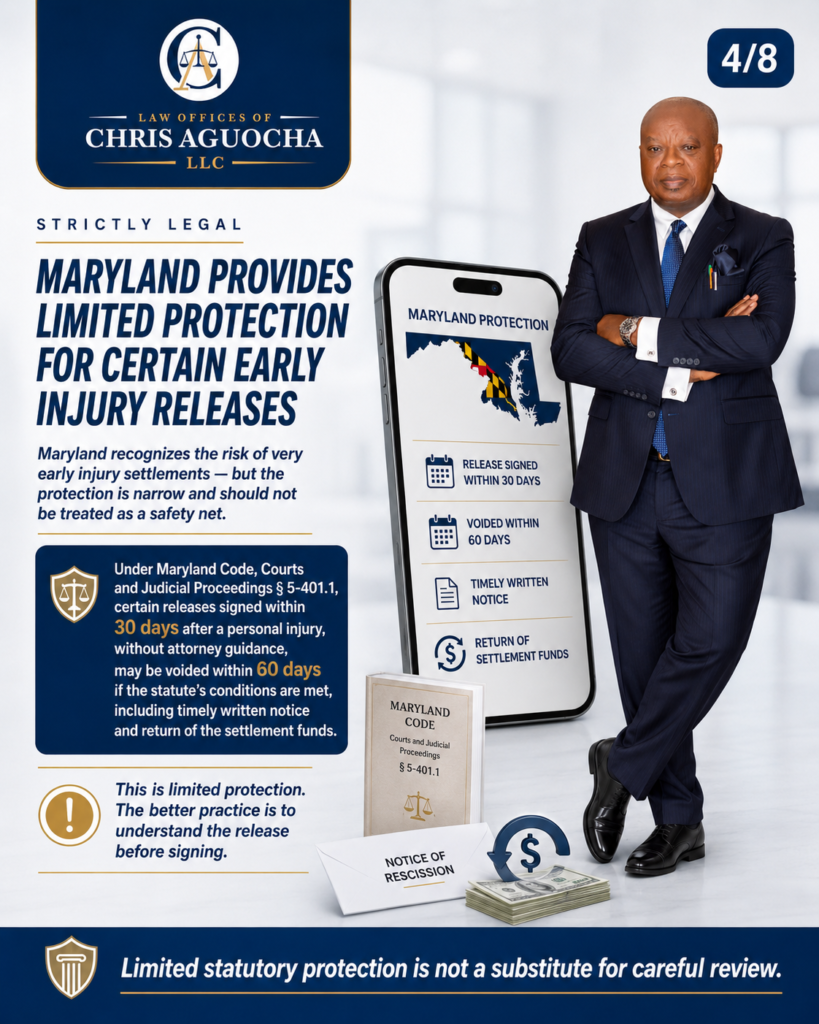
Maryland Provides Limited Protection for Certain Early Injury Releases
Maryland law recognizes that some individuals settle injury claims before the nature and extent of their injuries are fully understood.
Maryland law recognizes the danger of very early injury settlements. Under Maryland Code, Courts and Judicial Proceedings § 5-401.1, certain releases signed within 30 days after a personal injury, without the assistance or guidance of an attorney, may be voided by the injured person within 60 days after signing if the statutory requirements are satisfied, including timely written notice and the return of the settlement funds. This limited protection underscores the importance of understanding the legal consequences of signing a release before accepting an early settlement offer.
However, this protection is limited and should not be viewed as a reason to sign first and address the consequences later. The better practice is to understand the legal effect of a release before signing it.
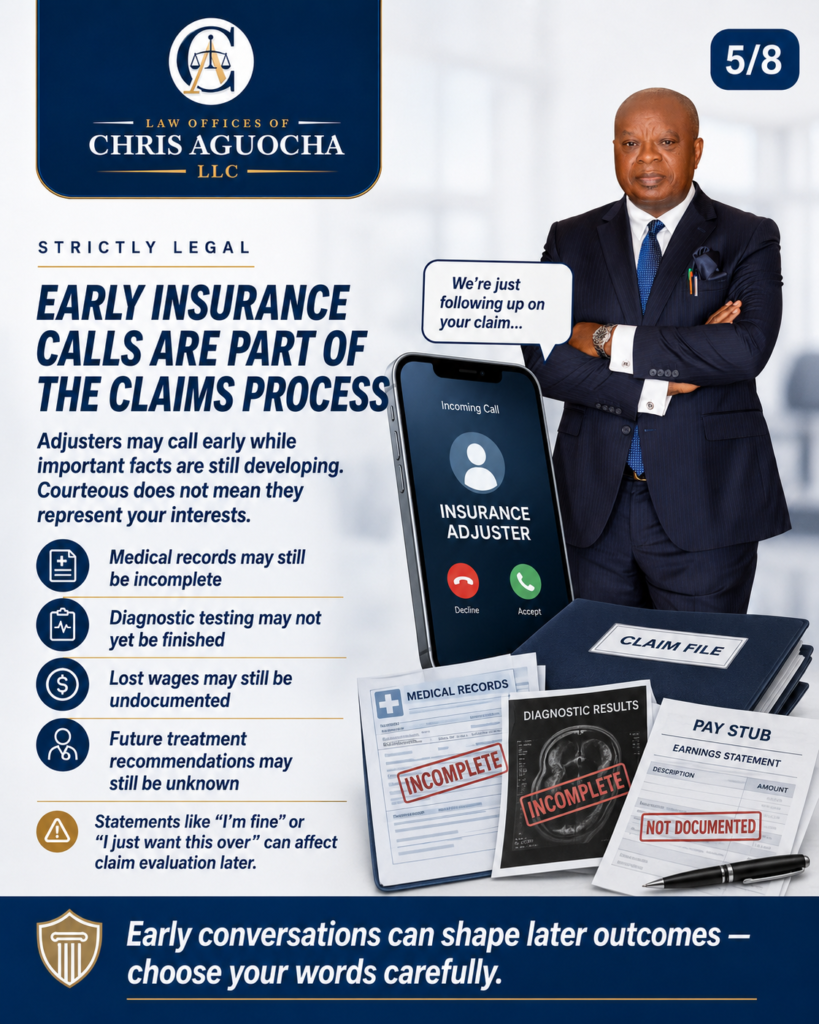
Early Insurance Calls Are Part of the Claims Process
Insurance adjusters often contact injured individuals early in the claim because important facts may still be developing.
At that stage:
• Medical records may be incomplete.
• Diagnostic testing may not yet have been performed.
• Lost wages may not be fully documented.
• Future treatment recommendations may be unknown.
Statements such as “I’m feeling fine” or “I just want to get this over with” can later be cited during claim evaluation.
Although adjusters may be courteous and professional, they represent the insurance company—not the injured person.
Review the Entire Claim Before Accepting an Offer
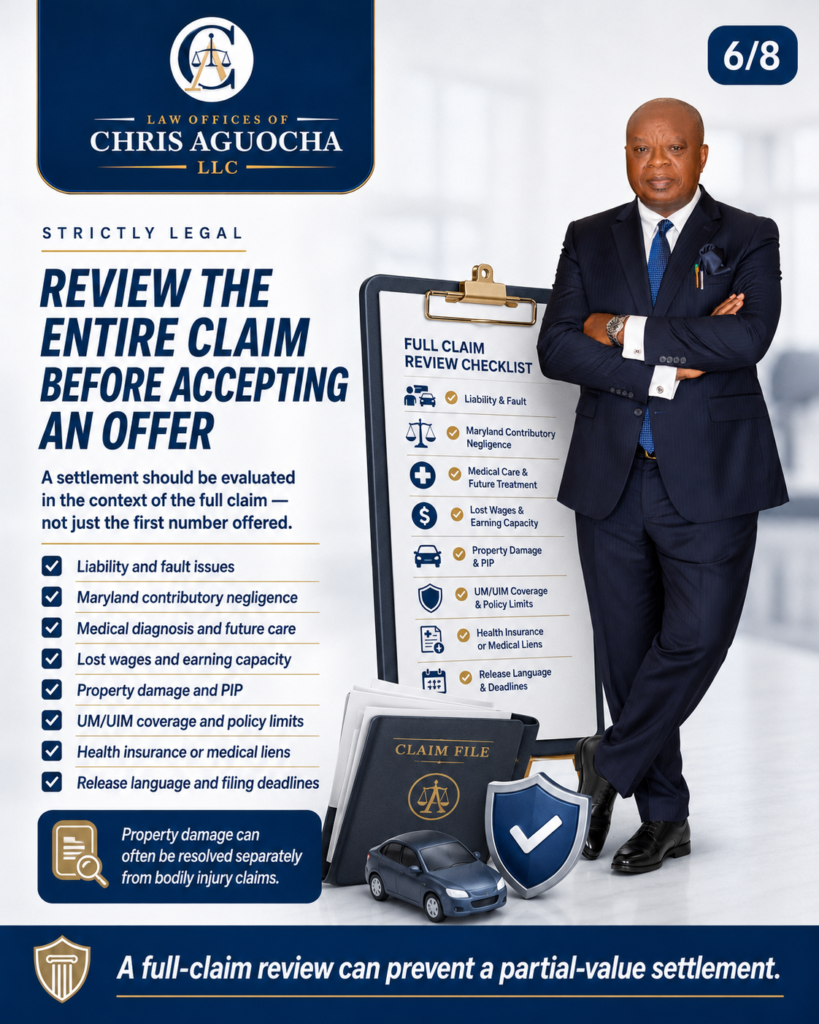
Before accepting an early settlement, consider reviewing:
• Liability and fault issues.
• Maryland’s contributory negligence rule.
• Medical diagnosis and treatment recommendations.
• Future medical care.
• Lost wages and loss of earning capacity.
• Property damage.
• Personal Injury Protection (PIP), if applicable.
• Uninsured/Underinsured Motorist (UM/UIM) coverage.
• Health insurance or medical liens.
• Insurance policy limits.
• Release language.
• Applicable filing deadlines.
In many cases, property damage can be resolved separately from the bodily injury claim, helping to avoid inadvertently releasing valuable injury claims while simply trying to repair or replace a vehicle.
Key Takeaways
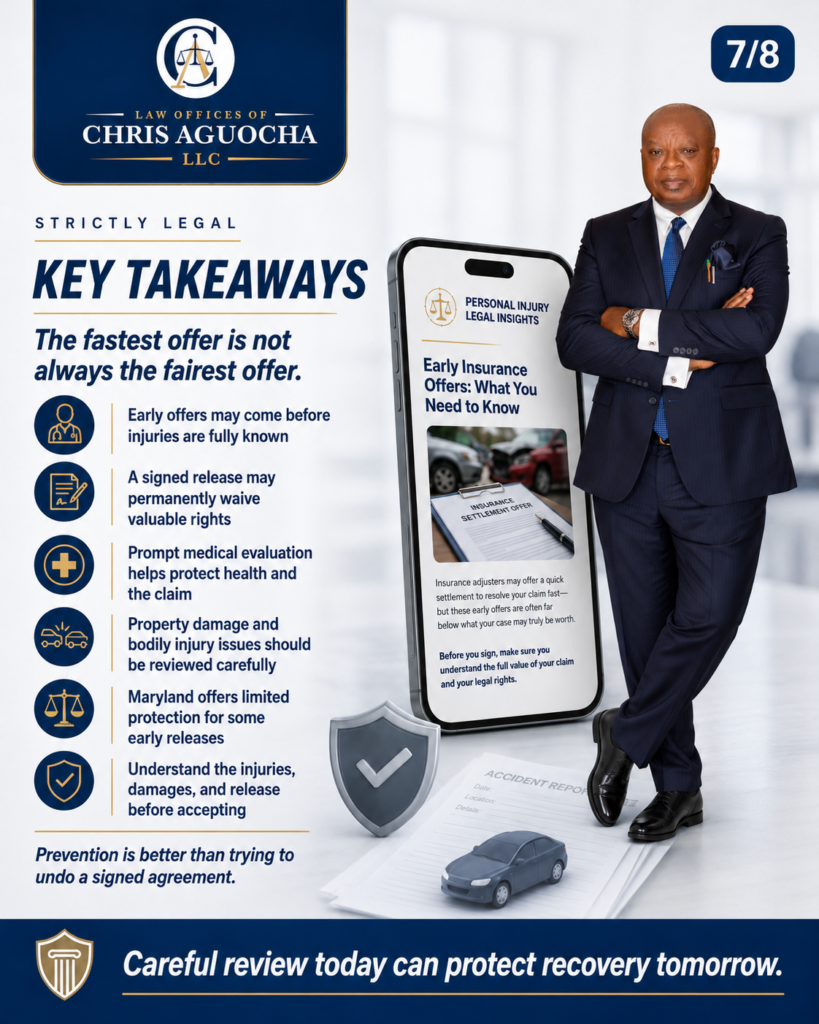
• An early settlement offer may come before the full extent of your injuries is known.
• The release you sign may permanently waive important legal rights.
• Prompt medical evaluation helps protect both your health and your legal claim.
• Property damage settlements should not automatically be combined with bodily injury settlements.
• Maryland law provides limited protection for certain early releases, but prevention is far better than attempting to undo a signed agreement.
• Before accepting an insurance offer, understand your injuries, your damages, and the legal effect of the release.
Injured in a Maryland Car Accident?
Law Offices of Chris Aguocha LLC represents individuals injured in motor vehicle accidents throughout Maryland. We help clients evaluate settlement offers, negotiate with insurance companies, and pursue compensation for medical expenses, lost income, pain and suffering, property damage, and other recoverable losses.
Office: 301-322-1304
Cell: 240-470-4364
Email: chris@aguochalawyer.com
Disclaimer: This article is provided for general informational purposes only and does not constitute legal advice. Reading this article does not create an attorney-client relationship. Every personal injury case is unique, and you should consult an attorney regarding your specific legal circumstances.
