
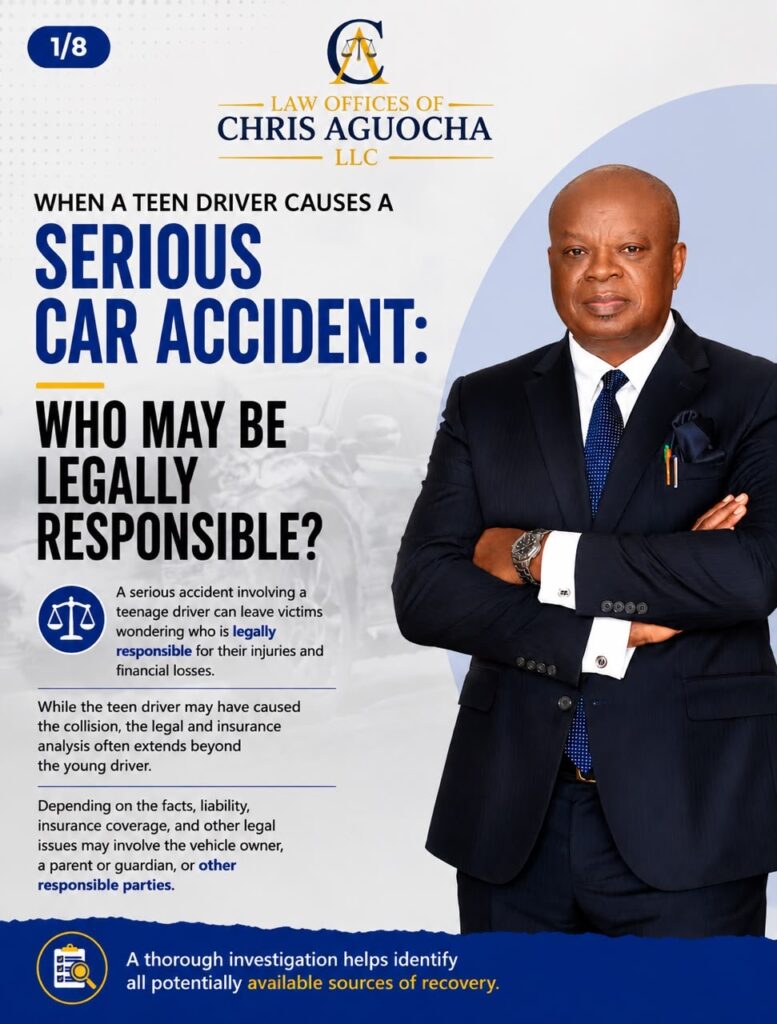
A serious accident involving a teenage driver can leave victims wondering who is legally responsible for their injuries and financial losses. While the teen driver may have caused the collision, the legal and insurance analysis often extends beyond the young driver.
Depending on the facts, liability, insurance coverage, and other legal issues may involve the vehicle owner, a parent or guardian, or other responsible parties.
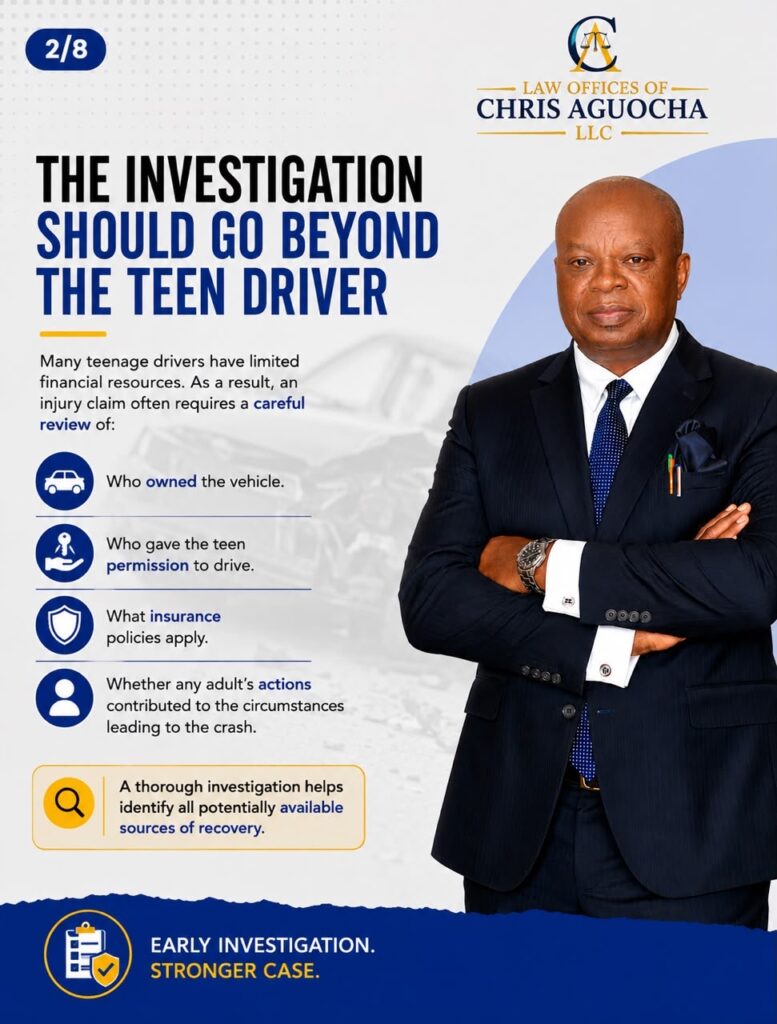
The Investigation Should Go Beyond the Teen Driver
Many teenage drivers have limited financial resources. As a result, an injury claim often requires a careful review of:
• Who owned the vehicle.
• Who gave the teen permission to drive.
• What insurance policies apply.
• Whether any adult’s actions contributed to the circumstances leading to the crash.
A thorough investigation helps identify all potentially available sources of recovery.
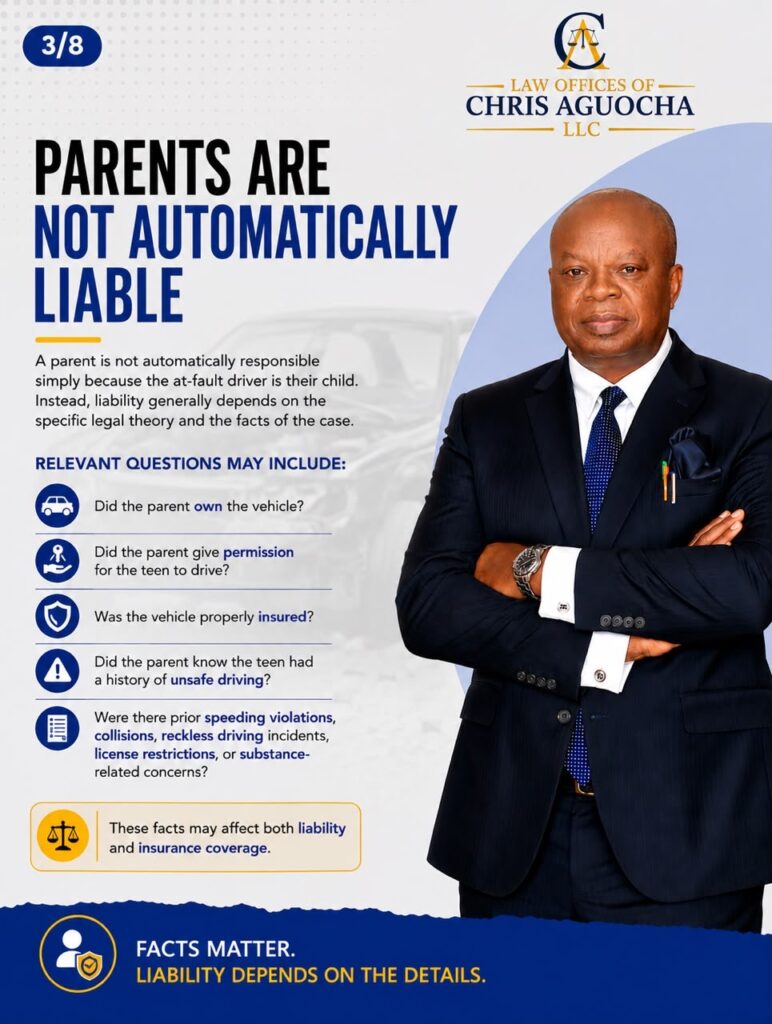
Parents Are Not Automatically Liable
A parent is not automatically responsible simply because the at-fault driver is their child.
Instead, liability generally depends on the specific legal theory and the facts of the case. Relevant questions may include:
• Did the parent own the vehicle?
• Did the parent give permission for the teen to drive?
• Was the vehicle properly insured?
• Did the parent know the teen had a history of unsafe driving?
• Were there prior speeding violations, collisions, reckless driving incidents, license restrictions, or substance-related concerns?
These facts may affect both liability and insurance coverage.
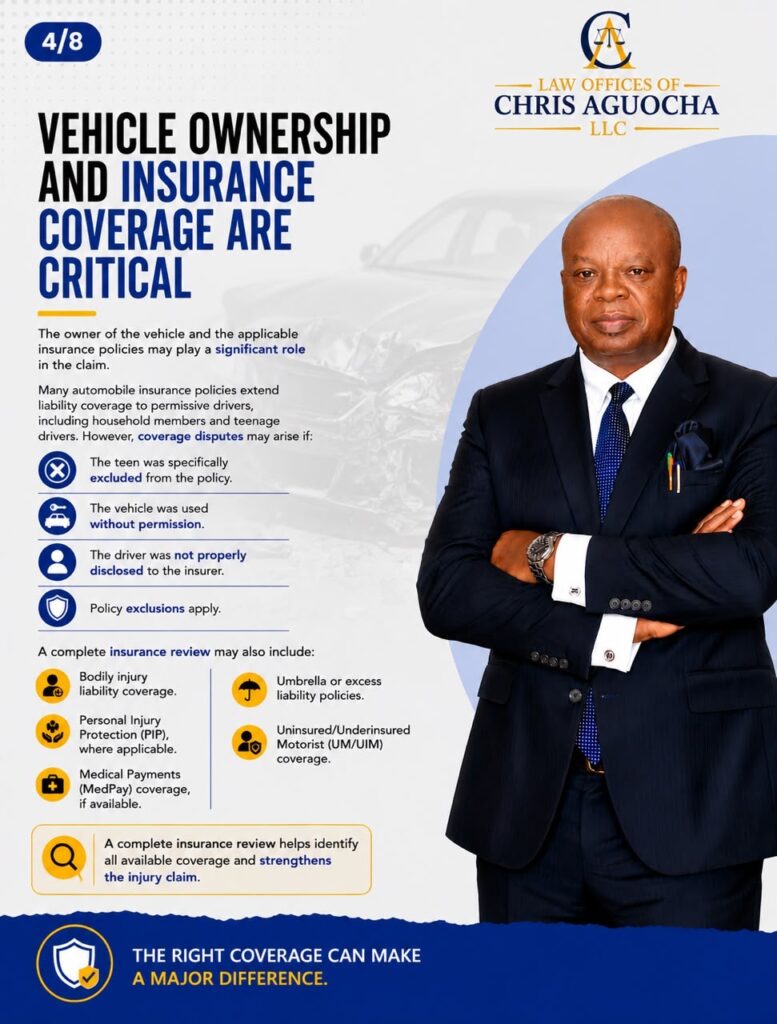
Vehicle Ownership and Insurance Coverage Are Critical
The owner of the vehicle and the applicable insurance policies may play a significant role in the claim.
Many automobile insurance policies extend liability coverage to permissive drivers, including household members and teenage drivers. However, coverage disputes may arise if:
• The teen was specifically excluded from the policy.
• The vehicle was used without permission.
• The driver was not properly disclosed to the insurer.
• Policy exclusions apply.
A complete insurance review may also include:
• Bodily injury liability coverage.
• Personal Injury Protection (PIP), where applicable.
• Medical Payments (MedPay) coverage, if available.
• Umbrella or excess liability policies.
• Uninsured/Underinsured Motorist (UM/UIM) coverage.
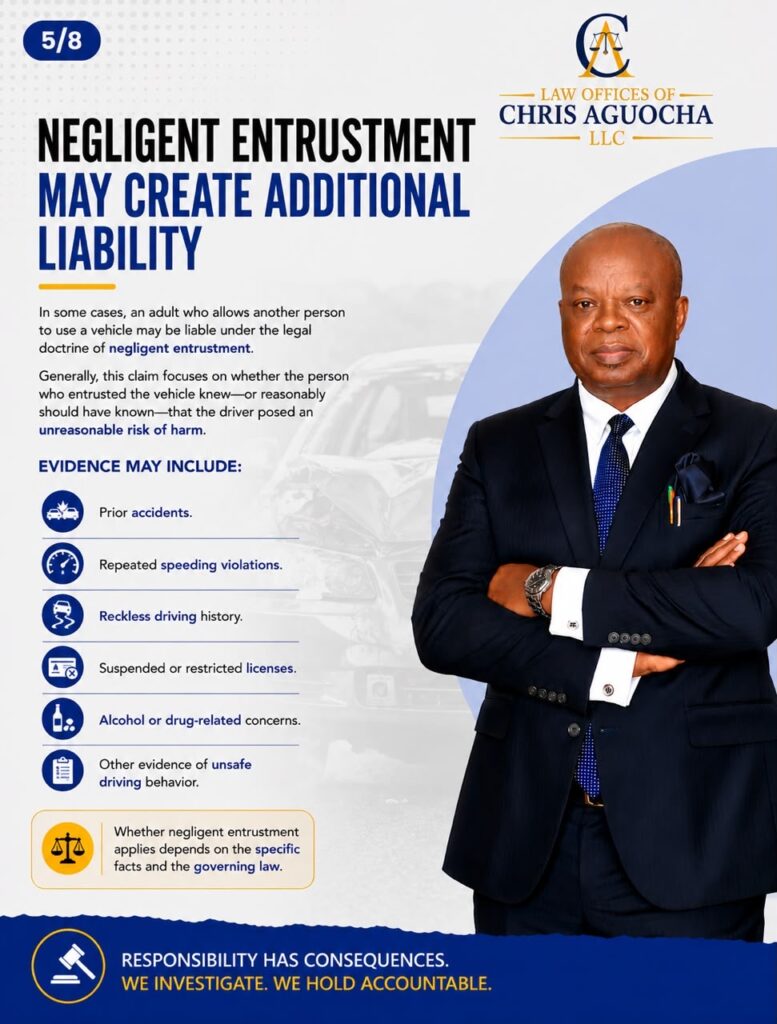
Negligent Entrustment May Create Additional Liability
In some cases, an adult who allows another person to use a vehicle may be liable under the legal doctrine of negligent entrustment.
Generally, this claim focuses on whether the person who entrusted the vehicle knew—or reasonably should have known—that the driver posed an unreasonable risk of harm.
Evidence may include:
• Prior accidents.
• Repeated speeding violations.
• Reckless driving history.
• Suspended or restricted licenses.
• Alcohol or drug-related concerns.
• Other evidence of unsafe driving behavior.
Whether negligent entrustment applies depends on the specific facts and the governing law.
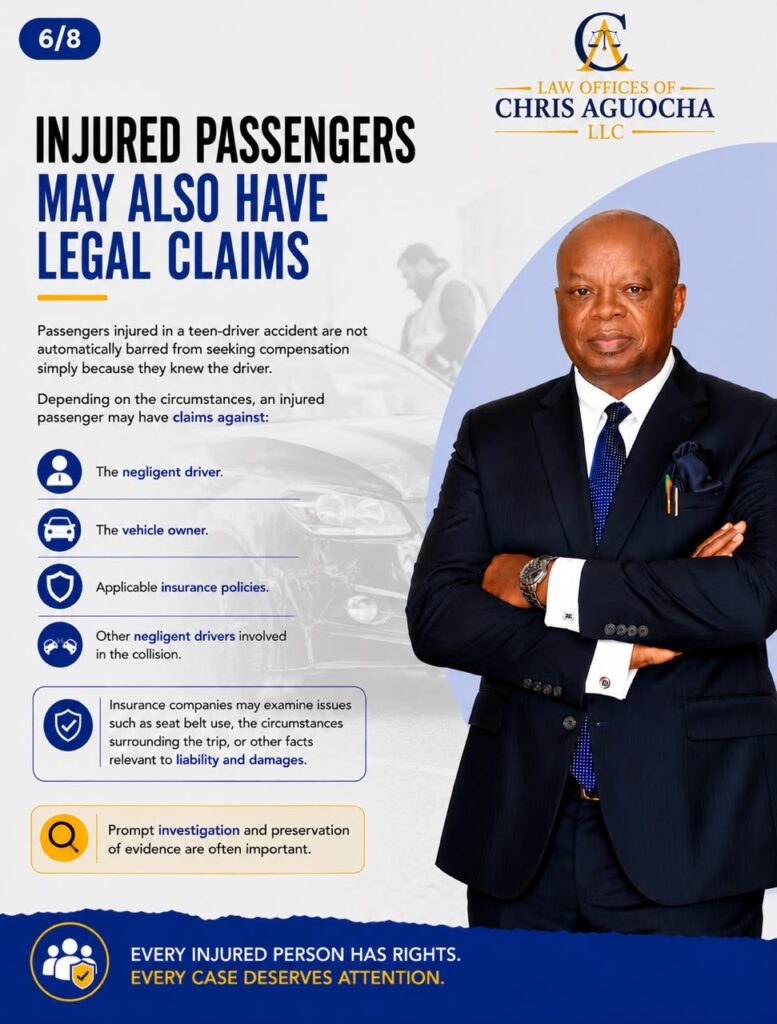
Injured Passengers May Also Have Legal Claims
Passengers injured in a teen-driver accident are not automatically barred from seeking compensation simply because they knew the driver.
Depending on the circumstances, an injured passenger may have claims against:
• The negligent driver.
• The vehicle owner.
• Applicable insurance policies.
• Other negligent drivers involved in the collision.
Insurance companies may examine issues such as seat belt use, the circumstances surrounding the trip, or other facts relevant to liability and damages. Prompt investigation and preservation of evidence are often important.
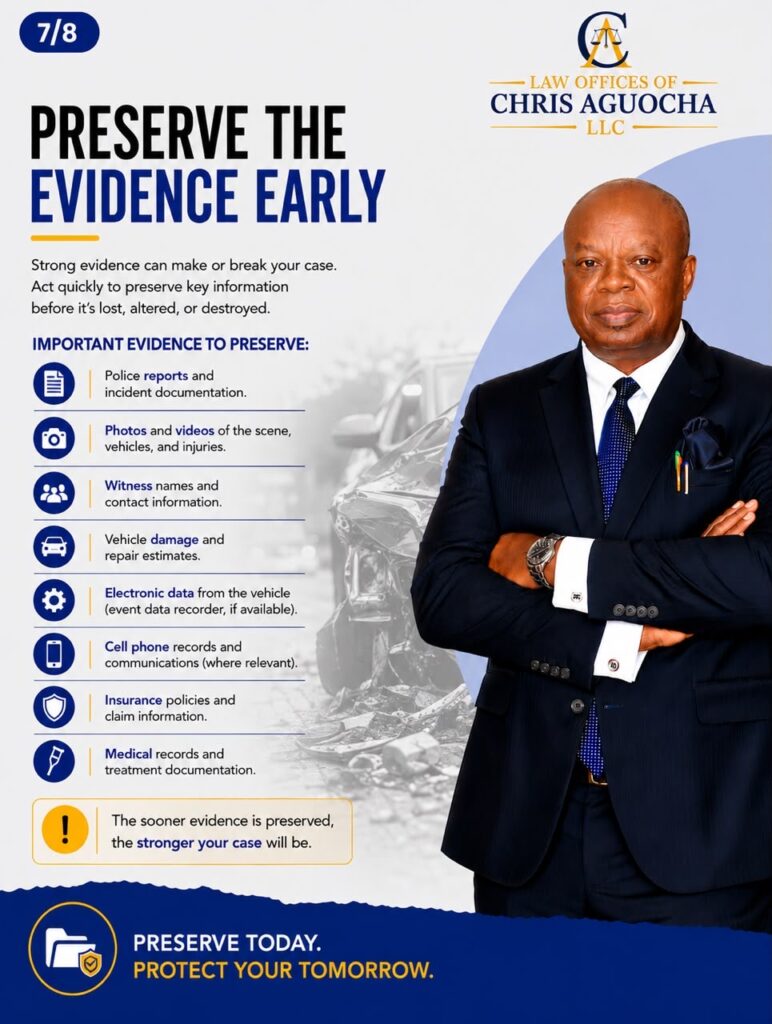
Preserve the Evidence Early
Following a serious collision, valuable evidence may include:
• Police reports.
• Photographs and video.
• Witness information.
• Vehicle damage.
• Electronic data, where available.
• Cell phone records, if relevant.
• Insurance information.
• Medical records documenting the injuries.
Early investigation may help preserve evidence before it is lost or becomes more difficult to obtain.
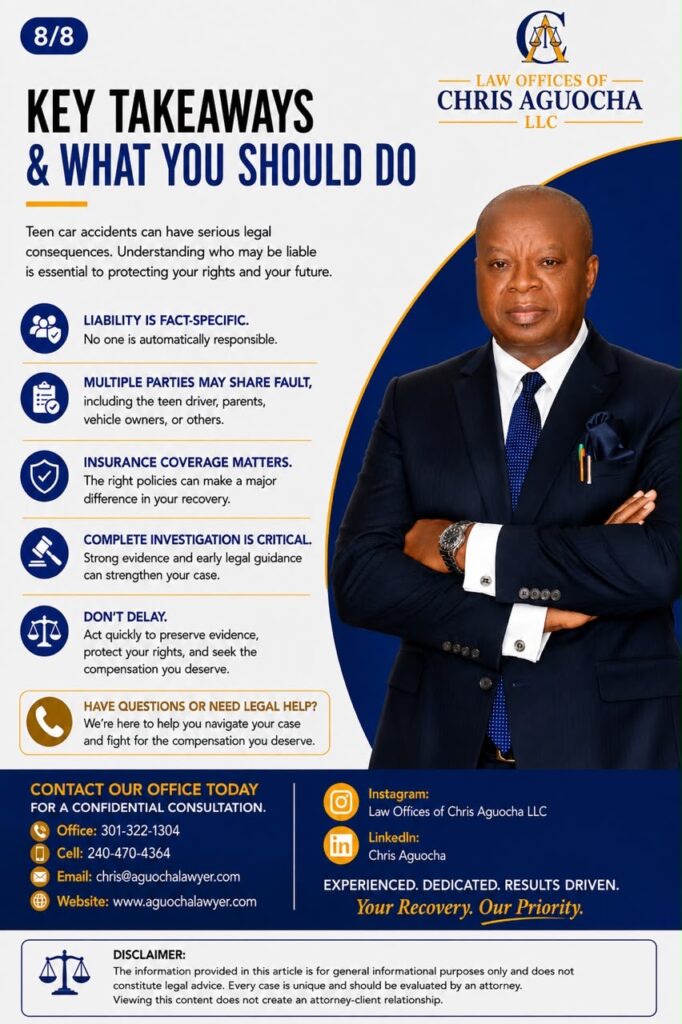
Key Takeaways
• A teen driver may be at fault, but liability and insurance issues often extend beyond the young driver.
• Parents are not automatically liable simply because the driver is their child.
• Vehicle ownership, permission to use the vehicle, insurance coverage, and negligent entrustment should all be carefully evaluated.
• Injured passengers may have valid legal claims depending on the circumstances.
• Early investigation can help identify responsible parties, preserve evidence, and maximize available insurance coverage.
Injured in a Serious Motor Vehicle Accident?
Law Offices of Chris Aguocha LLC represents individuals injured in motor vehicle collisions throughout Maryland. We investigate liability, identify all available insurance coverage, preserve critical evidence, and pursue compensation for medical expenses, lost income, pain and suffering, and other recoverable damages.
Office: 301-322-1304
Cell: 240-470-4364
Email: chris@aguochalawyer.com
Disclaimer: This article is provided for general informational purposes only and does not constitute legal advice. Reading this article does not create an attorney-client relationship. Liability in motor vehicle accident cases depends on the specific facts, applicable insurance policies, and governing law. Consult an attorney regarding your individual legal circumstances.
