


PIP Is About Immediate Protection, Not Final Fault
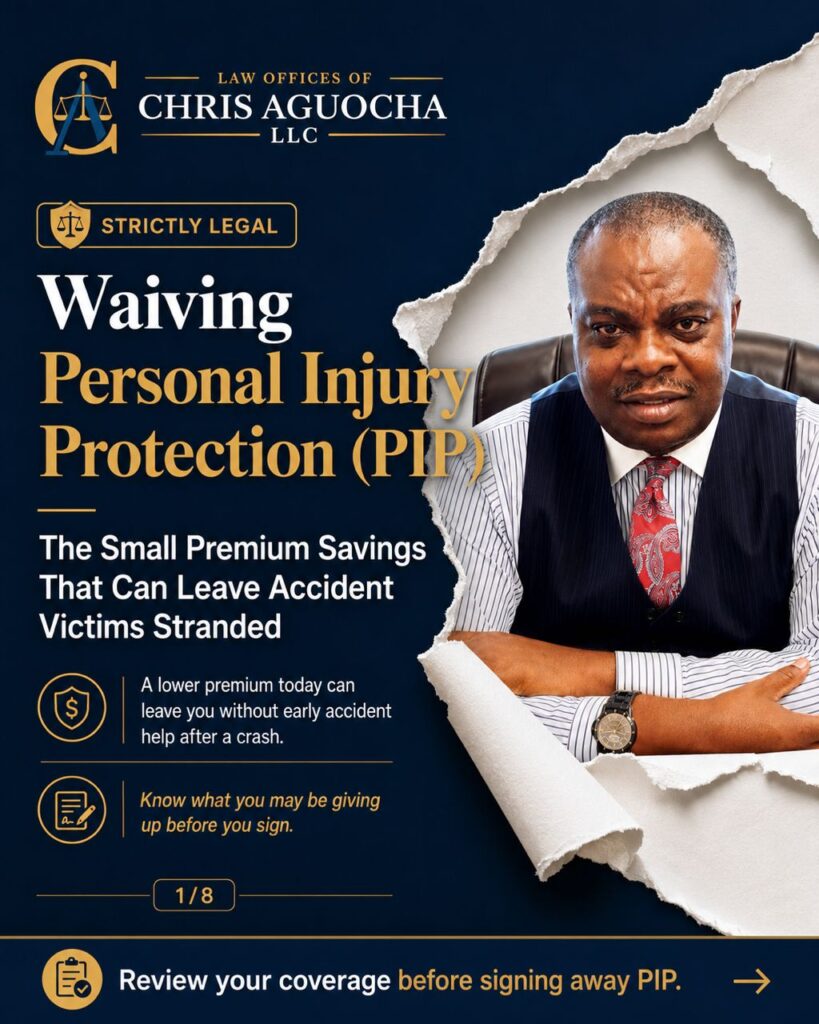
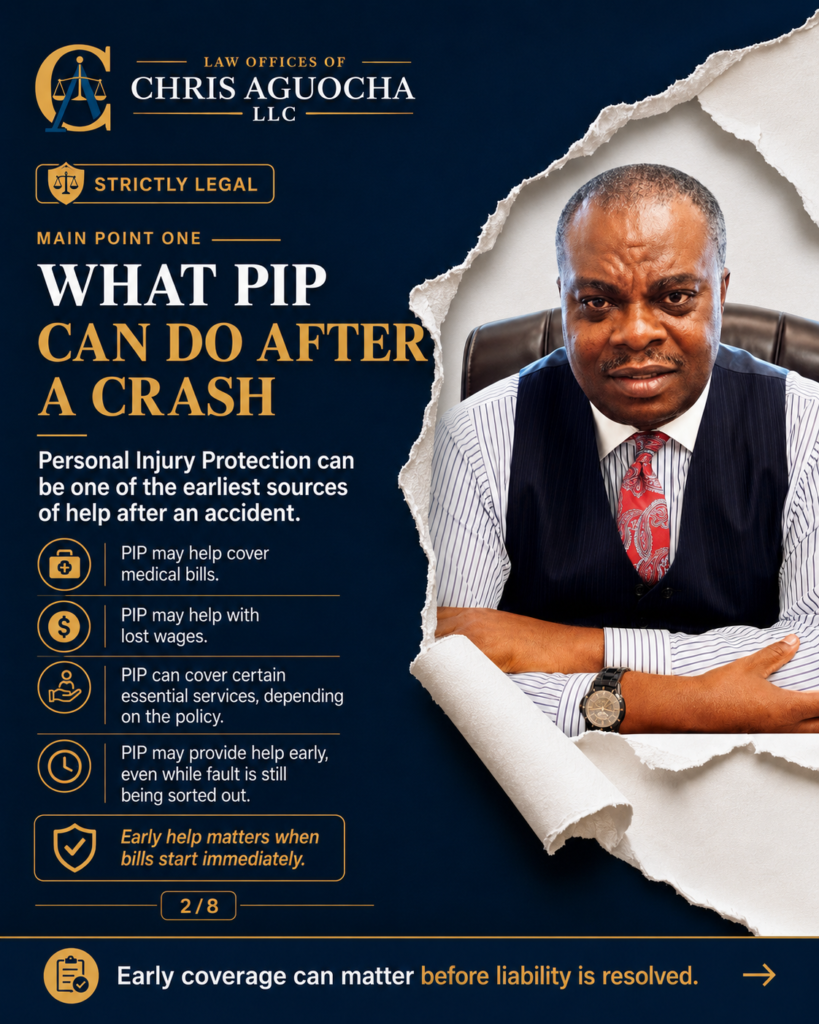
Personal Injury Protection, or PIP, is often misunderstood because many drivers focus only on who caused the crash. PIP serves a different purpose. It can provide early benefits for covered medical expenses, lost income, and certain essential services while fault is still being investigated. In Maryland, that timing matters because liability disputes and the contributory negligence rule can delay or complicate a third-party injury claim while bills and missed work begin immediately.
The Waiver Is a Legal Choice With Household Consequences
Maryland insurers must offer PIP coverage with a minimum benefit of $2,500 per person, per accident, unless the first named insured affirmatively waives it in writing. That waiver should not be treated like a routine checkbox. Once signed, it may bind the named insured, listed drivers, and resident family members age 16 or older. A policyholder may think the waiver only affects one person, but the decision can reduce protection for a spouse, teenage driver, or other household member.
The Practical Problem Is Who Pays First After the Crash
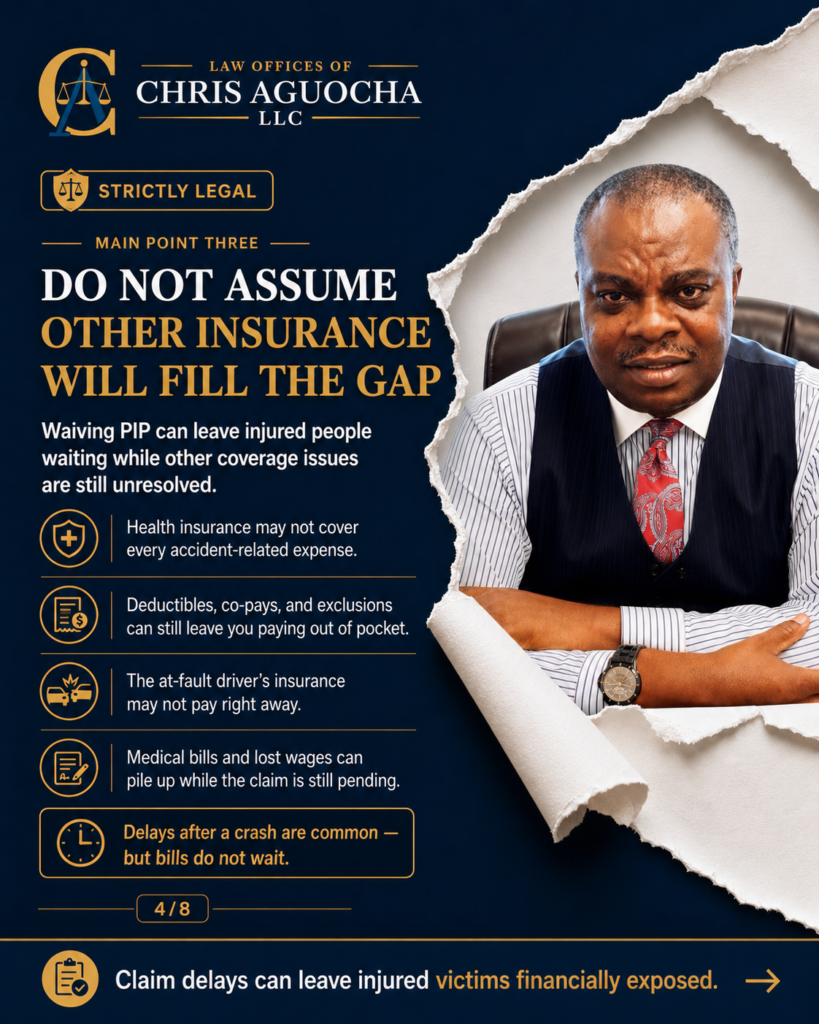
The at-fault driver’s insurance usually does not pay medical bills right away. Claims are investigated, fault may be disputed, and settlement may not happen until treatment is complete. Health insurance may help, but it may also involve deductibles, co-pays, network limits, denials, or reimbursement issues. PIP can help bridge that early gap. Without it, the injured person may be forced to pay out of pocket, delay care, miss wages, or accept financial pressure before the case is ready to resolve.
Common Mistakes Can Leave Families Exposed
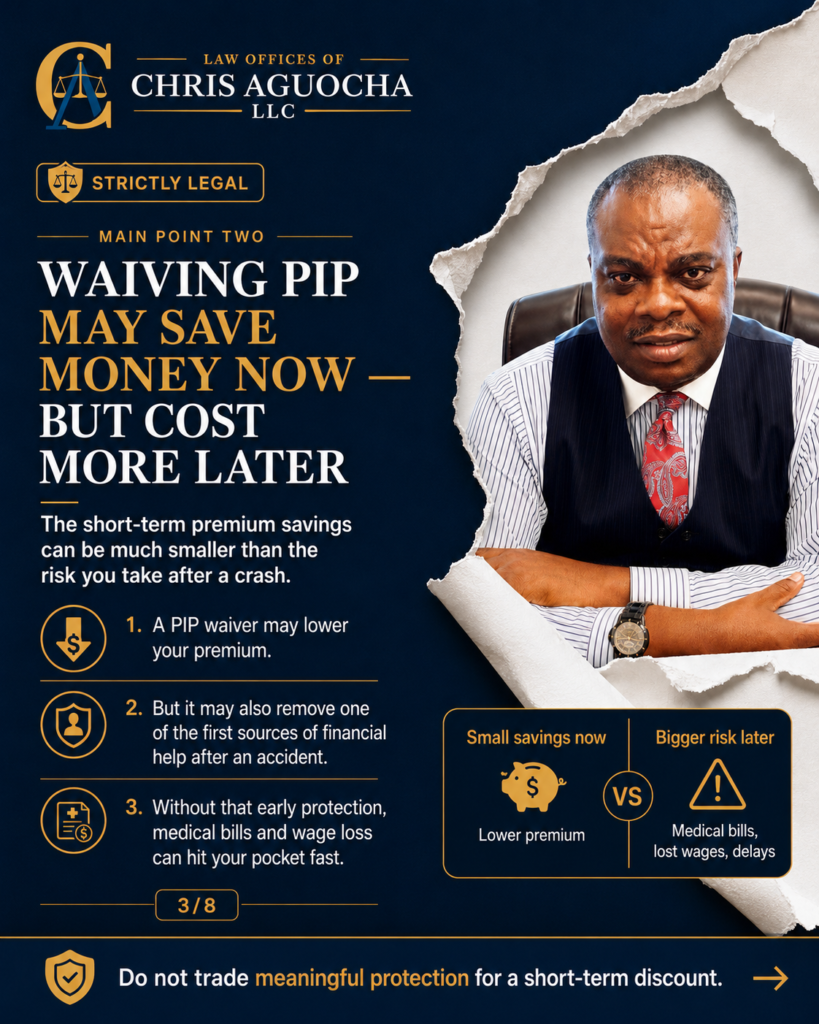
Drivers often waive PIP because the premium savings look attractive, but they fail to measure the small savings against the benefits being rejected. They assume health insurance is enough, the at-fault insurer will pay quickly, or the waiver affects only the signer. Others never review the declarations page to confirm whether PIP exists. These mistakes can become serious after a crash, especially for hourly workers, parents, caregivers, self-employed people, or families with limited savings.
The Policy Should Be Reviewed Before the Waiver Becomes the Problem
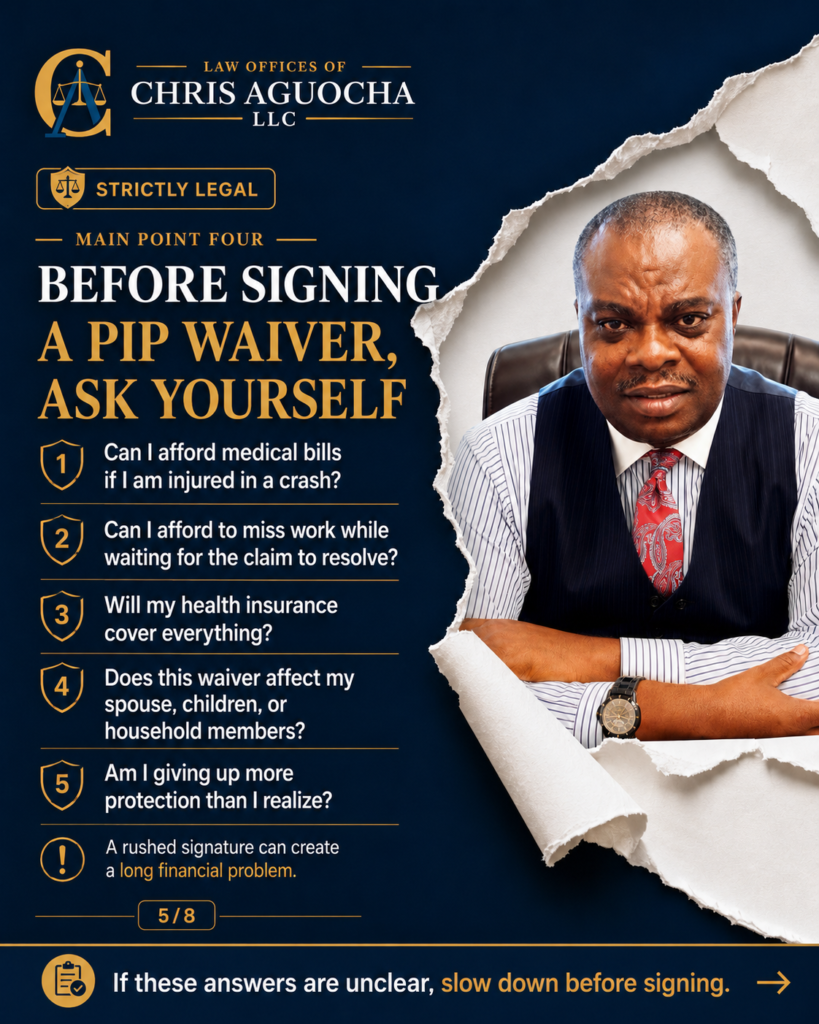
Before signing or renewing a PIP waiver, review the declarations page, waiver form, available limits, premium difference, household drivers, health insurance, wage-loss risk, and ability to handle medical bills without early benefits. After an accident, the policy should be reviewed immediately to confirm whether PIP exists, whether a waiver applies, what deadline controls the claim, and what medical or wage records must be submitted. Early review can protect the claim before avoidable mistakes cause damage.
Bottom Lines
Early legal guidance matters because coverage, deadlines, documentation, and insurance coordination can affect the claim.
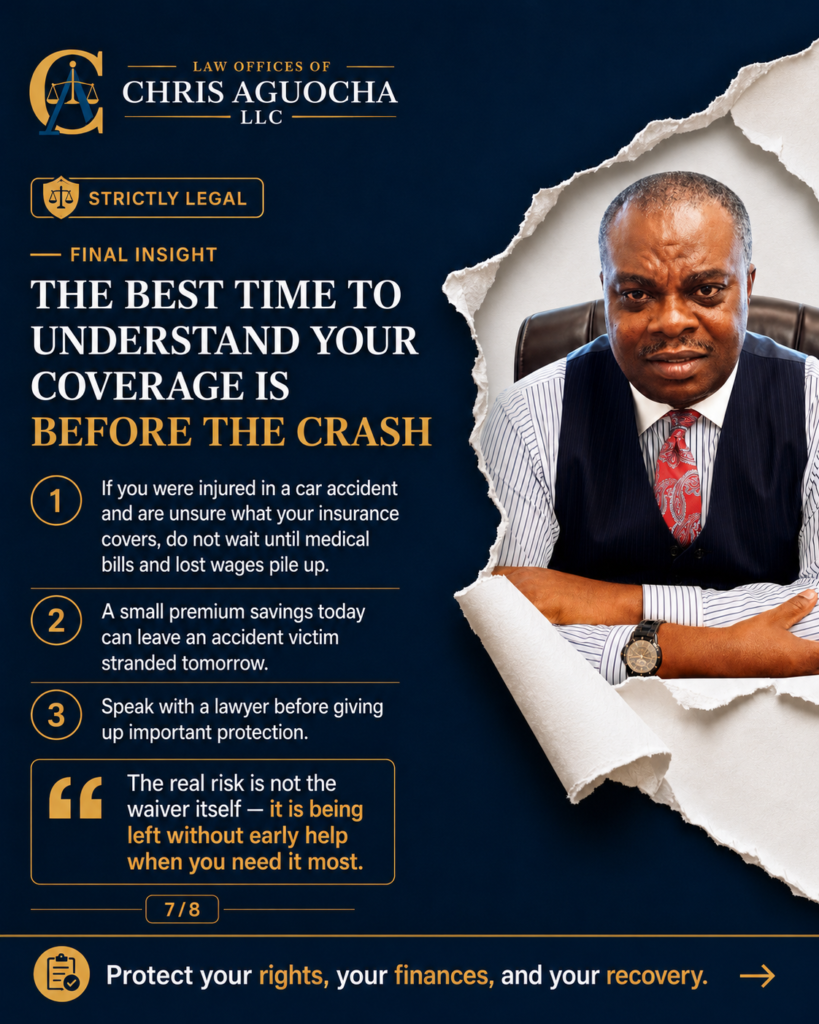
A small premium savings today can cost thousands after a crash if PIP benefits are unavailable.
PIP can provide early financial help for covered medical bills, lost wages, and essential services.
Do not assume health insurance or the at-fault driver’s insurer will pay immediately.
A waiver may affect listed drivers and resident household family members age 16 or older.
Review the policy, waiver, limits, health insurance, income risk, and family finances before signing.
For legal advice, consultation, or representation, contact Law Offices of Chris Aguocha LLC at
301-322-1304 (Office), 240-470-4364 (Cell), or chris@aguochalawyer.com
