
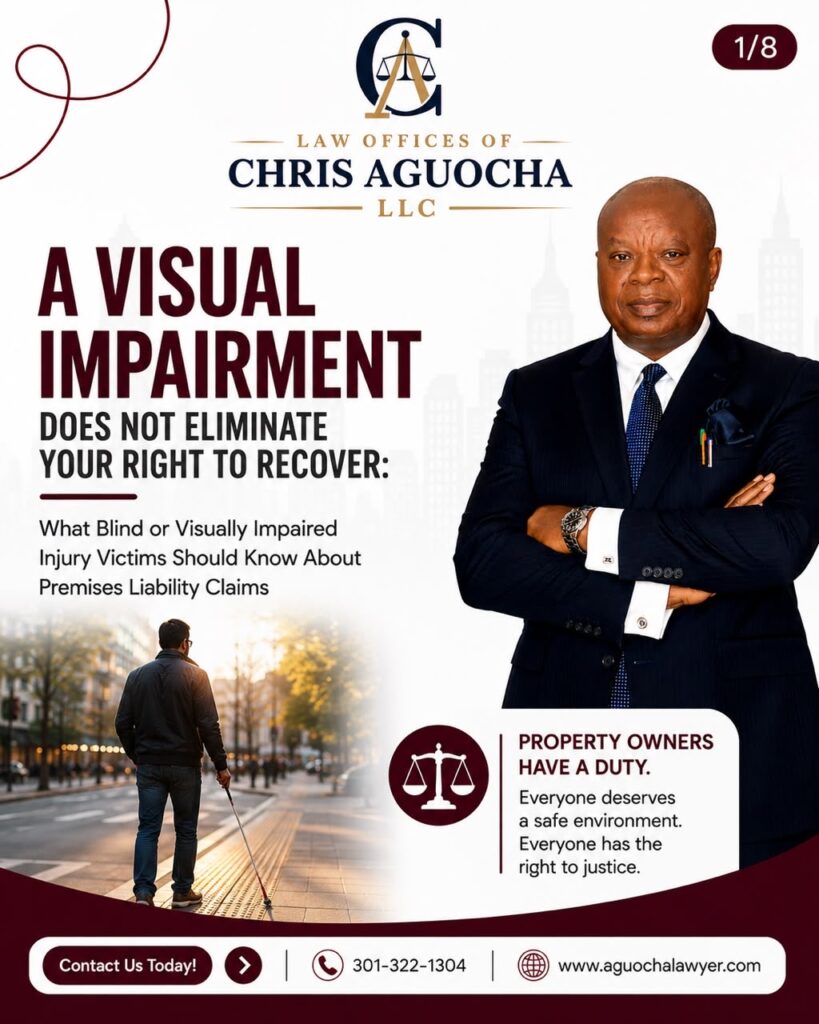
A serious fall or other injury can happen to anyone. Unfortunately, when the injured person is blind or visually impaired, property owners and insurance companies sometimes argue that the accident happened simply because the person could not see the hazard.
That is not the legal standard.
A visual impairment does not automatically relieve a property owner of the duty to maintain reasonably safe premises. Every case depends on the facts, the applicable law, and the available evidence.
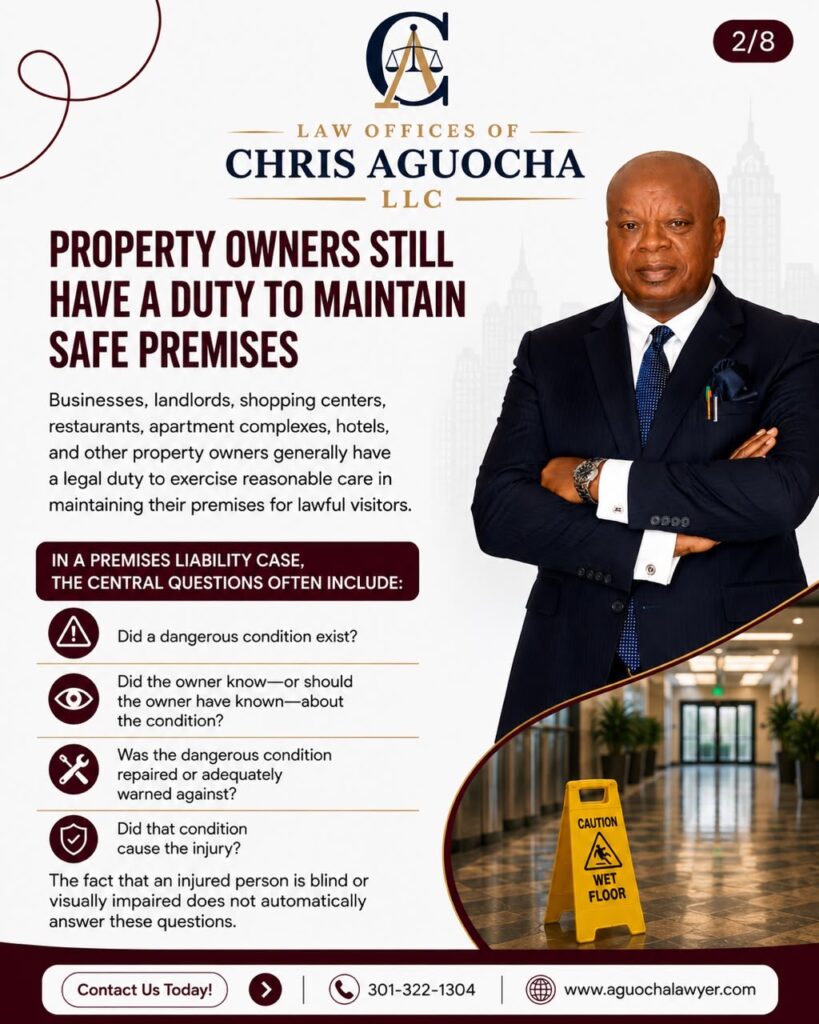
Property Owners Still Have a Duty to Maintain Safe Premises
Businesses, landlords, shopping centers, restaurants, apartment complexes, hotels, and other property owners generally have a legal duty to exercise reasonable care in maintaining their premises for lawful visitors.
In a premises liability case, the central questions often include:
• Did a dangerous condition exist?
• Did the owner know—or should the owner have known—about the condition?
• Was the dangerous condition repaired or adequately warned against?
• Did that condition cause the injury?
The fact that an injured person is blind or visually impaired does not automatically answer these questions.
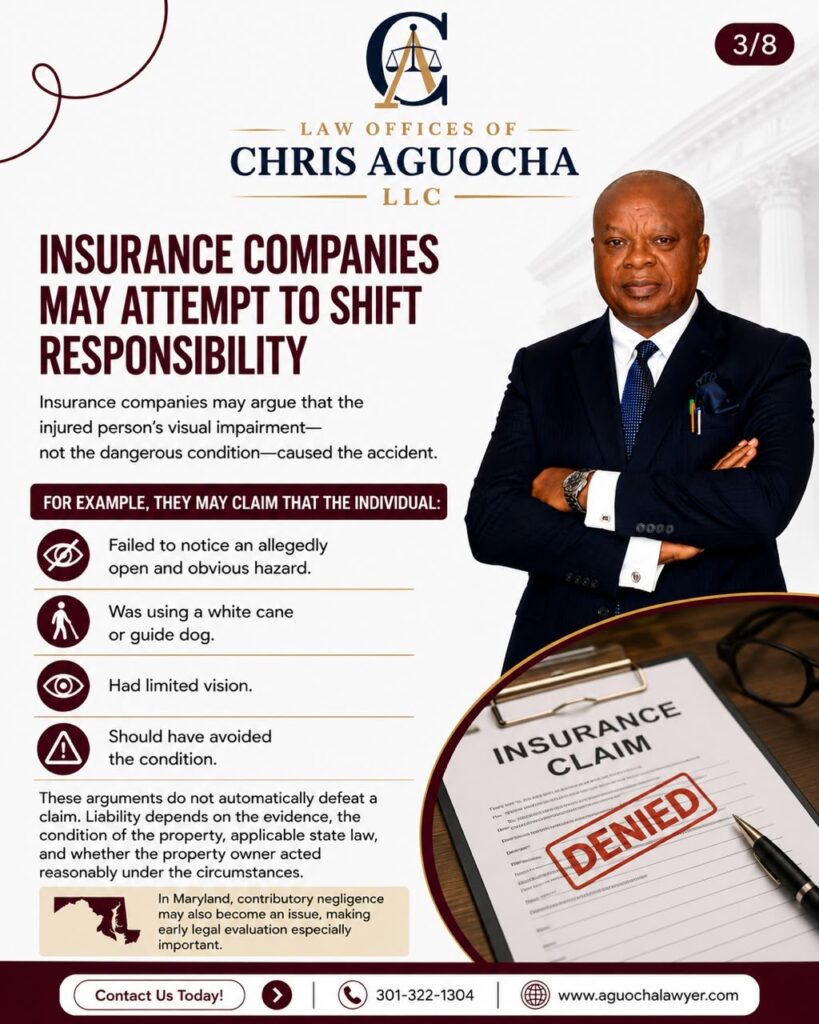
Insurance Companies May Attempt to Shift Responsibility
Insurance companies may argue that the injured person’s visual impairment—not the dangerous condition—caused the accident.
For example, they may claim that the individual:
• Failed to notice an allegedly open and obvious hazard.
• Was using a white cane or guide dog.
• Had limited vision.
• Should have avoided the condition.
These arguments do not automatically defeat a claim. Liability depends on the evidence, the condition of the property, applicable state law, and whether the property owner acted reasonably under the circumstances.
In Maryland, contributory negligence may also become an issue, making early legal evaluation especially important.
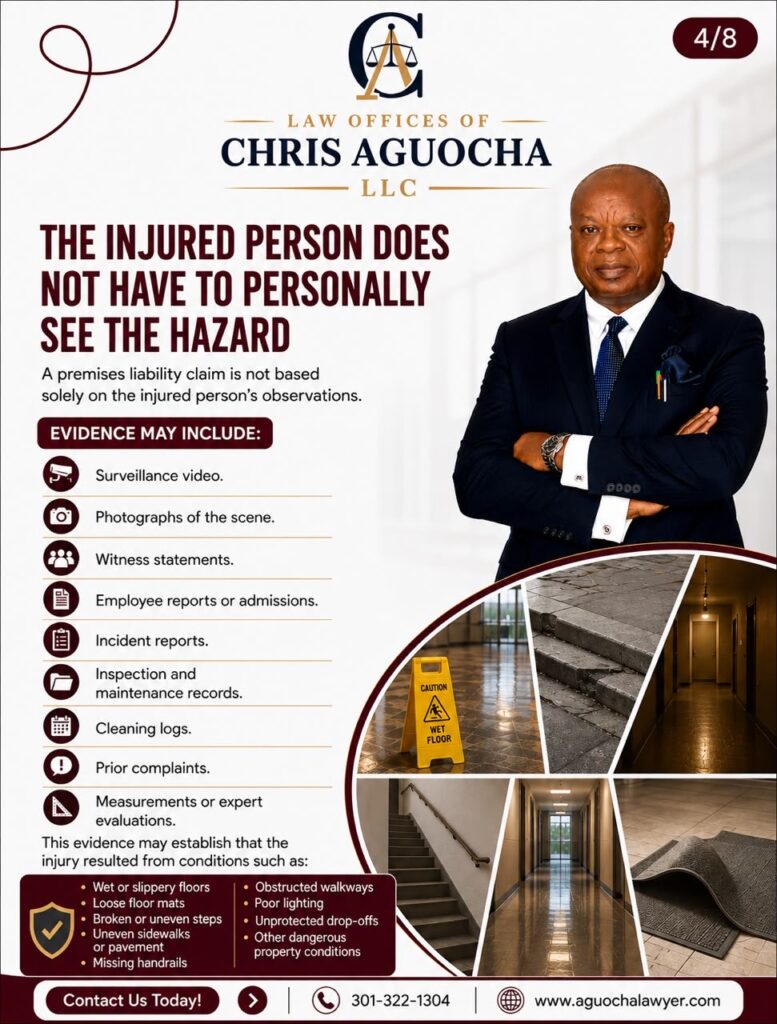
The Injured Person Does Not Have to Personally See the Hazard
A premises liability claim is not based solely on the injured person’s observations.
Evidence may include:
• Surveillance video.
• Photographs of the scene.
• Witness statements.
• Employee reports or admissions.
• Incident reports.
• Inspection and maintenance records.
• Cleaning logs.
• Prior complaints.
• Measurements or expert evaluations.
This evidence may establish that the injury resulted from conditions such as:
• Wet or slippery floors.
• Loose floor mats.
• Broken or uneven steps.
• Uneven sidewalks or pavement.
• Missing handrails.
• Obstructed walkways.
• Poor lighting.
• Unprotected drop-offs.
• Other dangerous property conditions.
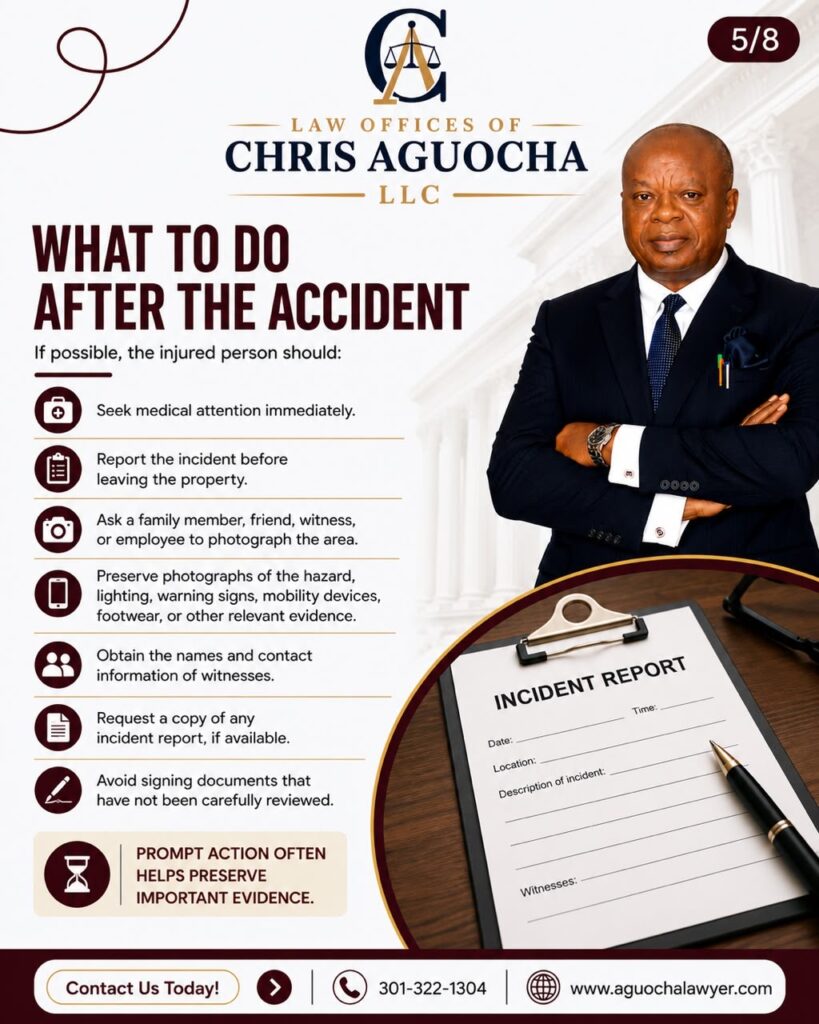
What to Do After the Accident
If possible, the injured person should:
• Seek medical attention immediately.
• Report the incident before leaving the property.
• Ask a family member, friend, witness, or employee to photograph the area.
• Preserve photographs of the hazard, lighting, warning signs, mobility devices, footwear, or other relevant evidence.
• Obtain the names and contact information of witnesses.
• Request a copy of any incident report, if available.
• Avoid signing documents that have not been carefully reviewed.
Prompt action often helps preserve important evidence.
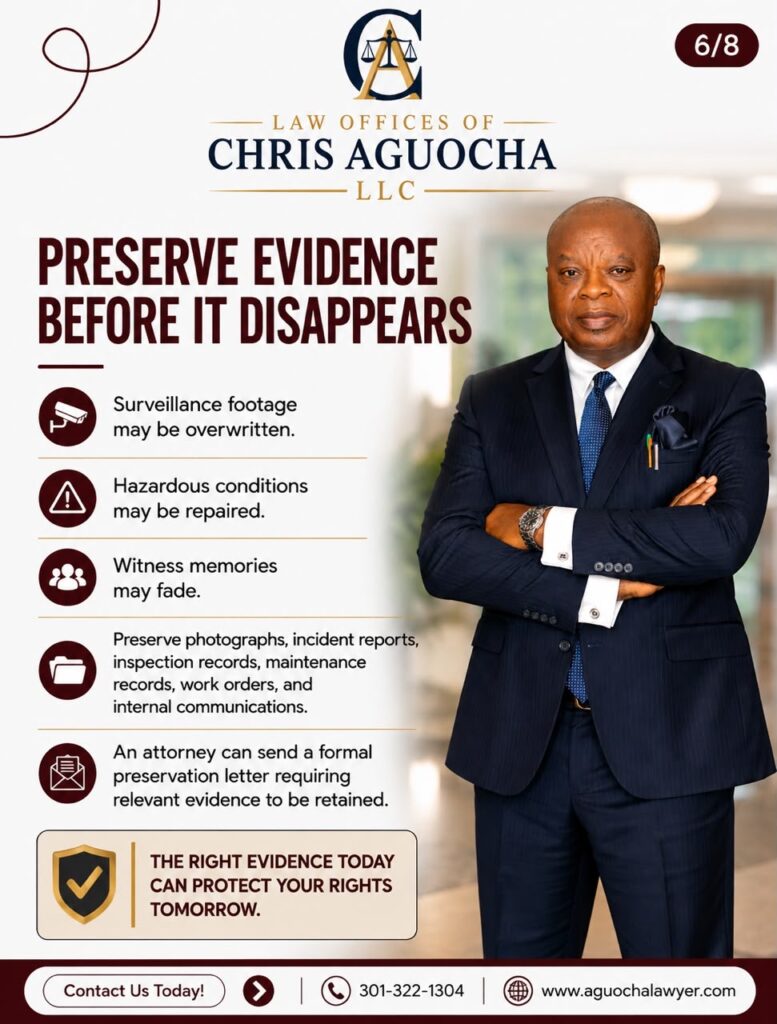
Preserve Evidence Before It Disappears
Critical evidence can disappear quickly.
Surveillance video may be overwritten, hazardous conditions may be repaired, and witnesses’ memories may fade.
Whenever possible, important evidence should be preserved, including:
• Surveillance footage.
• Photographs.
• Incident reports.
• Inspection records.
• Maintenance records.
• Work orders.
• Internal communications concerning the hazardous condition.
An attorney can send a formal preservation letter requesting that relevant evidence be retained.
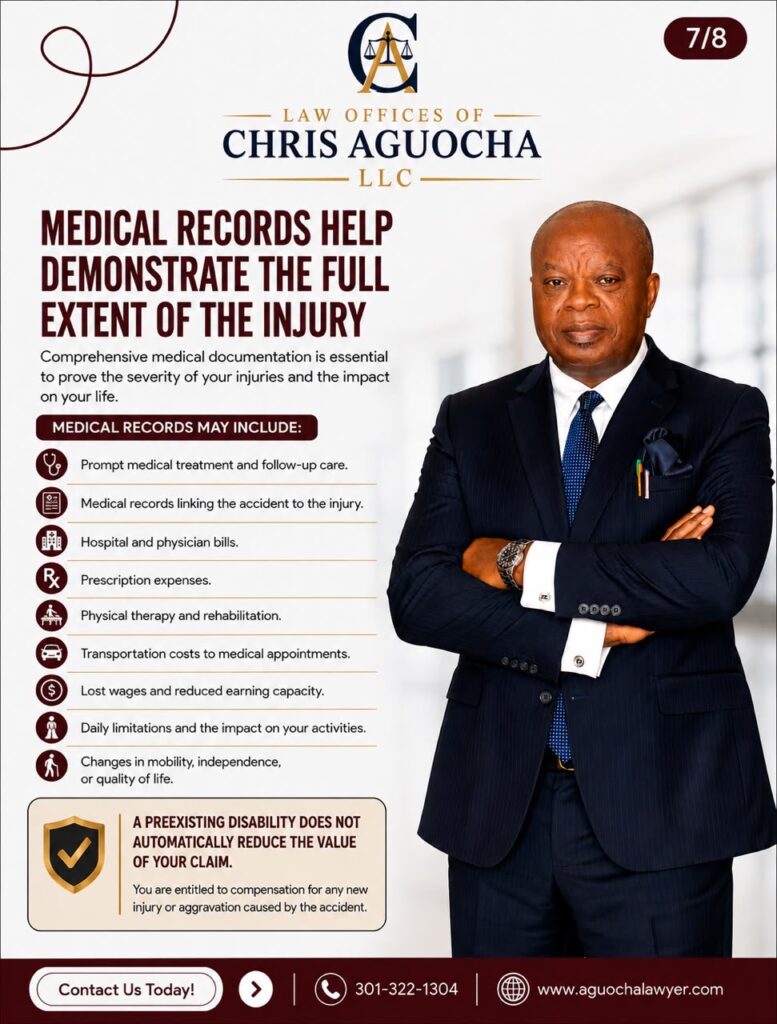
Medical Records Help Demonstrate the Full Extent of the Injury
Prompt medical treatment is important not only for health but also for documenting the connection between the accident and the injuries.
Keep records of:
• Medical treatment.
• Hospital and physician bills.
• Prescription expenses.
• Physical therapy.
• Transportation costs.
• Lost wages.
• Daily limitations.
• Changes in mobility, independence, or quality of life.
A preexisting disability does not automatically reduce the value of a claim for a new injury or for the aggravation of an existing condition.
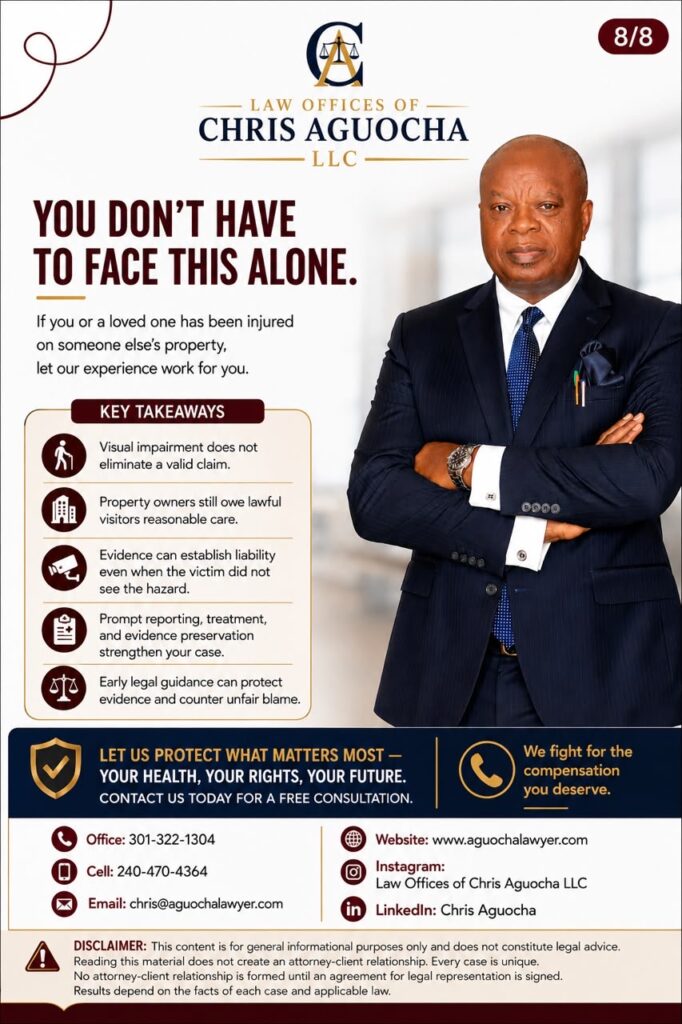
Key Takeaways
• A blind or visually impaired person may have a valid premises liability claim when injured by an unsafe property condition.
• Property owners remain responsible for exercising reasonable care in maintaining safe premises.
• Liability may be established through surveillance footage, witness testimony, maintenance records, photographs, and other evidence—even if the injured person did not personally see the hazard.
• Prompt reporting, medical treatment, and preservation of evidence can significantly strengthen a claim.
• Early legal guidance can help protect evidence and respond to attempts to unfairly shift blame.
Injured on Someone Else’s Property?
Law Offices of Chris Aguocha LLC represents individuals injured in premises liability cases throughout Maryland, including slip-and-fall accidents, trip-and-fall injuries, negligent property maintenance, and other serious injury claims. We work to preserve critical evidence, investigate dangerous conditions, and pursue the compensation our clients deserve.
Office: 301-322-1304
Cell: 240-470-4364
Email: chris@aguochalawyer.com
Disclaimer: This article is provided for general informational purposes only and does not constitute legal advice. Reading this article does not create an attorney-client relationship. Every premises liability case is unique, and liability depends on the specific facts, applicable law, and available evidence. Consult an attorney regarding your individual legal circumstances.
